To be the world’s best cyclist is, one imagines, something of a poisoned chalice. The endless demands on your time, being shuttled around the world at the behest of sponsors, being bothered on training rides – all of this is something that is part and parcel of being Tadej Pogačar. And then there are the brands that want you to endorse their thing. All things that add to the complication of life, but also usually come with some pretty hefty financial incentives attached.
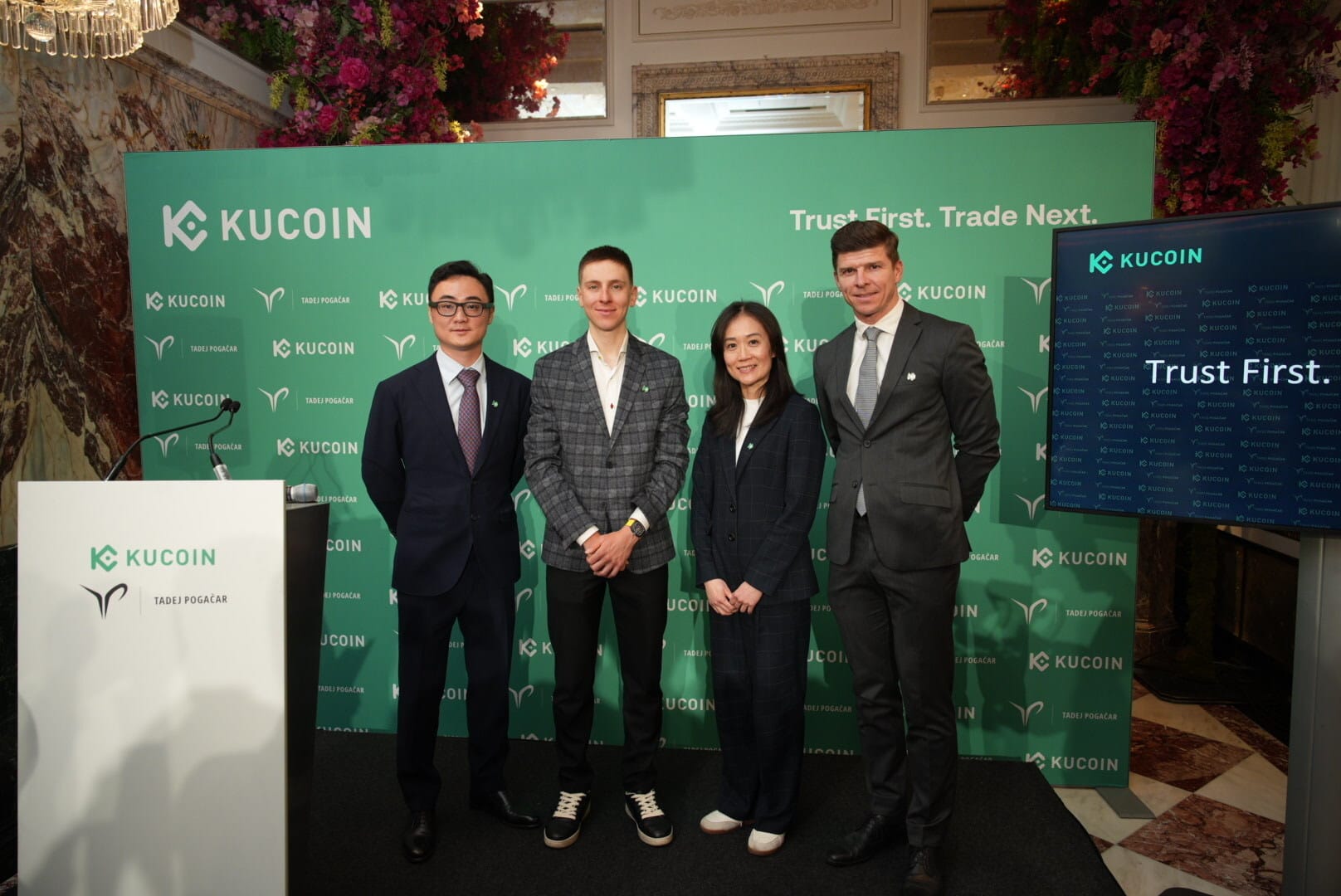
Which is all to say – Tadej Pogačar is now all-in on a cryptocurrency trading platform, having signed up as KuCoin’s global brand ambassador, with the partnership announced in an event in Vienna yesterday. The partnership, according to a KuCoin press release, “marks the first time a top-tier global crypto exchange and a world-class professional cyclist have come together in a value-driven, trust-led partnership.”
Those are certainly some words! So far, so good!
‘Trust’ is the key word throughout the press release, cropping up 13 times in a few paragraphs. Indeed, trust is apparently KuCoin's headline feature: “Trust, Proven by Performance” reads one headline in their marketing materials; “Trust First. Trade Next.” reads another. As is often the case with partnership announcements such as Pogačar's, both parties have offered carefully worded, ghost/AI-written quotes about how “trust is not declared, but earned through long-term performance, professionalism, and discipline” and how this is “a rare alignment of values between two leaders operating at the highest level of their respective fields.”

Offering his own perspective on this mother of all synergies, Pogačar wants you to know that there are similarities between cycling and crypto, in that in cycling, “trust is built through preparation, consistency, and a relentless focus on safety [earned] over time, through performance and responsible decision-making under pressure" and "that mindset strongly resonates with how KuCoin approaches trust and security.”
Meanwhile, the CEO of KuCoin, BC Wong, is pretty amped about the ways that “Tadej represents excellence achieved through discipline and consistency at the very highest level. At KuCoin, we apply the same principles as we continue to strengthen security, compliance, and governance — helping bring crypto to a broader, more mainstream audience.”
Let's take a spin down Cycling x Crypto alley
All of this seems fine: the crypto space isn’t exclusively filled with charlatans and frauds (despite a number of striking examples otherwise). And the crypto industry isn't new to the world of cycling, either. The women’s WorldTour team Canyon-SRAM zondacrypto has a crypto exchange as a sponsor – one that is also prominent enough to have naming rights to stadiums in Switzerland and Poland, and doesn’t seem to have any obvious red flags hanging over it. Early on in Pogačar’s pro cycling journey, there was a crypto tie-in too – the Slovenian Continental-level team he rode for before signing for UAE Team Emirates, Ljubljana Gusto Xaurum, had a cryptocurrency in third billing.
Crypto is relatively normalised in Pogačar’s home country, too, with the capital Ljubljana recently named the world’s most crypto-friendly city thanks to its 150+ crypto ATMs and high concentration of crypto-related wealth. Further, the country’s national cycling federation has for a number of years been sponsored by NiceHash, giving that crypto exchange prime billing on the front of Pogačar’s jersey as he’s sailed across the line to win the last two World Championships.
But if NiceHash sounds familiar, it’s probably because you remember another Slovenian crypto entity with a very similar name: NextHash. NextHash was founded by the Slovenian entrepreneur Ana Benčic after she secured a share of NiceHash when that company was reeling after having millions of euros of bitcoin stolen by North Korean hackers. After NiceHash realised Benčic didn’t have the assets to justify her move into the company they sued her, and she exited stage-left, starting up NextHash soon after.
By mid-2021, NextHash had secured naming rights sponsorship of the WorldTour team Qhubeka-NextHash, but within months had failed to provide a majority of its payments, and caused the team to fold by the end of the season (after a few years working its way back up through the ranks, the team has since re-emerged on steadier footing as Pinarello-Q36.5).
Despite a deeply dubious recent history in cycling sponsorship, NextHash soon popped up again as an NFT partner of the UCI Track Champions League (at the time, the UCI did not respond to requests for comment about how this came about; TCL organisers Warner Brothers Discovery chose to “politely decline the opportunity to comment” when asked if NextHash had actually delivered on any of its commitments, financial or otherwise). For what it’s worth, that seems to be about the last roll of the dice for the company: Escape Collective understands that Benčic is currently embroiled in a couple of criminal cases in her native Slovenia (a local police spokesperson said they were unable to comment due to Slovenia's personal data protection act), while the NextHash website has been down for months and financial records indicate the company has been dissolved.
All of which is a very long way of getting to the point that there’s a messy history when it comes to crypto ventures in the world of cycling. And, as a result, you’d probably expect that Pogačar’s team had done their due diligence on KuCoin before he signed up as their global brand ambassador.
And you’d probably be wrong.
A sinking feeling
So let’s learn some things about KuCoin, a company which is overtly trading on the two attributes of ‘trust’ and ‘performance’. How far does one have to go to see some red flags? Let’s try the first page of Google.
Did we do a good job with this story?