
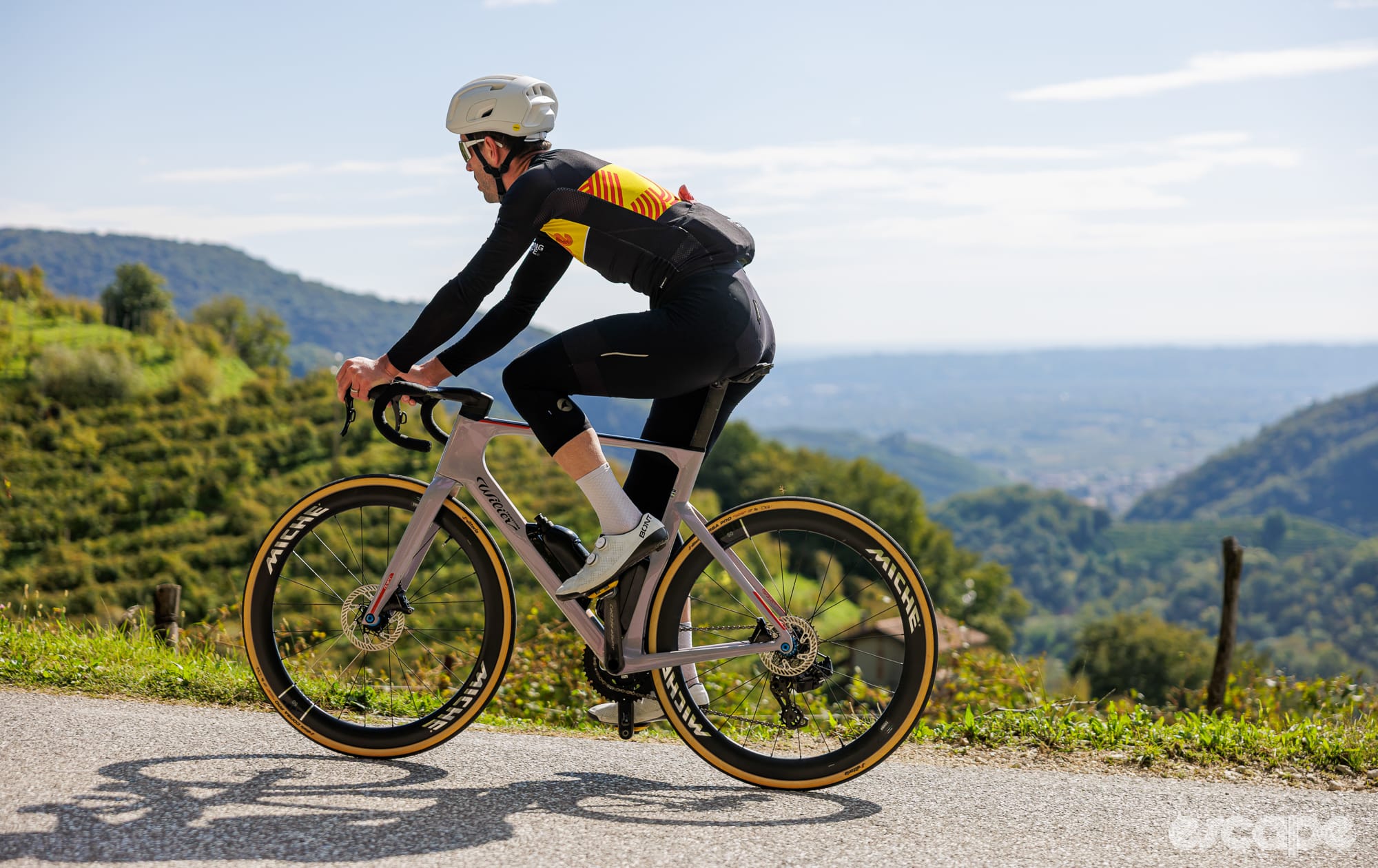
That’s the Wilier Filante SLR ID2. It’s new, it’s pretty, and it’s an aero race bike developed (at least in part) to maximise the performances of the Groupama-FDJ team. Or is it?
There’s a recurring question on the Geek Warning podcast: if the UCI’s commercialisation rule means pros and consumers ride the same bikes, does that serve either group well? Until now, that conversation has largely focused on whether amateurs are overly influenced by what the pros ride. It’s not the access to pro equipment that’s in question, but whether the “win on Sunday, sell on Monday” marketing and marginal gains mentality have gone too far, leaving some of us on the wrong bike, convinced that those performance claims are the key to speed or the cure for our fitness shortcomings. But with the advent of the so-called “hyperbike” category, that question might have flipped, and this new Wilier might present an interesting new paradox.
Highs: Elegant design and excellent finish. Stable, predictable handling in all conditions. Noticeably refined front-end feel. Aero bottles and cages offer options. Superb ride.
Lows: Pricing. Limited barstem size options. Missed a geometry opportunity. Single fork rake across all sizes. Feels evolutionary rather than revolutionary. Aero bottles rattle, round bottles fit awkwardly.
Price: €13,100 / US$15,900 as seen.
Dura-Ace Di2 build with Miche Kleos RD 50 wheels €11,900 / £10,750 / US$13,900.
Ultegra Di2: €9,700 / £8,750 / US$11,500 (power meter upgrade available)
Force AXS E1: €9,900 / £8,950 / US$11,700 (power meter upgrade available)
Frameset: €5,800 / £5,500 / US$ and AU$ TBC
My “beat” is performance, my niche is aero, my riding style is racing. It’s bikes that promise speed and efficiency that I’m tasked with assessing, interpreting, and generally reporting back on. The new Filante is right in my wheelhouse, but has me confused since Wilier unveiled it at a Prosecco winery in northern Italy three weeks ago. With all the talk of CFD modelling, wind-tunnel validation, and having tracked Wilier’s Supersonica TT bike development last year, I expected something … more.
But it looked familiar – clean, elegant, and unmistakably Wilier, like the old bike with new bottles, if I’m honest. My first reaction was disappointment: another iterative update at the dawn of an era of radical reinvention. But was that fair?
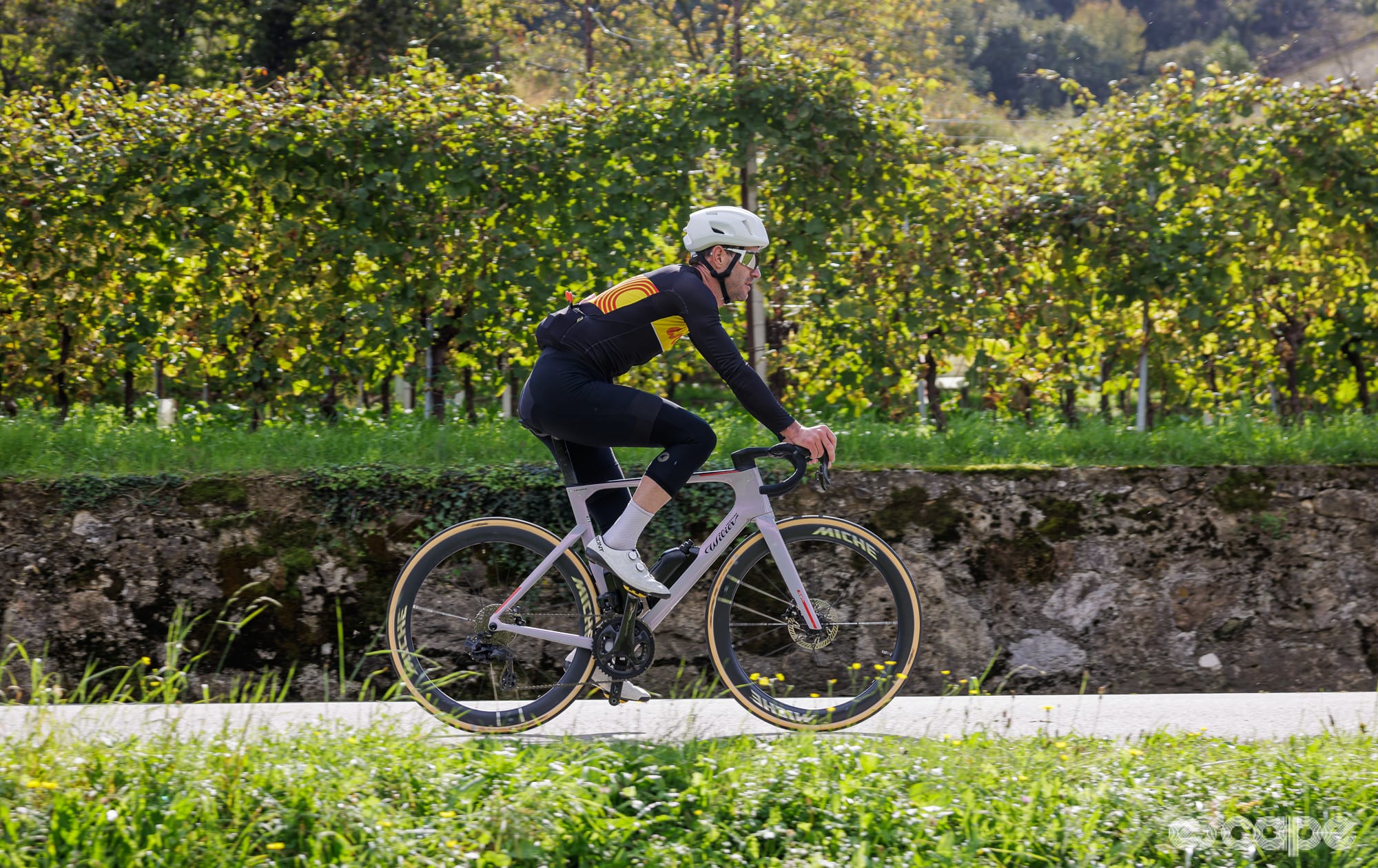
I’ve had the Filante for three weeks. I’ve ridden it up and down stunning Italian climbs, through vineyards, and taken it home to ride through farmyards. I’ve used it on club runs, coffee rides, and tested it on endurance rides, VO₂ intervals, and all-out efforts. I’ve swapped between the new aero bottles central to Wilier’s aero claims and regular round ones, dropped the bars and peered inside the headset. I’ve got a feel for the Miche Kleos RD wheels that now come as Wilier’s in-house race spec. It’s a bike I’ve lived with to understand its place in the new landscape of aero and “hyper” race bikes.
The more I’ve ridden the Filante ID2, the more I’ve revisited that old Geek Warning question and whether the balance has shifted. After several years of many consumers using bikes optimised for pros, are more pros about to be using bikes restrained for consumers?
Key to it all is Wilier’s challenge. It didn’t set out to build the absolute fastest bike possible and sell it, but to build a bike that sells and still be suitable for the fastest riders in the world. You could argue that’s always been true for most brands, but rarely, if ever, has it been more relevant, now at the dawn of the hyperbike era.
What’s new?
The headline numbers first: Wilier claims the new Filante ID2 is 13.6% more aerodynamic than its predecessor in the wind tunnel without a rider. With a rider, Wilier claims it maintains an impressive 4.5% improvement over the outgoing bike-and-rider system.
Did we do a good job with this story?