

It feels like the chrome has barely set on the new SRAM Red AXS E1 road groupset yet here we are with a review of another top-tier dropbar groupset from the American company. This time, it’s the much-anticipated Red XPLR AXS E1 1x group for all-road and gravel pursuits, and there’s a whole lot to talk about here.
SRAM has merged bits and pieces of its road and mountain bike tech to create a groupset that brings a number of new concepts to the dropbar world. The "too long; didn’t read" version is that the new Red XPLR groupset eliminates the traditional derailleur hanger by using the Full Mount interface of SRAM’s mountain bike Transmission systems. It uses the new and greatly improved braking of the new Red AXS levers. It’s 1x-specific and introduces a 13-speed cassette with a 10-46T range that aims to better match the tighter gear gaps afforded by 2x systems. A replaceable 1x chainring solves a complaint present in the Red road power meter. There’s still a surprising amount of backward compatibility and interchangeability in the wireless system. And it all works impressively well.
Obviously, Red XPLR AXS is priced sky high, but I’m willing to bet 100 quality 5 mm hex keys that the technology and concepts released here will quickly trickle down to more attainable price points. Or to not let a bad pun go to waste, SRAM will be transmissioning in this direction. This stuff is going to look quite normal in a few years.
This article is an in-depth explainer and review. Before we dig into the details, it’s worth noting that this new flagship gravel groupset release coincides with Zipp’s new line of extremely wide gravel race wheels. There’s also a new matching handlebar. See our coverage of the new Zipp XPLR line for details and ride thoughts.
Bad stuff: Still not wide enough range for all forms of gravel, derailleur is forever locked into the 10-46T size cassette, brakes have a lot of freestroke with lever reach brought in, new derailleur won’t fit a lot of gravel bikes in use, US$600 cassette, DUB cranks get real tight to remove.
Note: The new SRAM Red XPLR AXS has the same name as the groupset it supersedes. To help differentiate the generations, SRAM uses an alphabetical coding system. The previous Red AXS generation is known as “D1,” while this latest stuff is coded as “E1.”
From the road side of things
The new Red XPLR AXS group has some brand-new and unique components to it, but in many ways, they’re parts and concepts we’ve seen (and covered) before.
Despite being at a SRAM road product launch just a few months ago, SRAM did a good job of keeping the media in the dark about this XPLR release. Still, in reviewing the new Red AXS road group, it was clear that the new shifters and brakes also offered significant advantages for gravel riders.
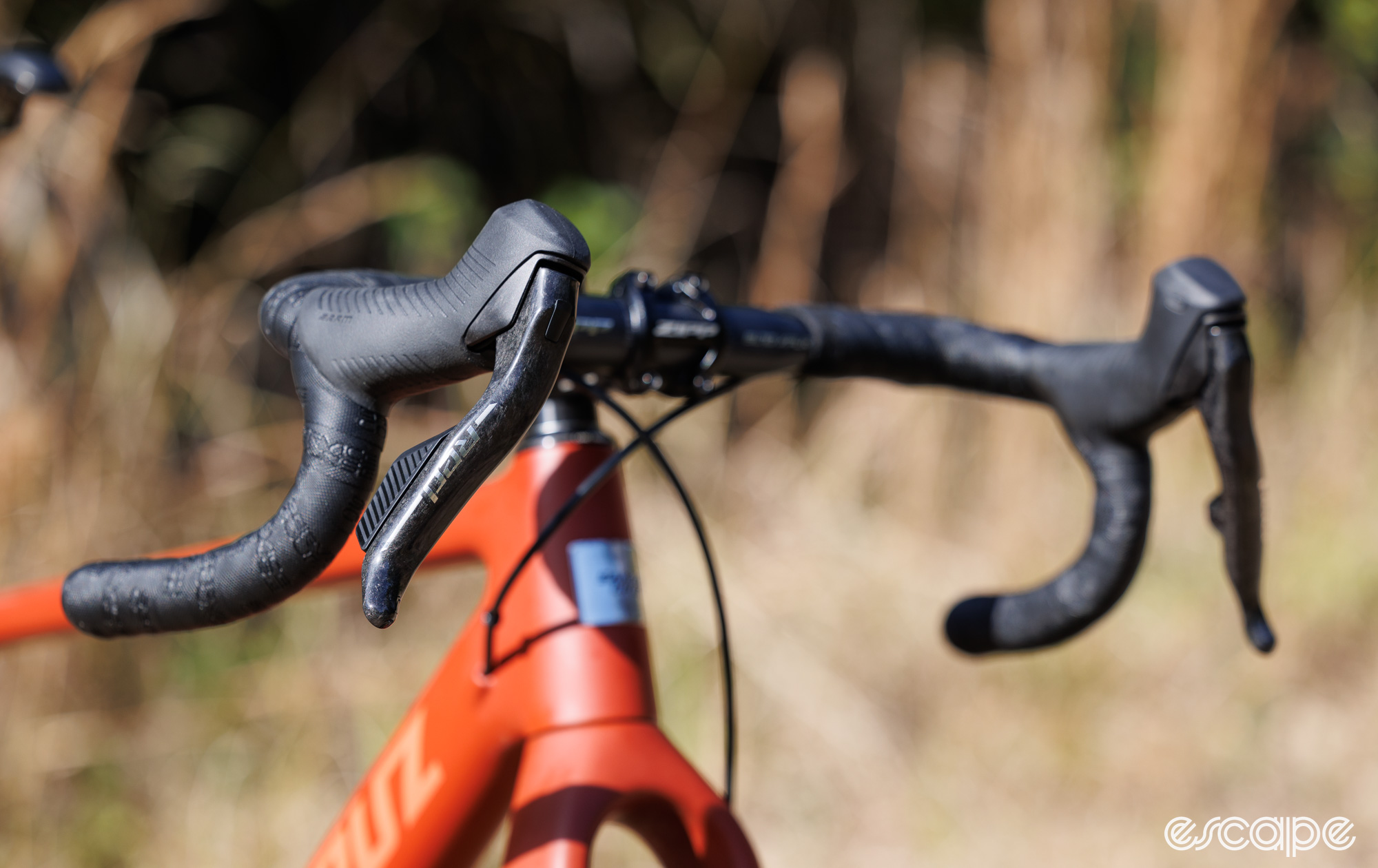
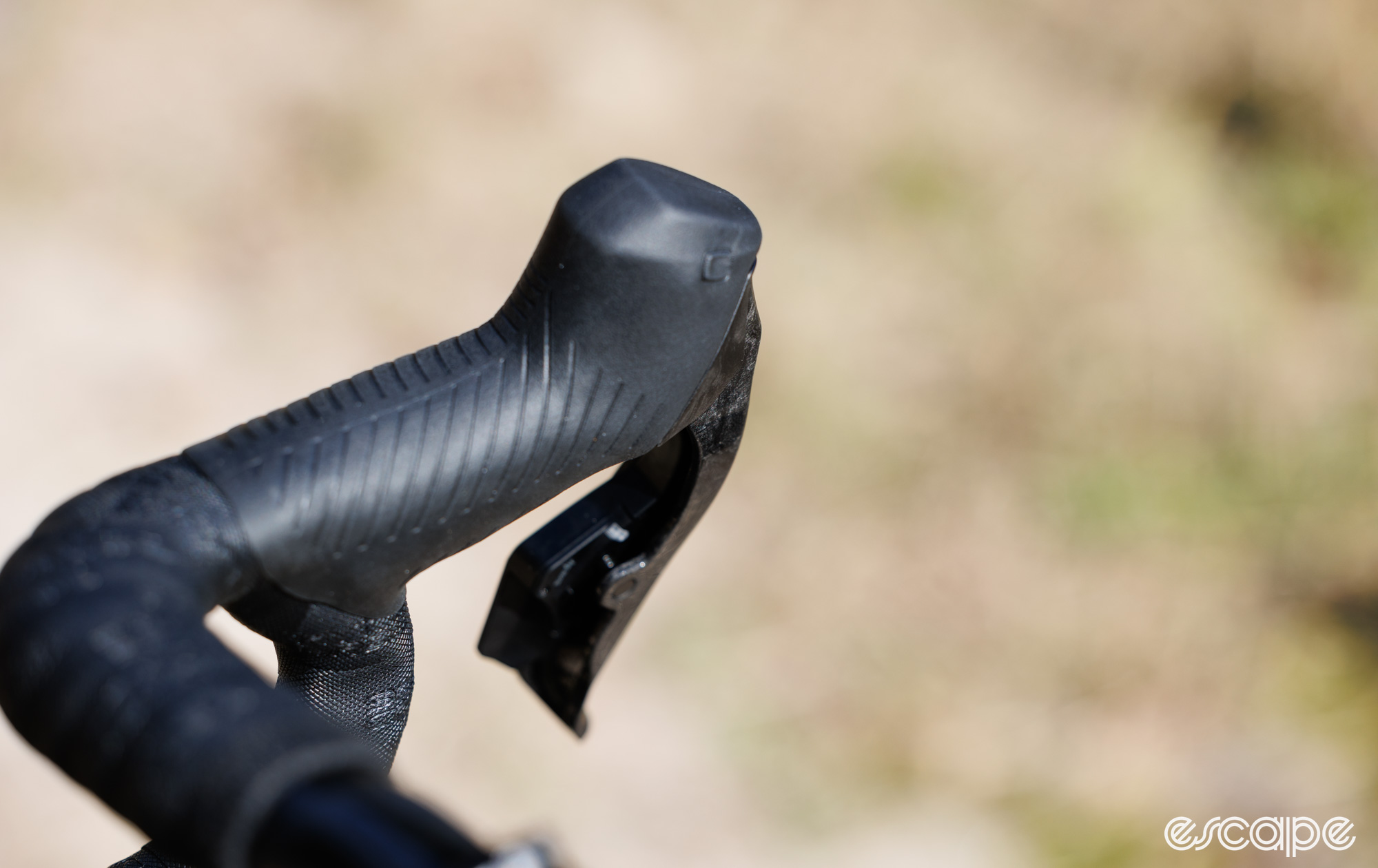
As previously covered, the biggest and best update in SRAM’s recent Red AXS road groupset release was the overhauled shifters and brakes – pieces that are now shared with the new Red XPLR. To quickly recap, the company wholly revamped the external shape and internal structure in order to move the brake master cylinder piston from an inefficient vertical position to one that runs horizontally through the lever body and works much like a mountain bike brake.
Along with some revisions in the shiny new brake caliper, the new brake is said to require just 1/5th of the effort when braking from the hoods, and 1/3rd of the effort when in the drops. The difference in lever effort is truly night and day, plus the general lever feel and power are now more consistent (linear), too.
These levers also got an ergonomic overhaul with more length for the palm (beware the 5 mm increase in hood reach), more lever angle to suit modern dropbar shapes, and simpler lever-reach adjustment. SRAM also added customisable bonus buttons for your thumbs to activate on the inner side and near to the top of the hood – out of the box they’re set up as an additional shift button, but you can change them to control cycling computers or an AXS dropper post.
The new hoods/brakes stick with DOT-5.1 brake fluid, use the same brake pad shape as before, are still powered by a CR2032 battery, and remain backward compatible with all SRAM AXS wireless derailleurs, including previous road, XPLR, and mountain bike models. I encourage you to read my recent review of the Red AXS 2x road groupset if you wish to know more about these.
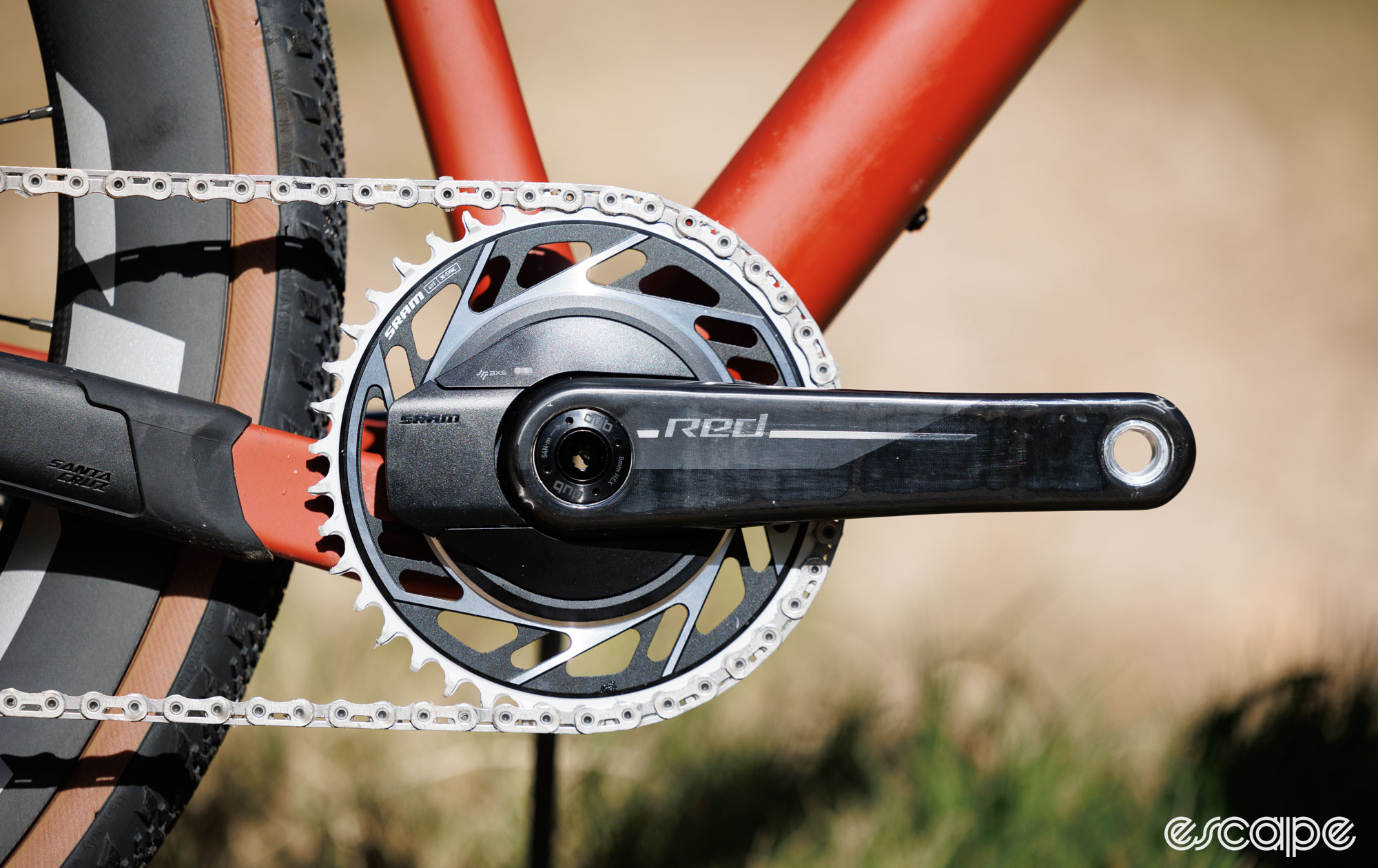
The lightened disc brake rotors and carbon crank arms (but not crankset) are now also shared between Red AXS (road) and Red XPLR AXS (gravel). Those crank arms drop approximately 30 grams from the previous version, while introducing an increased range of lengths covering 160, 165, 167.5, 170, 172.5, and 175 mm.
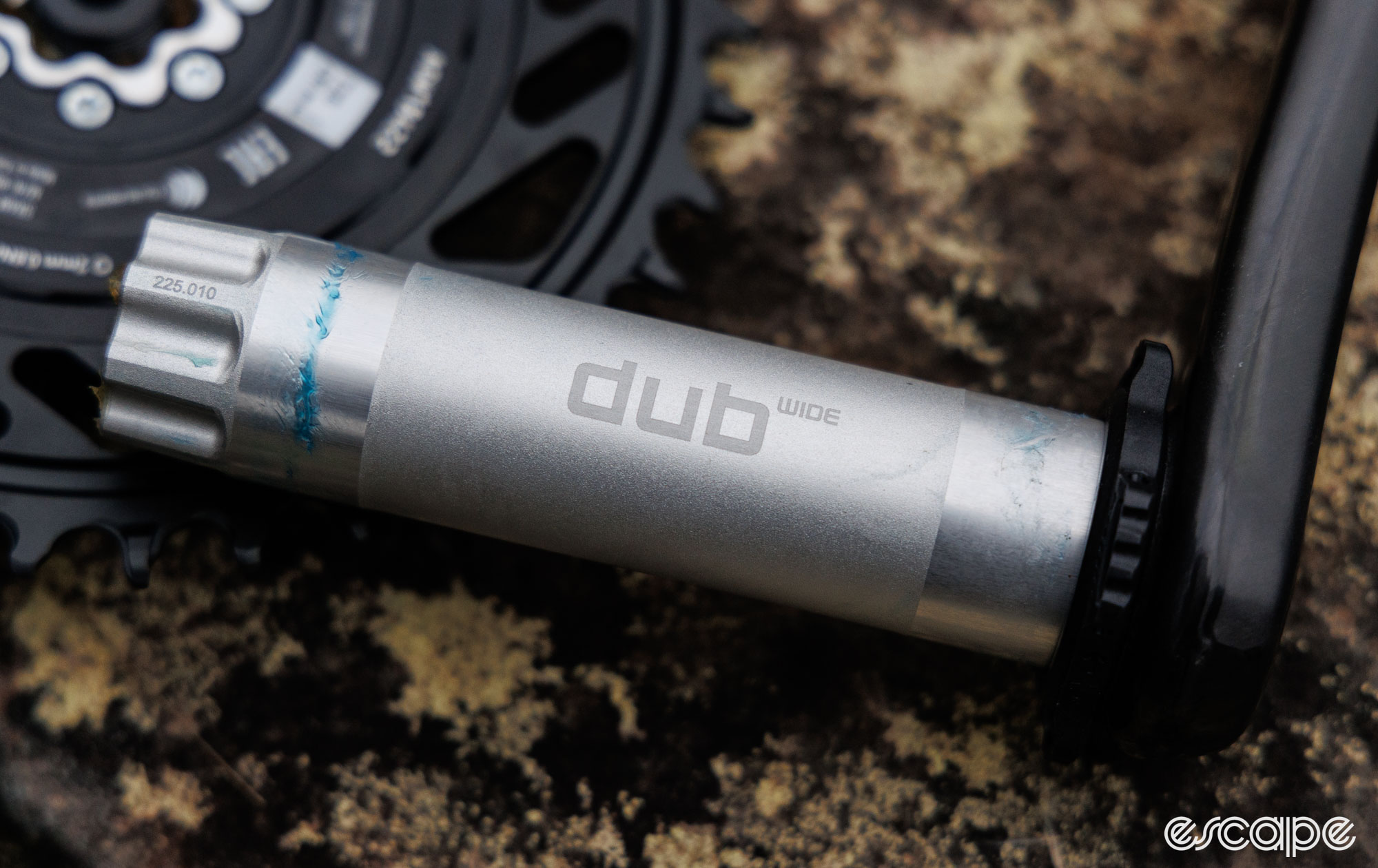
Where the Red XPLR AXS crankset does differ is in using SRAM’s ‘Wide’ (now called XPLR) axle width, which the industry is increasingly adopting to afford more tyre clearance on gravel bikes (Shimano has done similar with its GRX). This increased width moves the chainline out from 45 mm (SRAM road) to 47.5 mm. Meanwhile, the Q-factor grows from 145 mm in the road crank to 150 mm for this XPLR version. There are no changes to the DUB bottom brackets.
Despite Red XPLR going 13-speed, it uses the identical 12-speed Flat Top chain to Red AXS. Now at 126 links, this chain features the newly lightened design already seen, and SRAM is updating the packaging of the chain to show its 12- and 13-speed compatiblity. SRAM claim you must use the road version of the chain, but there’s seemingly little stopping you from using a SRAM T-type Transmission mountain bike chain in a pinch.
How did SRAM manage to keep the chain dimensionally the same while adding another cog? That is made possible by the new Full Mount rear derailleur …
From the mountain bike side of things
In early 2023, SRAM had one of its most significant releases with the introduction of its Eagle Transmission systems. Transmission introduced a bunch of new tech, but none more notable than the Full Mount system that sees the derailleur sandwich the open frame dropout in place of a Universal Derailleur Hanger (UDH). To rewind further, SRAM had spent the prior few years encouraging mountain bike brands to adopt its UDH standard, claiming one derailleur hanger to rule them all is better for consumers (it is), but really they were laying the path for a new shifting system.
That Full Mount derailleur design brought along a few benefits. Firstly, there is no longer a derailleur hanger to bend or break in the event of a crash, dropped bike, or angry baggage handler. In the event the derailleur does get hit, it’s designed to pivot backward or shift inward, while the derailleur itself is incredibly robust, can take an actual kicking, and is largely repairable. That Full Mount then makes for a stiffer interface to handle heavy shifting loads. And with the position of the derailleur and cassette locked in by design, the setup is easier than ever and requires only simple tools.
Over the past couple of years, we’ve seen a number of gravel, all-road, and even pure road bikes begin to adopt the UDH standard. We’ve seen this trick play out before, so it was only a matter of time before we saw the Full-Mount derailleur arrive in the dropbar world. Indeed, that’s exactly what the new Red XPLR AXS does.
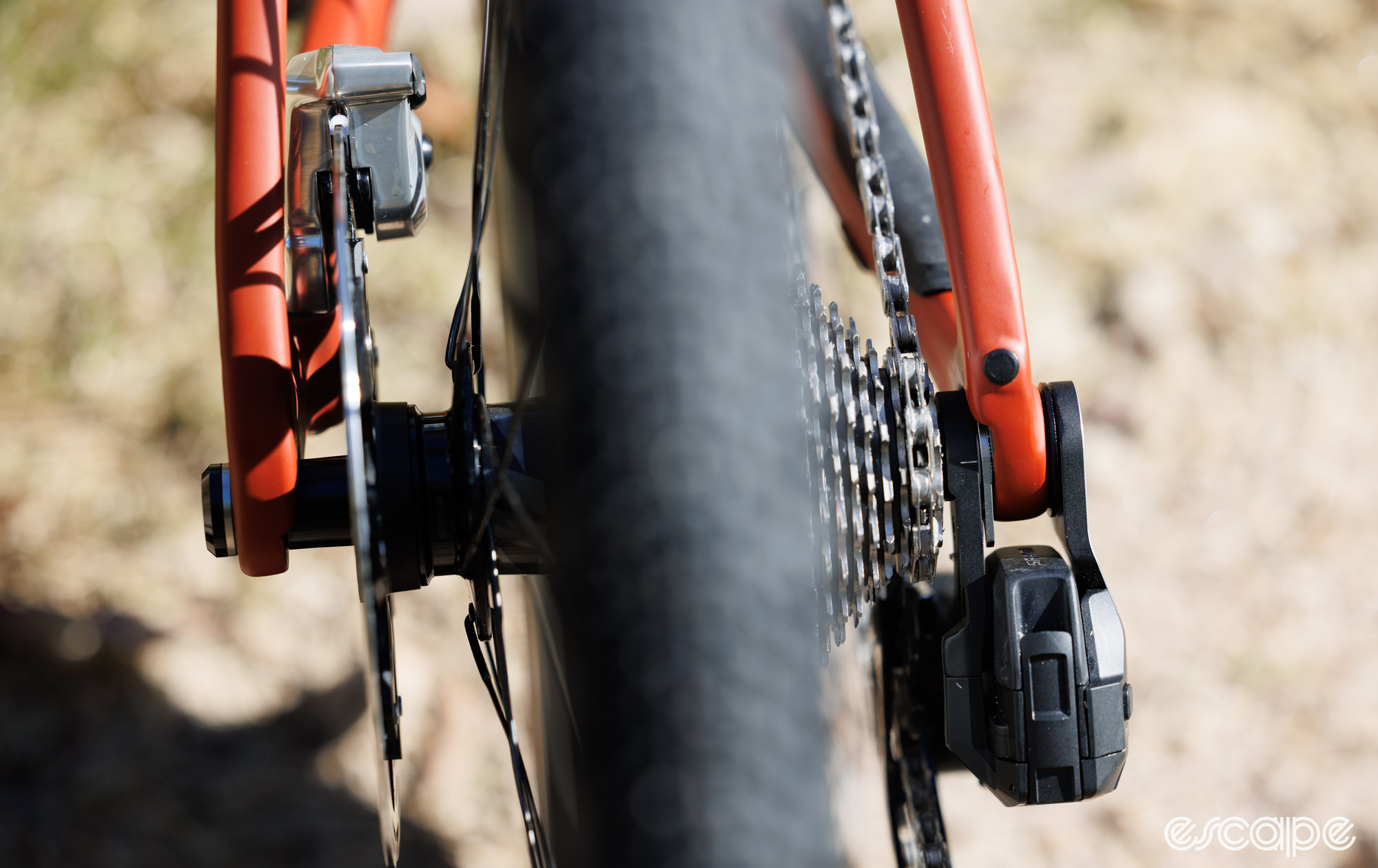
In order to run the new Red XPLR groupset you must have a frame with a UDH – a requirement that rules out compatibility with a huge number of bikes out in the wild. SRAM then requires gravel frames to have a minimum chainstay length of 415 mm, and that the chainline is 47.5 mm (provided by SRAM’s XPLR/Wide cranks). Alternatively, the system can also be equipped to road and all-road bikes with 405-415 mm chainstay lengths if accompanied by SRAM’s Aero road 1x crank (45 mm chainline).
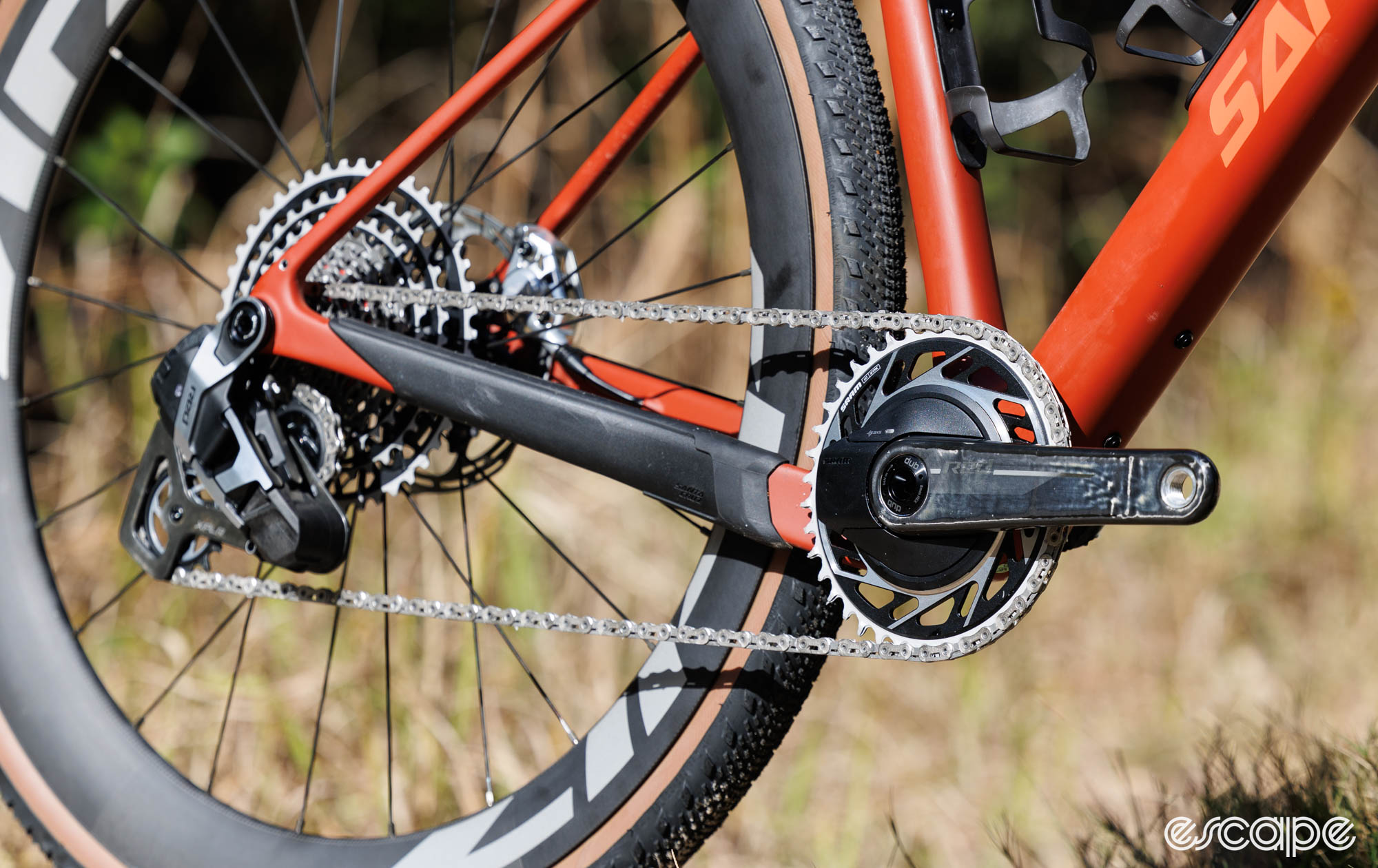
The mountain bike Eagle Transmission derailleur is specifically matched to the 12-speed 10-52T cassette and a single chainring up front. Meanwhile, the new Red XPLR derailleur is also locked into a specific size of cassette and for use with only a single chainring up front, however, it takes things to 13-speed and tightens the range to 10-46T.
You can use the mountain bike Transmission derailleur and cassette on a UDH-equipped gravel bike, however, it doesn’t go the other way around. The new Red XPLR Full Mount derailleur is a dedicated gravel and related dropbar product, based on a 142 mm axle width, that narrower chainline, and not designed with mountain bike rear suspension in mind.
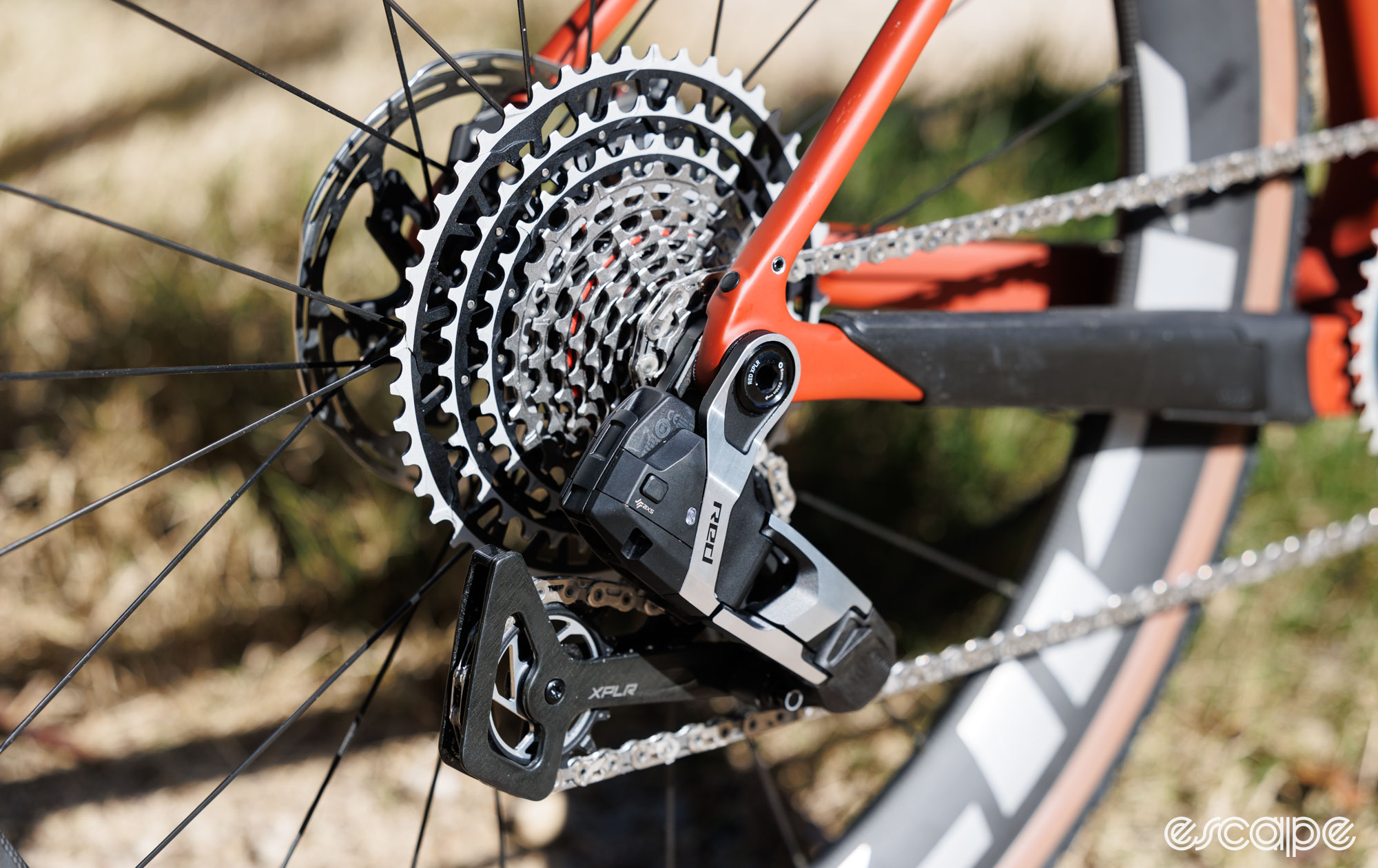
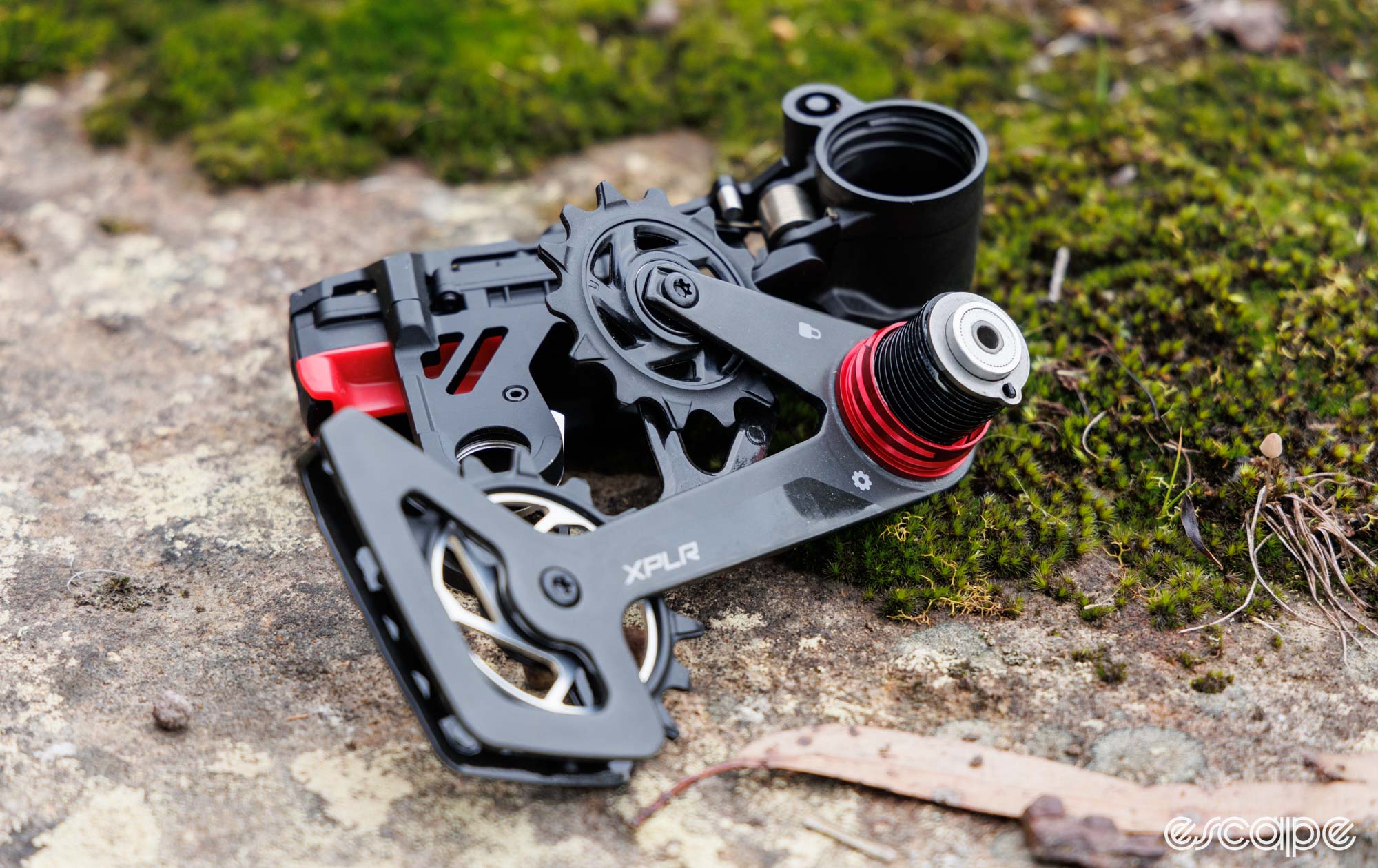
Subtle differences continue with the spring-based clutch mechanism (for chain retention) being similar to what’s found in Transmission derailleurs, but with a lighter spring for efficiency gains and reduced weight. Still, SRAM claims this offers better chain retention than anything it's previously made, excluding Transmission, of course. The aluminium body of the derailleur is further lightened compared to the mountain bike offerings, and the full carbon cage assembly is shorter (by approximately 10 mm, measured from the Full Mount/dropout). However, it’s still fairly enormous when you put it side-by-side with a previous 1x12-speed XPLR rear derailleur.
An old demo of some of the features in Transmission that are now shared in Red XPLR AXS.
Other elements are identical to Transmission. The battery remains the same as all other SRAM wireless derailleurs (and droppers posts and Flight Attendant suspension). The entire pulley cage assembly and accompanying clutch still screw into the derailleur body without tools, making future replacements an absolute breeze. The battery clip and outer parallelogram plate remain replaceable parts in the event you do something horrific. Borrowing from the latest GX Transmission derailleur, the battery also sits in a better-protected horizontal position. The oversized pulley wheels (16T lower) are identical to those used in the XX SL derailleur. And as shown in the video above, this includes the “Magic Wheel” feature that allows the chain to keep moving in case a stick finds its way through the open pulley. And there’s still the cage lock for simple wheel removal without a fight with the derailleur’s clutch.

Moving away from the derailleur, the crank arms may be the same as the recently released Red AXS road, but the powermeter is most similar (although not identical) to SRAM’s XX SL mountain bike offering. With this comes great news in that the single chainring is not an integrated piece of the power meter (unlike the 2x road power meter), but rather is fancily threaded into place. Just like the XX SL system, the “Threaded Mount” is an incredibly neat and reliable connection between the power meter and chainring, with the only obvious downside being that a special tool is needed (or at least strongly advised) to replace the ring.
Did we do a good job with this story?