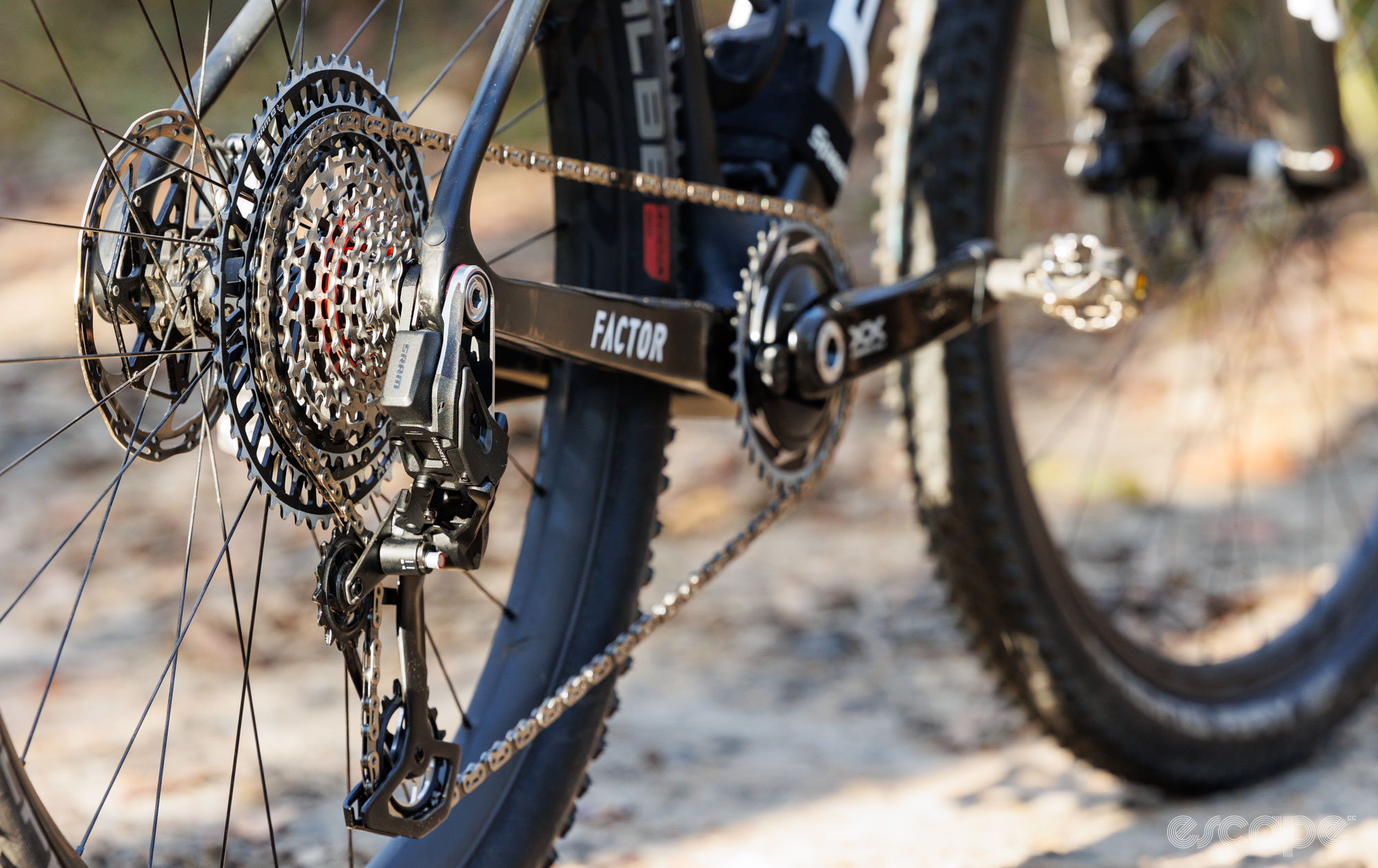

SRAM’s freshly announced Eagle mountain bike transmissions are a gamechanger for derailleur-based systems. That’s not hyperbole put forth by a marketing team. What else would you call a rear derailleur that takes the place of the frame’s bendable derailleur hanger and aims to solve almost all common setup issues? And most impressively, it’s a fitment design that SRAM has already, sneakily, managed widespread industry adoption of.
Today SRAM officially unveiled its XX SL, XX, and X0 AXS 1x12 speed groupsets which all share the same direct mount derailleur concept, 10-52T gearing range, and insanely smooth shifting under immense load. I’ll walk you through this new technology, how we got here, what this could spell for future products (including road and gravel), and why I’m rather blown away by it, as, after all, I’ve been riding the top-tier and lightest XX SL version in my spare time (which I’ve had plenty of recently).
This is a big product release with a lot to talk about. If you prefer audio, then be sure to check out my dedicated Geek Warning podcast episode with Lachlan McKillop of SRAM’s technical communications team, where we discuss how this new system works and the features it offers.
Before we continue, a quick summary:
The short of it: SRAM's latest mountain bike groupsets spell the end of the rear derailleur hanger.
Good stuff: New benchmark in shifting under load. Simplest setup and ownership. Ultra robust design. Integrated powermeters. More repairable.
Bad stuff: Shifter ergonomics. Locked into UDH frames and a 10-52T cassette. Weird chain compatibility. More replaceable than serviceable. High pricing on wear parts. DUB cranks are still hard to remove.
How we got here
Look at your derailleur-based bike, and you’ll see the rear derailleur is bolted to a dropped hanger that belongs to the frame. Recent decades saw the derailleur hanger commonly become a replaceable component, and more fragile bike materials were commonly fitted with a hanger made from a softer material to act as the sacrificial lamb in the event of damage. As more gears were added to our bikes – often with the power of electric motors and greater leverage for bigger cogs – the more stress was put on the system, making it critical that those hangers were strong and remained dead straight.
As recently as 2018 we had no standards for these replaceable derailleur hangers. Bike mechanics around the world have drawers of spare hangers, but inevitably, it’s near impossible (or at least financially wasteful) to keep stock of them all. And so here we are: there are businesses dedicated to manufacturing, stocking, and selling the hundreds of different derailleur hanger shapes and sizes in existence and there's little sign of the problem slowing. That was until SRAM strolled into town like something out of a fairytale.
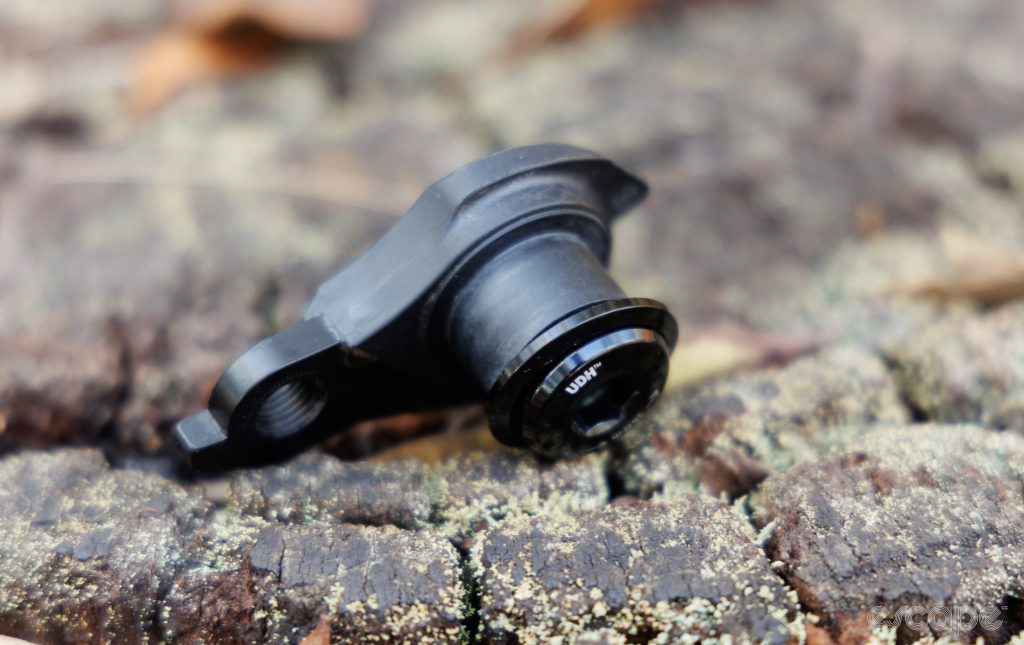
In 2019 SRAM publicly revealed the Universal Derailleur Hanger (UDH). It was a low-cost hanger made of polymer material that sought to unify the derailleur hangers found on mountain bike frames moving forward. Based around a 12 mm thru-axle and a consistent axle thread pitch, the UDH promised improved shifting stiffness, a way to pivot in case the derailleur took a knock from the front, and also gave a little shelf to help push the chain back onto a 10T cog. Better yet, it was backward compatible with all prior derailleur-based systems. All that was required was for frame manufacturers and bike brands to adopt it. And adopt it they did. There has barely been a new mountain bike released in the past two years that doesn't utilise the UDH standard.
SRAM earned plenty of praise for what at first just seemed like a goodwill gesture to unify the industry. And then the leaks started to occur. Patent documents were revealed of a derailleur that sandwiched the frame dropout, then spy shots of riders on prototype direct-mount derailleurs surfaced, and then the biggest races in the world were won on the stuff. Soon it was evident that the UDH was a placeholder for something bigger, more robust, and much more integrated.
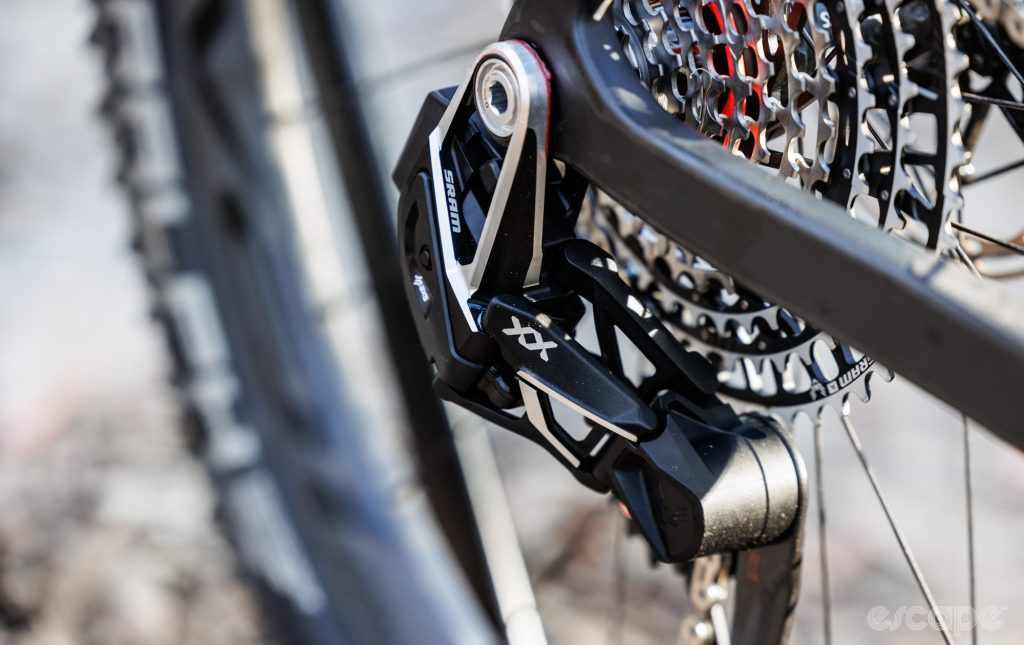
OK, so the concept of directly mounting a rear derailleur isn’t new. Shimano had a real crack at it in 2003 with its Saint downhill range with the derailleur mounted off a protruding rear hub axle. Even as recently as 2012 we saw Shimano pushing the concept of a direct-mount derailleur that offered a stiffer and more robust interface. However, while that most recent iteration saw some uptake (and more of it on the road in recent years), it’s a far cry from the singular-shape frame integration that SRAM’s UDH achieves.
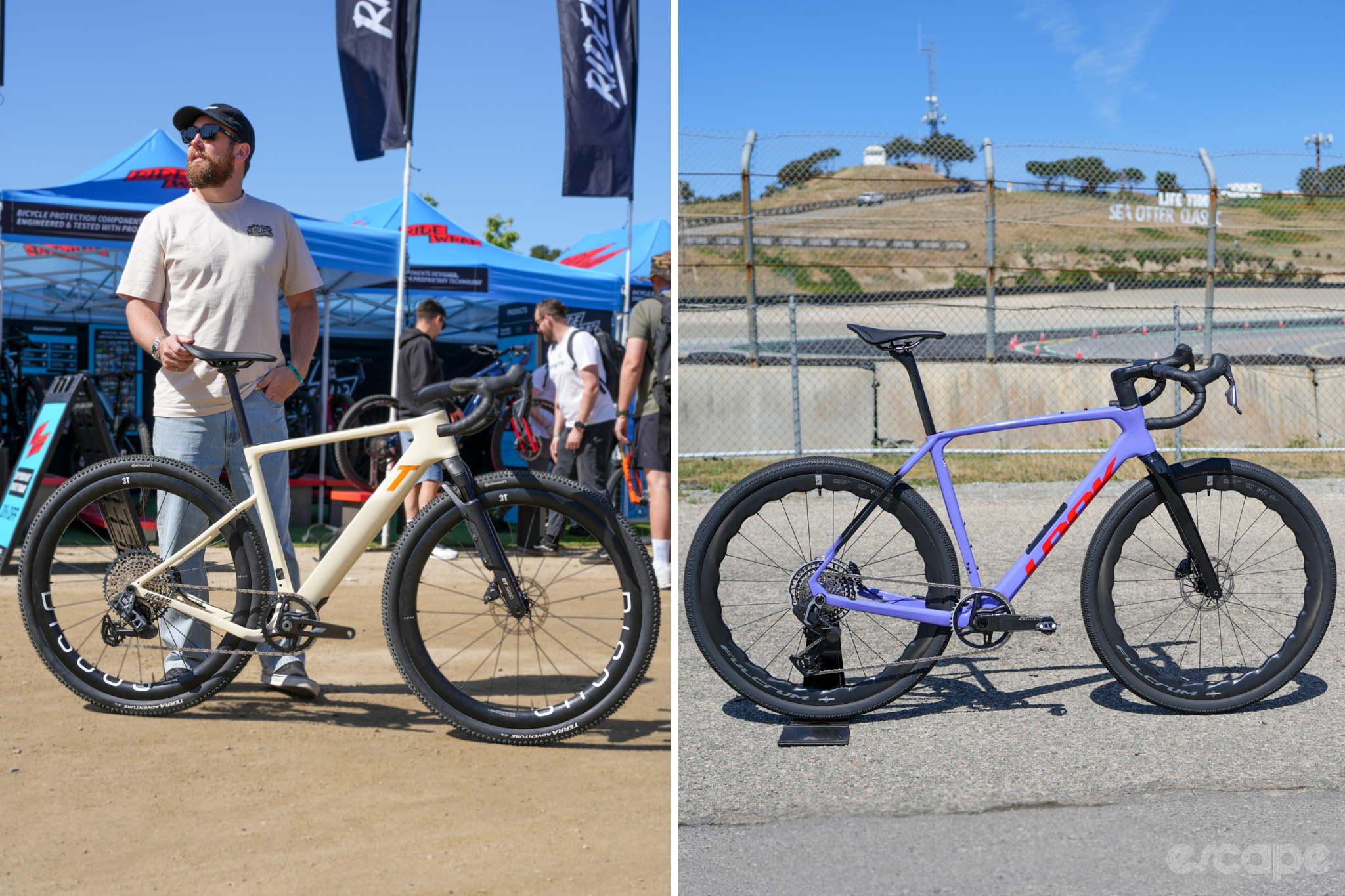
The list of official SRAM-approved UDH-compatible bikes is immense – there are even a few gravel bikes starting to appear on there, such as the Enve Mog and YT Szepter.
Old meets new
Whether you’re looking at the new XX SL, XX, or X0, these new Eagle transmissions offer an interesting mix of old and new. And yes, ‘transmission’ is SRAM’s wording.
Did we do a good job with this story?