

The cycling industry is bracing for yet another tariff escalation in a year when there's barely been a moment of respite. The latest proposed fee could add substantial costs to almost any bike imported to the US, regardless of country of origin. And in a twist, it's driven partly by an American bicycle company.
 Suvi Loponen
On 7 October the US Department of Commerce (DOC) began taking public comment on fresh additions to the so-called Section 232 steel and aluminium "derivatives" lists, and buried among 95 requests are two directly affecting the bike industry: filings from Guardian Bikes and the Aluminum Extruders Council (AEC) to apply a new 50% duty to the metal content of complete bikes and frames. The AEC also proposed higher duties on certain e-bikes. The tariffs would fall on top of existing duties.
The filings land in an industry landscape already riddled by uncertainty; a series of tariff changes that began in early spring and have arrived, disappeared, and been reintroduced at short notice and at varying rates. Now Guardian, a children's bike brand with an Indiana factory, is asking for a levy that would fall, in the main, on imported competitors' content. People For Bikes, a trade association representing the wider industry, said the proposal would be "crushing" when stacked on top of existing duties and surcharges, and essentially, only drive up the consumers prices. In a move that underlines the industry's sense of alarm, PFB issued a call for brands and retailers to submit comments opposing the proposal.
Bike tariffs in the name of national security?
These proposals are not yet approved and remain open for public comment until 21 October. After the comment window closes on 21 October, DOC can adopt, amend, or shelve them. At the time this story was published, the AEC docket had over 2,000 comments, and the one submitted by Guardian Bikes hovered at near 500. By contrast, many of the other 93 requests on the same list had no comments at all, which is likely a direct result of the PFB call to action and is an indicator of how much these tariffs would impact the industry.
The Trump administration has used a variety of ways to levy tariffs. But with the US Supreme Court set to decide the legality of the economic emergency (IEEPA) avenue, the administration has shifted to focus on the Section 232 tariffs. That authority permits tariffs on steel and aluminium for national-security reasons and is less subject to judicial oversight; over the past year, ever more finished goods that contain those metals have been swept into scope through so-called derivative lists. For bikes, the inclusion on this list would not mean an automatic 50% price or cost increase; rather, the duty is calculated on the declared value of their steel and aluminium content. But it would likely still result in significant cost increases.
 Suvi Loponen
As Bicycle Retailer and Industry News reported, there is widespread uncertainty around the actual calculation of these tariffs. If the metal content is interpreted as the price paid for each finished component – not the cost of raw commodity inputs – the vast majority of a typical bike's value is affected. On an alloy or steel bike, almost everything but tyres, tubes, saddles, and grips includes steel or aluminium. Even on carbon bikes, there's a significant amount of steel and aluminum in parts like drivetrains, brakes, and even spokes.
That added cost, added on top of the already existing base bike duties, China-specific Section 301 tariffs, and the administration's other surcharges, easily stacks the prices up more than any brand could absorb.
Take, for example, a US$1,800 aluminium bike with 35% metal content. A 50% levy on that portion alone adds roughly US$315 – before base duties and any country-specific surcharges. If enforcement counts processed components rather than raw inputs, the taxable 'metal' share rises, and so does the bill.
"If we're paying a 50% tariff on the BOM (bill of materials) cost of those components on top of the 20% tariffs already implemented, we're done," Ibis co-founder and CEO Tom Morgan said in an email response to Escape Collective. "I'm not talking about Ibis. I'm talking about the US bicycle industry, brands, and retailers."
Guardian's case and the industry response
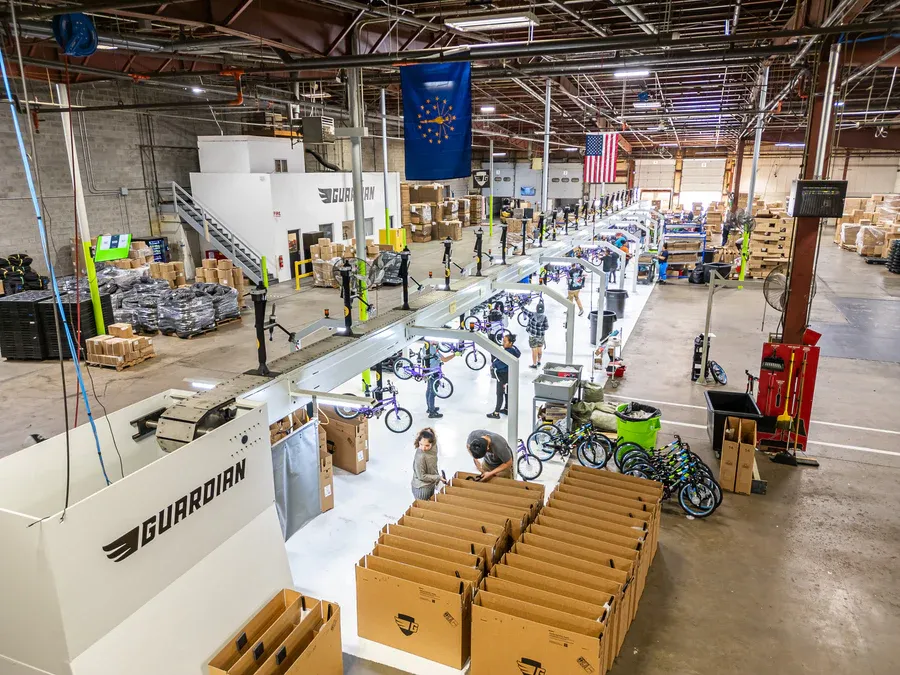
Guardian's filing is the most charged element of the story, as Section 232's purpose (in statute) is to let the US restrict or adjust imports that "threaten to impair national security." As People For Bikes notes in its response to the proposed tariffs, "Bicycles and electric bicycles are used for recreation and transportation. They are not made, used or necessary for national security . About 85% of bicycles imported into the United States are children's bicycles with no strategic value whatsoever."
Did we do a good job with this story?