

Welcome back to Threaded, the tool column for all tool nerds, bicycle mechanics, and DIY enthusiasts. This is the third and final edition of the cartridge bearing (not so) mini-series.
Part one looked at best practise methods for removing cartridge bearings. Part two was all about finding the correct size and measuring the various types of cartridge bearings found on bicycles. And now, we’re ready to cover the processes and tools for installing cartridge bearings – lessons that doubly apply to press-fit bottom brackets and headset cups.
While some of these tasks covered may be best left to professionals, as usual with Threaded, I’ll aim to offer insight relevant to the budgets and experience levels of home mechanics through to professionals.
Pressing principles
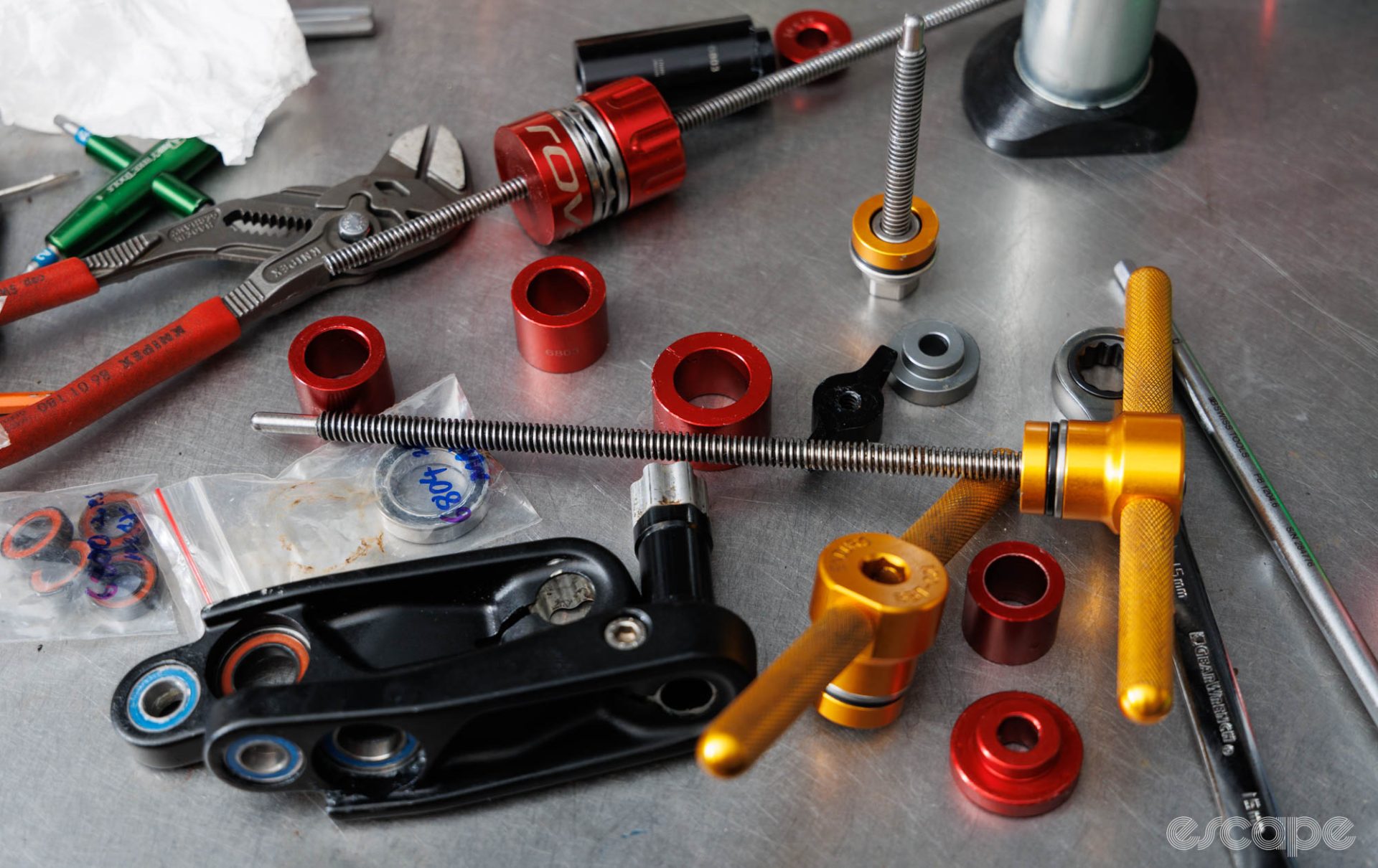
While removing bearings can be a tricky game of ever more specialised tools and creativity, the process of installing a cartridge bearing (or bearing cup) into its bore is often pretty simple and requires relatively affordable tools (even a trip to a hardware store may suffice).
In a magical world where all the bearing bores are made exact to tolerance and ideally square to each other, the process for installing a bearing into its bore is a relatively simple process. In this world where unicorns roam and housing is affordable, merely keeping the bearing perfectly straight is enough to ensure the bearing stays that way. Add pressing on the bearing from the right spot and you’re golden.
Pressing from the right spot will be dependent on how the bearing is retained and the axle design around it. Most bicycle components use the outer race of the cartridge bearing as the press-fit interface. Meanwhile, in rare instances, the inner race serves for the press-fit, such as with Campagnolo Ultra Torque cranks. You should always press in a bearing by the race that acts as the press-fit interface. It’s also often perfectly fine to press against both races, assuming that the fixed race is taking the load and the loose race is merely supporting alignment – this is the default method of most tools. Meanwhile, pressing solely on the “loose” race (typically the inner race) can damage the bearing and should be avoided.
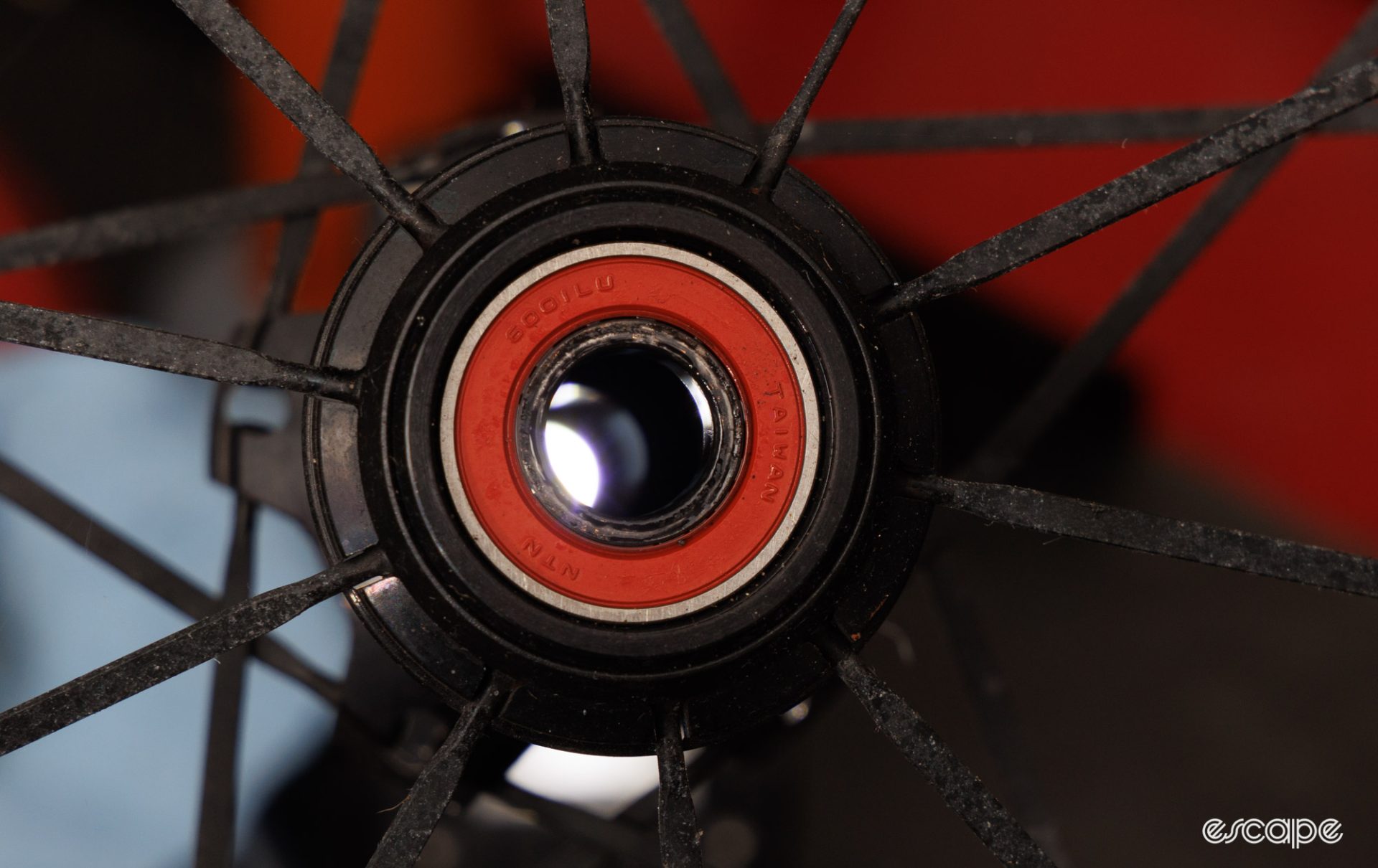
While sometimes unavailable, it’s always a good idea to consult directions from the component manufacturer. If a manufacturer calls for pressing of the bearing in a certain manner, then it’s likely for good reason. For example, some hub designs have an axle that sits proud of the bearing and, therefore, calls for pressing against the outer race with no contact to the inner race.
When installing a bearing it’s important you don’t force it into place. “It can be easy to strong arm/hand a press-fit interface, but having finesse and an easy hand when pressing can make a world of difference. The little pressure points of resistance are often communicating something,” said Paul Sollenberger, Head of Product Management at CeramicSpeed.
That increase in resistance may be the result of an undersized bore, but more commonly, it’s likely to be a bearing that’s going in crooked and likely damaging the bore in the process. Many higher-end bearings tools no longer provide big handles, and that’s simply because it shouldn’t take much force to install a bearing if it’s going in correctly.
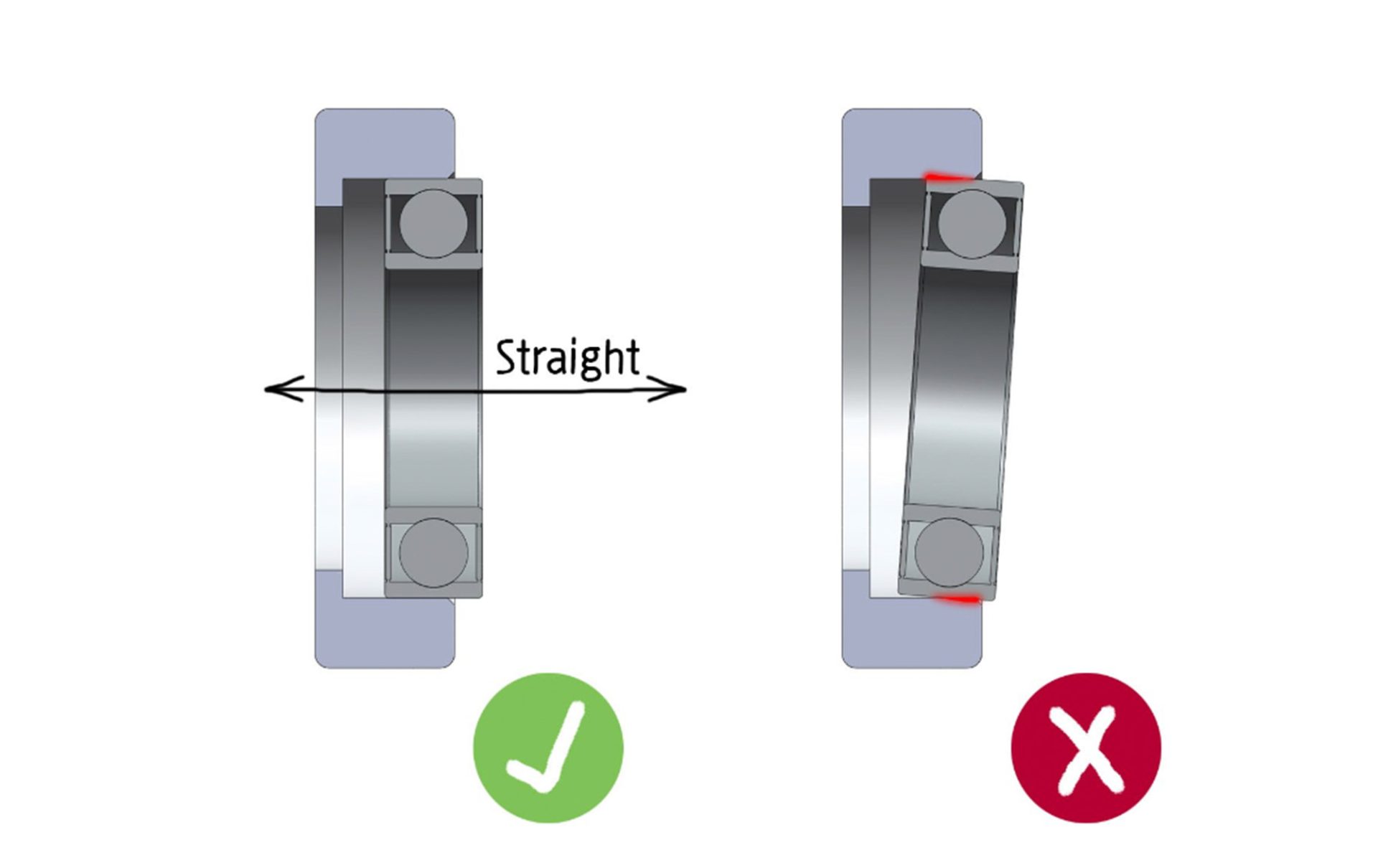
“When a bearing isn't going in square it will gouge material in the bearing bore. Remember, in many applications you are pressing a hardened steel bearing into a soft aluminum or carbon part; it doesn't take much to damage the part,” explained Jason Quade, founder of Abbey Bike Tools. “This will lead to a poor-fitting bearing that is more prone to creak and will usually reduce durability.”
Another general rule I always recommend is to press one bearing (or cup) at a time. You have a far greater chance of keeping the bearing square if leveraging against a surface (again in an ideal world) that is solid and perpendicular. Doing one bearing at a time also allows you to more easily focus on that all-important tactile feel for whether the bearing is going in correctly or not. Related, if the bearing press being used has a bushing, a thrust bearing, or a similar low-friction surface, then you want to press the bearing in from the side of the tool with this feature.
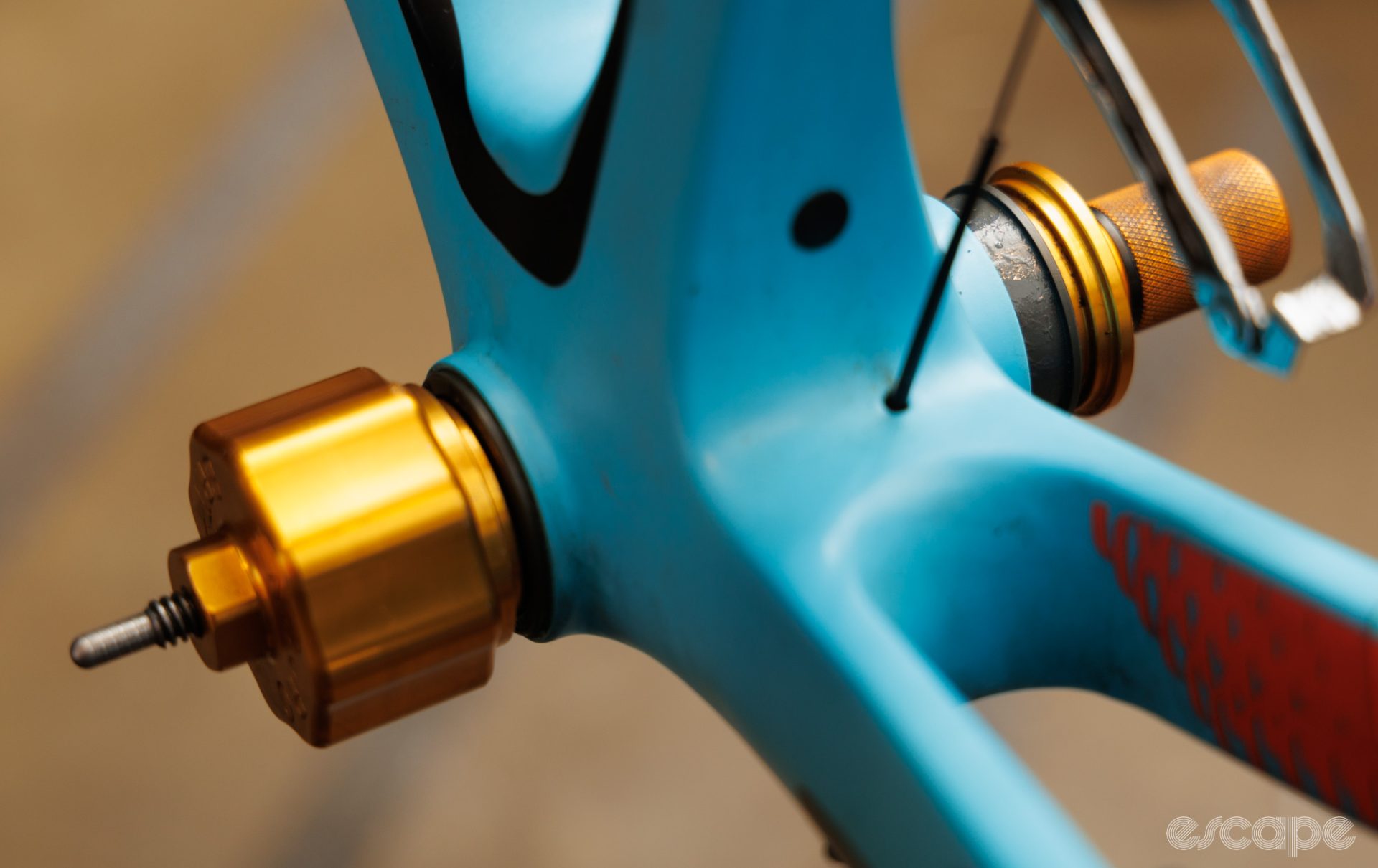
Boring numbers
How an old bearing comes out often indicates how a new one will go back in. Sometimes a bearing or press-fit headset/bottom bracket cup will come out without the aid of tools – providing a clear sign that the press-fit bore is out of round and/or oversized. Meanwhile, a bearing that feels rough when installed but perfectly smooth once removed indicates that the bore may be undersized. However, in most instances, the old bearing will come out smoothly, and you can breathe easy.
Bearing bore dimensions are complex topics, with ever more expensive specialist tooling to measure them precisely and with variance in what’s deemed acceptable or desired. Unfortunately, bad tolerances do exist within the industry, so it’s good practice to measure at least the bottom bracket and head tube bores before pressing in bearings (or cups).
On the assumption that you only have access to digital or vernier calipers, you can still get decently close to knowing whether the bearing bore is useable. “If you can insert the ID points of the caliper and then rock them back and forth a little bit until you feel them settle, you will usually get a close measurement. It can help to practice on something with a known measurement so you know what the correct dimension feels like,” said Quade.
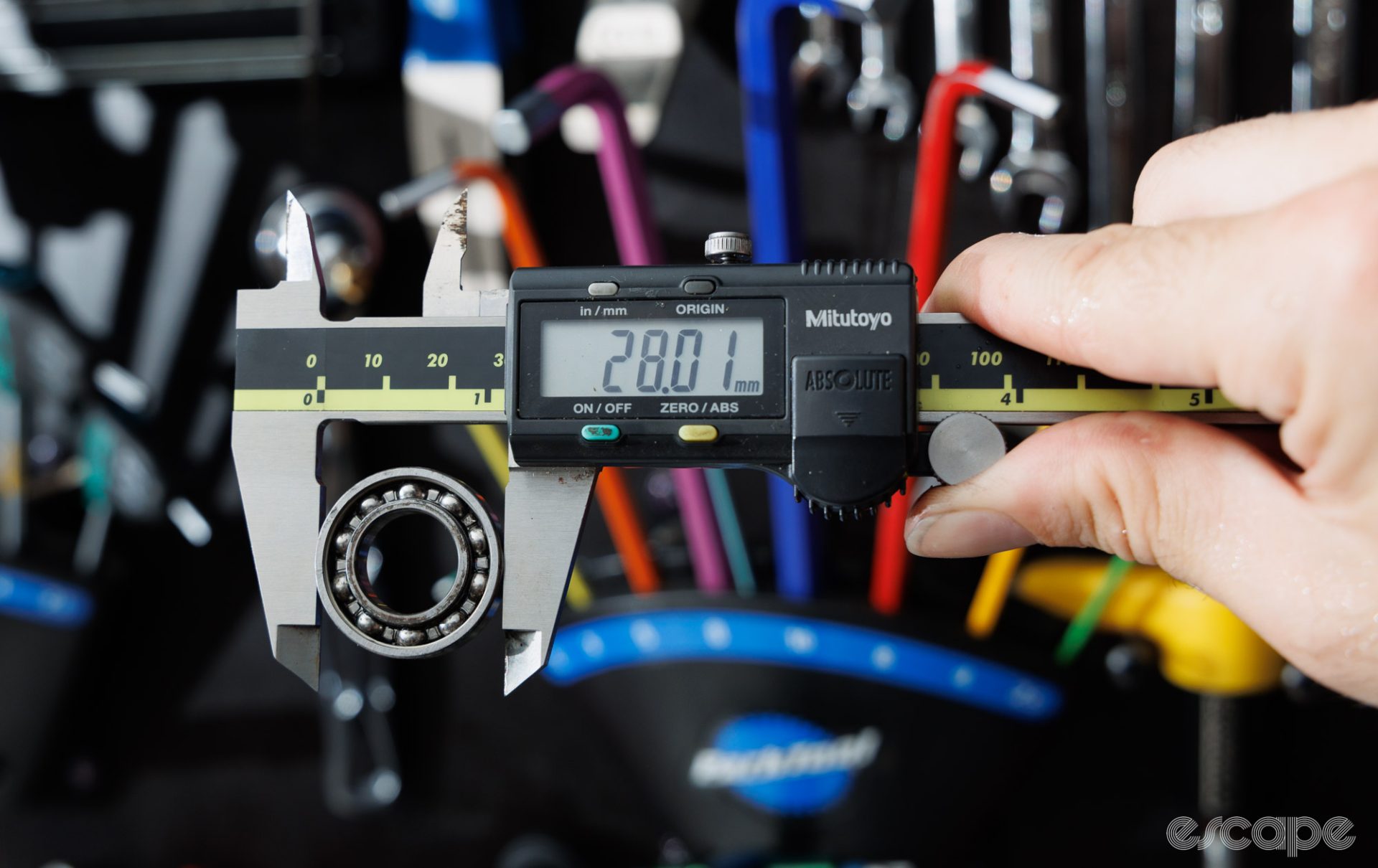
“The other thing about measuring bearing bores, especially those in headsets and bottom brackets, is how round the bore is," he added. "Because of the method of manufacture and the larger size, these bores are rarely round from the factory regardless of frame material. So taking measurements in multiple directions can give you a better understanding of what their nominal (average) diameter is. If you get a bore that's marginally egg-shaped, the bearing can usually tolerate it. However, if there’s a lot (.04mm or greater) of mismatch, the bore should really be corrected, especially in a bottom bracket where the bearings get circulated constantly.”
Did we do a good job with this story?