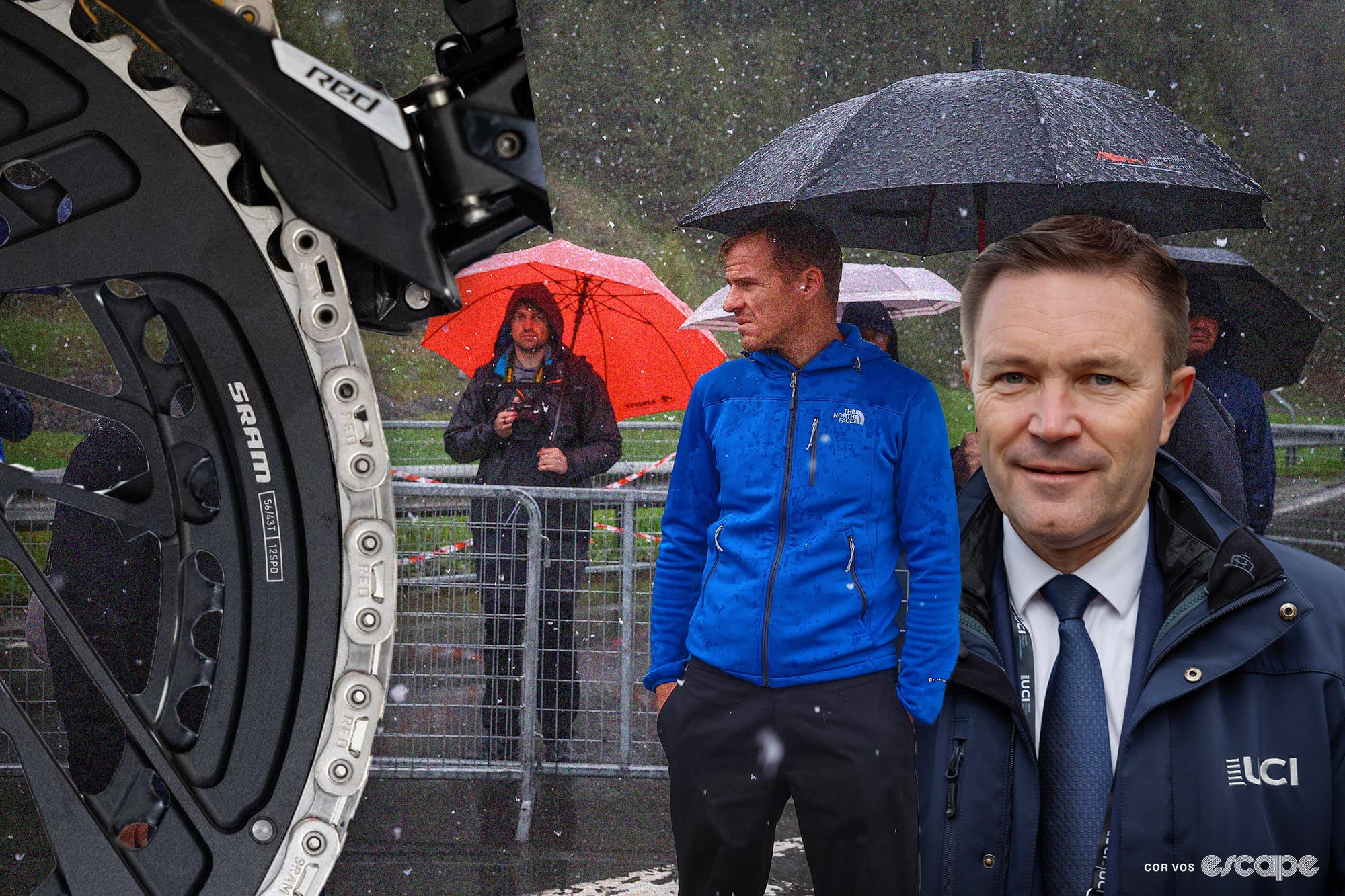

The Belgian Competition Authority (BCA) has ordered the UCI to suspend its new “Maximum Gear Ratio Standard,” a rule that would have limited the largest gear allowed in professional road races and triggered an escalating legal dispute with drivetrain manufacturer SRAM.
In a decision published Thursday, the BCA imposed urgent interim measures requiring the UCI to halt implementation of the rule, which caps gear rollout at the equivalent of a 54x11, no later than October 13, just one day before its planned debut at the Tour of Guangxi. In a statement released Thursday, the UCI agreed to do so.
The ruling marks a fascinating moment: a national competition regulator stepping into the governance of professional cycling, effectively overruling the UCI's unilateral authority to create technical regulations. It's a sweeping, comprehensive legal victory for SRAM with potential impacts well beyond 10-tooth cogs.
The BCA said the rule “generates disproportionate negative effects” on SRAM, the only major component supplier whose current equipment does not comply, and that the UCI’s adoption process “did not meet the required conditions of objectivity and transparency.”
While acknowledging the UCI’s role in ensuring rider safety, the BCA found that the federation’s rule-making procedures must still meet standards of “proportionality and non-discrimination,” according to the BCA statement, particularly when they carry “economic consequences” for equipment suppliers, which sat at the core of SRAM’s argument. The regulator concluded that the gear rule, as introduced, risked “serious and difficult-to-repair” harm not only to SRAM but also to the teams it equips.
The decision amounts to a temporary injunction against the UCI, preventing it from enforcing any gear ratio limitations until a new standard is drafted “based on a transparent, objective and non-discriminatory procedure,” or until a full ruling is delivered on the merits of the case.
The UCI and SRAM respond
The UCI issued its own statement on Thursday evening, confirming that the Tour of Guangxi gearing test “will not take place” as a result of the Belgian Competition Authority’s order. The federation said it would appeal the decision and consider revising the suspended protocol “to allow for the implementation of the tests desired by all stakeholders in professional road cycling.”
The UCI expressed “surprise at the intervention of a competition authority on a subject desired by all stakeholders of cycling,” pointing out that the Belgian regulator had acted “on a complaint from a US company against a Swiss sports association regarding a test to be carried out on Chinese territory.” The federation framed the dispute as an unwarranted intrusion into a safety initiative, adding that it “deeply regrets that riders’ safety does not appear to be a shared objective with those who challenged the implementation of the Maximum Gearing Test Protocol.”
SRAM responded to the Belgian Competition Authority’s decision with a statement welcoming the suspension of the UCI’s gearing restriction and framing it as a step toward broader reform in how cycling’s technical rules are made. The company said it “welcomes today’s decision by the Competition College of the Belgian Competition Authority (BCA) to suspend the Union Cycliste Internationale’s (UCI) proposed maximum gear protocol ahead of the Tour of Guangxi,” adding that while the immediate restrictions are halted, “the broader anti-trust case continues.” SRAM noted that nine professional teams had joined its challenge before the BCA, all arguing that the UCI’s rule was “fundamentally unfair to SRAM riders, teams, and SRAM itself.”
Did we do a good job with this story?