
I was bored, and I wanted a pink bike.
I mean, sure, it was also an opportunity to grapple with my curiosity about the massive Chinese sales platform, AliExpress. But really, boiling it down to the essence, I was served up an ad for a nice-looking pink frameset and my boredom did the rest.
Parts in the garage I could put on it? Nearly enough for a full build. Need for a new bike? I mean, no – but I can always twist myself in knots for another bike, especially once I'd sold one to make it sorta kinda come out in the wash. The cost? Negligible: a bit of shopping around got me a frameset, headset and thru-axles for AU$419.61 (US$275 / €237), including shipping (a few other bits and bobs to complete the build took the total spend up to ~AU$650). I double-checked the geometry chart, triple-checked the spec, and hit the checkout button.
And then, I waited to see what arrived, and how it would ride.
Want an audio version of this story? Subscribe to the Rabbit Holes feed, wherever you get your podcasts.
What’s AliExpress?
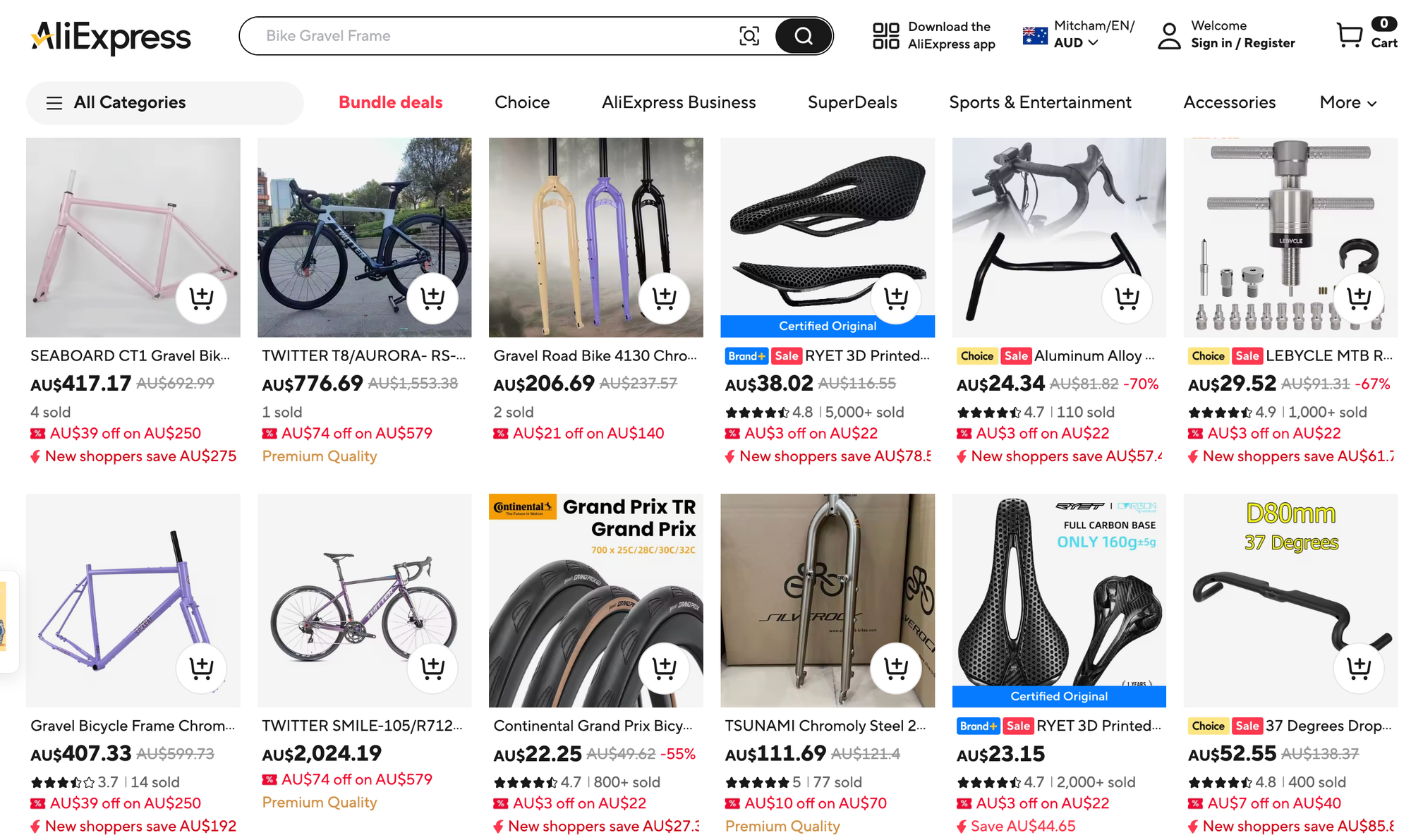
AliExpress, for the uninitiated, is a massive online retailer that is itself part of an even more massive company, Alibaba Group. The parent company, with a valuation among the top 10 brands globally, contains the world’s largest B2B marketplace (Alibaba.com), as well as the largely Chinese-language consumer site Taobao, the name-brand-focused Tmall, the payment platform that processes the transactions (AliPay), even the logistics company that sends the parcels (Cainiao). All of which equals a lot of people (a reported 205,000 employees) and a lot of money (2024 revenue was some US$130 billion). And Alibaba's just one of the ecommerce titans in China: Temu and Shein, separately operated and owned, are almost as ubiquitous.
Of the Alibaba entities, the internationally oriented AliExpress is a bit like a Chinese Amazon or eBay: hundreds of thousands of virtual storefronts selling pretty much anything under the sun. In the bike world, you can get everything from beer bikes to bottom brackets – often at prices far cheaper than from local retailers or distributors. The downsides? A few. There is widespread IP theft, with fake brand name products sold as the real thing – sometimes identifiably so, often not. Sellers and their products aren’t obliged to comply with any of the regulatory hoops that give consumers reassurance, and communication can be hit and miss – and almost always through a language barrier.
 Dave Rome
According to industry expert (and Escape Collective contributor) Jayu Yang, AliExpress is “a gateway to sell Chinese products overseas, with main suppliers who are Chinese trading companies.” The legitimacy of goods on there varies, she told me: real, fake, and in-between, like the many 'grey-market' products which aren't fake but aren't intended for commercial sale – groupsets supplied at bulk rates to bike manufacturers, say, and then quietly diverted into the aftermarket. Some of them are products of the same factories used by brands you’ve heard of, with the cheaper costs the outcome of an oversupply problem. “Overcapacity is always a problem in China,” she explained.
 Jayu Yang
But there are also many, many products that are made in factories without any of the oversight or checks and balances that you’d expect in the mainstream (western) cycling industry – and differentiating between the two is far from straightforward. “Because there’s no strict regulation, you can do whatever you want,” she said. “Buying products from AliExpress is like Russian roulette – it’s a gamble.”
Upside and downside
That sounds damning, but it’s not to say that AliExpress, taken as a whole, is an inherently bad platform: negative experiences are merely a side-effect of its vast scale. “There is an old saying in China – if a tree is big, it will always have bad branches,” Yang said. And AliExpress is a big tree.
There are good branches, too: even if you’ve never shopped on AliExpress directly, you’ve probably bought something from there. The platform's products are often resold at a markup by sellers in the Western world – a practice known as ‘dropshipping’ – from eBay to Amazon to standalone storefronts reaching customers through social media ads. The dropshippers don’t have to buy the products upfront; they’re just an intermediary who markets them and acts as a go-between, without having to absorb any of the cost (and risk) of production. [For an extra wrinkle, there's also fake dropshipping.]
And even buying from AliExpress directly, without any intermediary filtering for quality, the products themselves can be legitimately great: I’ve had good luck with Chinese brand groupsets like Sensah, titanium bottle cages, hanger alignment tools, absurdly cheap front racks.
 Iain Treloar
The operative word there, though, is ‘luck’. Even proceeding carefully, there’s a morbid thrill of the unknown. Until your purchase turns up in the mail, you can never really know whether the product you’ve taken a punt on is going to be good, great, or ghastly. Or if it'll turn up at all.
Taking the experiment up a notch
Having made a good number of purchases on AliExpress over the years, with products running the gamut of that spectrum, there’s one risk I’d not yet taken: building up a bike.
The range of framesets and complete bikes for sale on the platform is enough to give you finger fatigue as you scroll, and scroll, and scroll. Among them are products with the unmistakable silhouette of some of road cycling’s best-known carbon fibre frames – copies of the likes of Pinarello, Cannondale, Cervelo, Specialized – which look a lot like the real thing, but often have tells that they are forgeries. The quality of these is likely highly variable, and given the properties of the material they’re made from, can represent physical as well as financial risk.
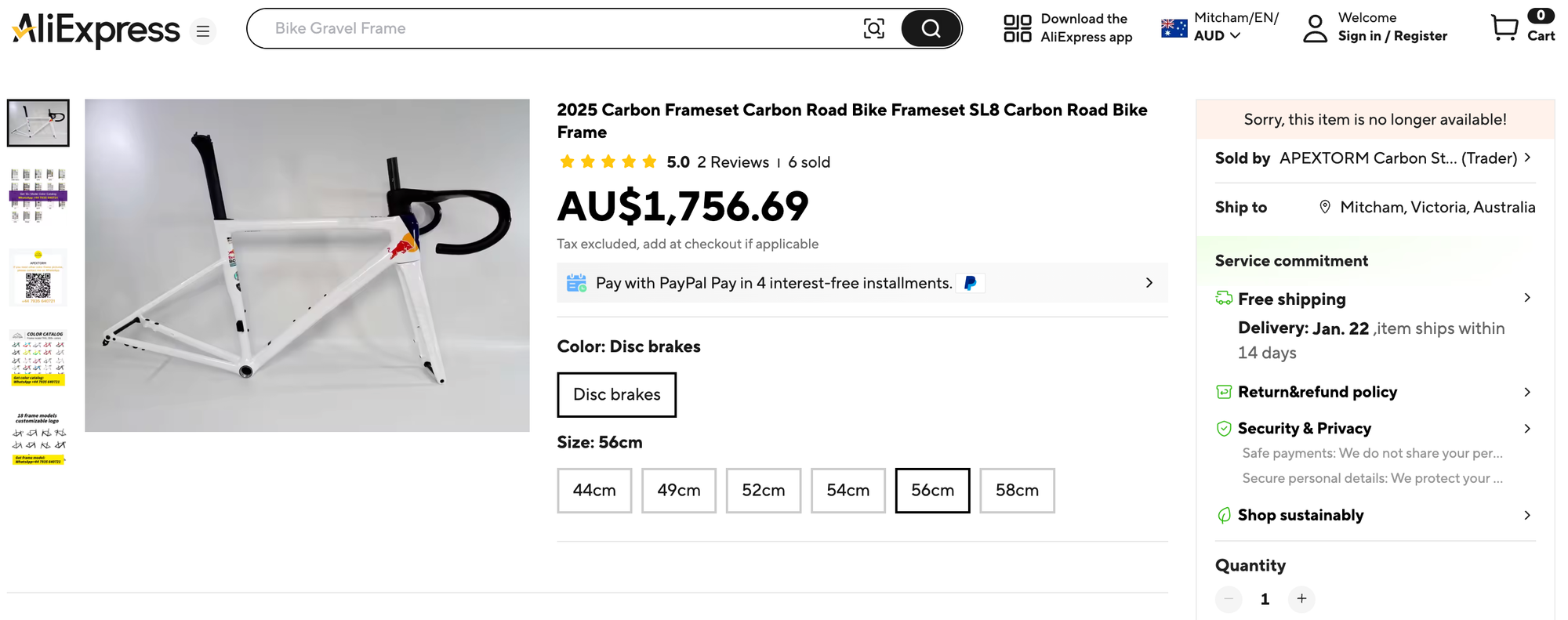
“No matter what we do, no matter how hard we fight, someone will be counterfeiting the Tarmac SL12 when it comes out,” Andrew Love, Specialized’s global brand protection manager, told me for a previous story – the analogy illustrating the Sisyphean scale of the problem (Specialized is only up to the Tarmac SL8). “Human beings are very gullible when they think they can save money. So people fall for this – and in different ways, in different places,” he said.
One of the most prominent places being AliExpress.
 Iain Treloar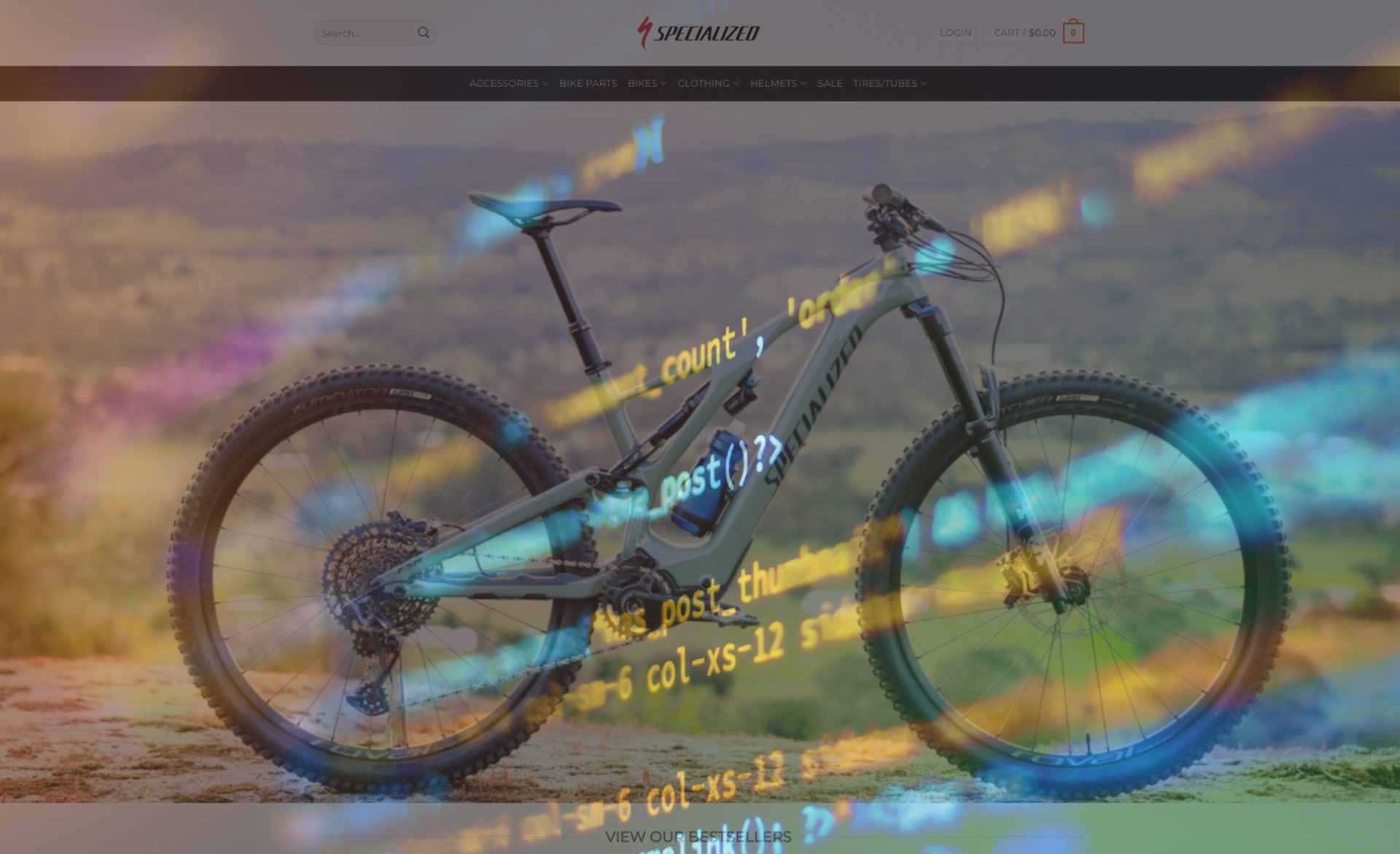
AliExpress’s bike selection is far broader than just fakes, though, with a growing cohort of Chinese brands offering products under their own names, itself representative of broader shifts in the market. Like everything else on the platform, these bikes, too, can be wildly variable – and not just in quality. Some of them just look cheap. Some of them have a limited sizing range geared towards the Chinese domestic market that makes them incompatible with someone of my (slightly but not conspicuously above Australian average) height.
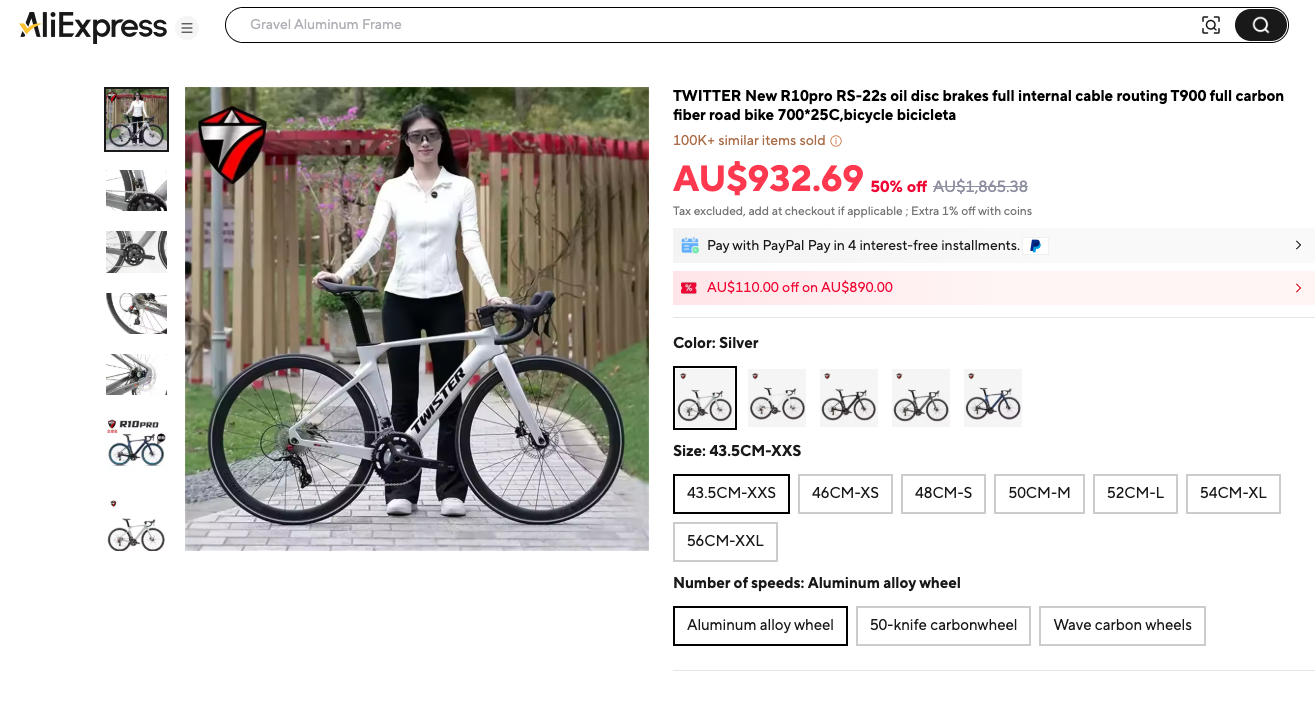
Others have branding that seems like it should be kryptonite to a western consumer; one of the most prominent brands on AliExpress, for instance, is ‘Twitter’. Still others rip off better-known Chinese brands; the ‘Java’ brand of road bikes, which has been raced at ProTeam level, has a soundalike and lookalike in ‘Sava’. There are ghosts of other notorious Chinese bike brands too – SpiritX feels like an homage to the deeply doomed SpeedX, for instance.


I could’ve bought one of these products, but buying something on the expectation that it’d probably be a bit shit didn’t seem like the best way to approach this story, and I like my teeth enough that I didn't want to take a punt on untested carbon fibre. Really, I was more interested in getting something that might actually be good – to see what it’s like as a consumer to do your due-diligence on AliExpress and maybe end up with an actually nice bike at the end of it all.
The brand ‘Seaboard’ was where I ended up. A slightly odd moniker at first glance, it’s arguably not really any worse than the likes of Giant, which has worn itself into familiarity through exposure. A few folks on bike forums dedicated to AliExpress reckoned that Seaboard was one of the most reputable brands on the platform, and I saw it described as the premium brand of Tsunami, another big player (mostly in the singlespeed space). There were even positive reviews of the brand’s frames in English on YouTube. For my purposes, crucially, they actually offered bikes that had a geometry chart and tyre clearance that makes sense in the year 2025, with subdued branding that didn’t scream ‘TWITTER’ everywhere.
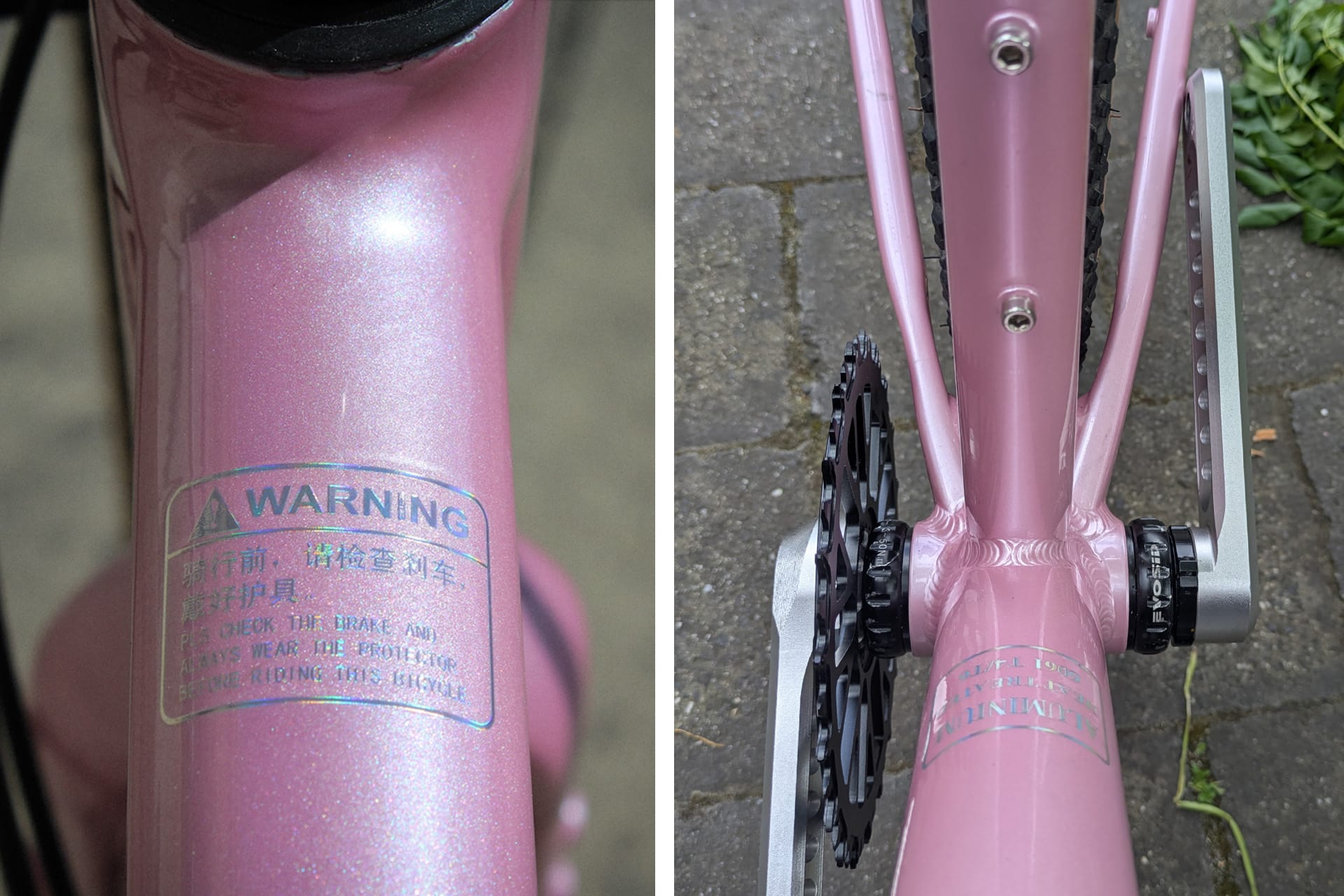
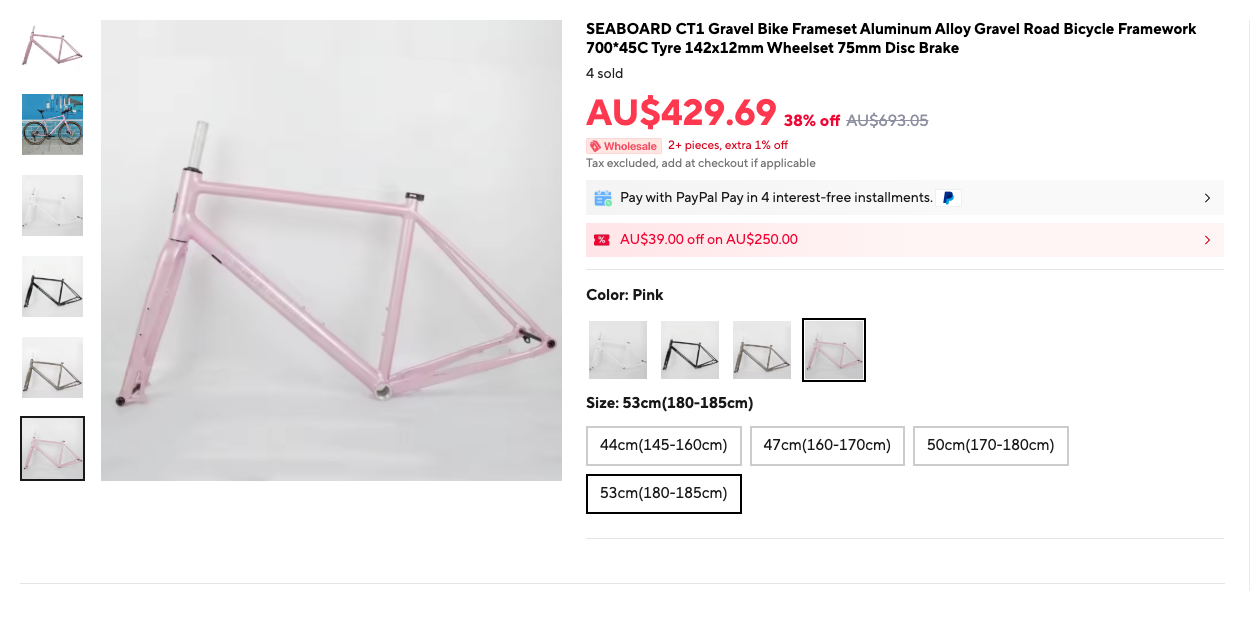
As mentioned, I didn’t want to second-guess whether any carbon fibre parts were going to spontaneously implode, so I bought a Seaboard CT1 – a new model for 2025 with a frame and fork made of 6061 heat-treated aluminium alloy. It is offered in four sizes (the largest apparently caters for riders from 180-185 cm), and is “designed for flat handle gravel road bikes and can only be installed on a single disc”, which I took to mean that it can’t take a front derailleur. All the other bits and pieces in the description seemed pretty conventional – a 68 mm BSA bottom bracket, tyre clearance up to 700 x 45C, a 27.2 mm seatpost – and it came in a pretty dusty pink colour.
It was, I reasoned, probably not going to be the best bike I’d ever owned, but chances seemed good it wouldn’t be the worst.
The box arrives
Did we do a good job with this story?