Welcome to Escape Collective. Please select your language.
Please note that this is an automated translation and it will not be perfect. All articles have been written in English and if anything appears to not make sense, please double check in English.
Even when cycling fans have the Tour de France, Eurobike, handmade shows, and a mountain bike World Cup to focus on, you can bet that bicycle workshops around the globe continue to buzz. And for them, I have a small handful of new workshop-focussed tools to share and offer my thoughts on.
Within this gallery-style edition of Threaded, you'll find what I think could be the new benchmark in hex key interfaces. I share my thoughts on Effetto Mariposa's first overhaul of its torque wrench line-up in over a decade. I get hands-on with an ultra fancy laser-based tool for stem alignment and how it compares to other laser-based tools. Lastly, I explain why the fancy long-reach pliers I just bought are perhaps a waste. All of these tools sit on the premium and professional end of the scale so hopefully, even if you can't stomach the prices, you can at least appreciate the pursuit of finding a better way.
This Threaded comes just one week after the last. In case you missed it, last week's Threaded #18 was a New Tools Day edition that focussed largely on consumer and ride-friendly mini pumps, portable inflators, tubeless plug kits, and chain breakers.
GripEdge RPT
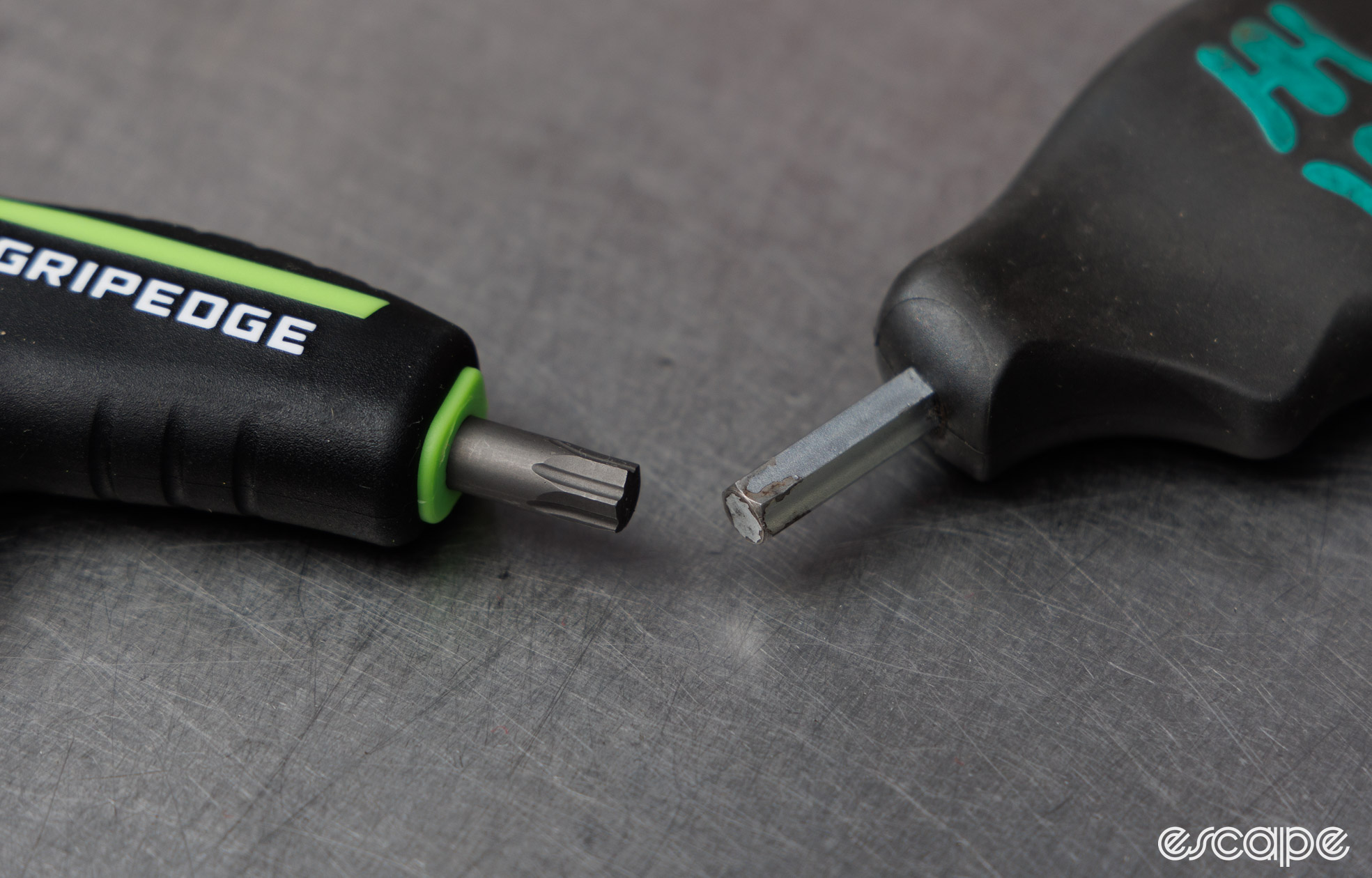
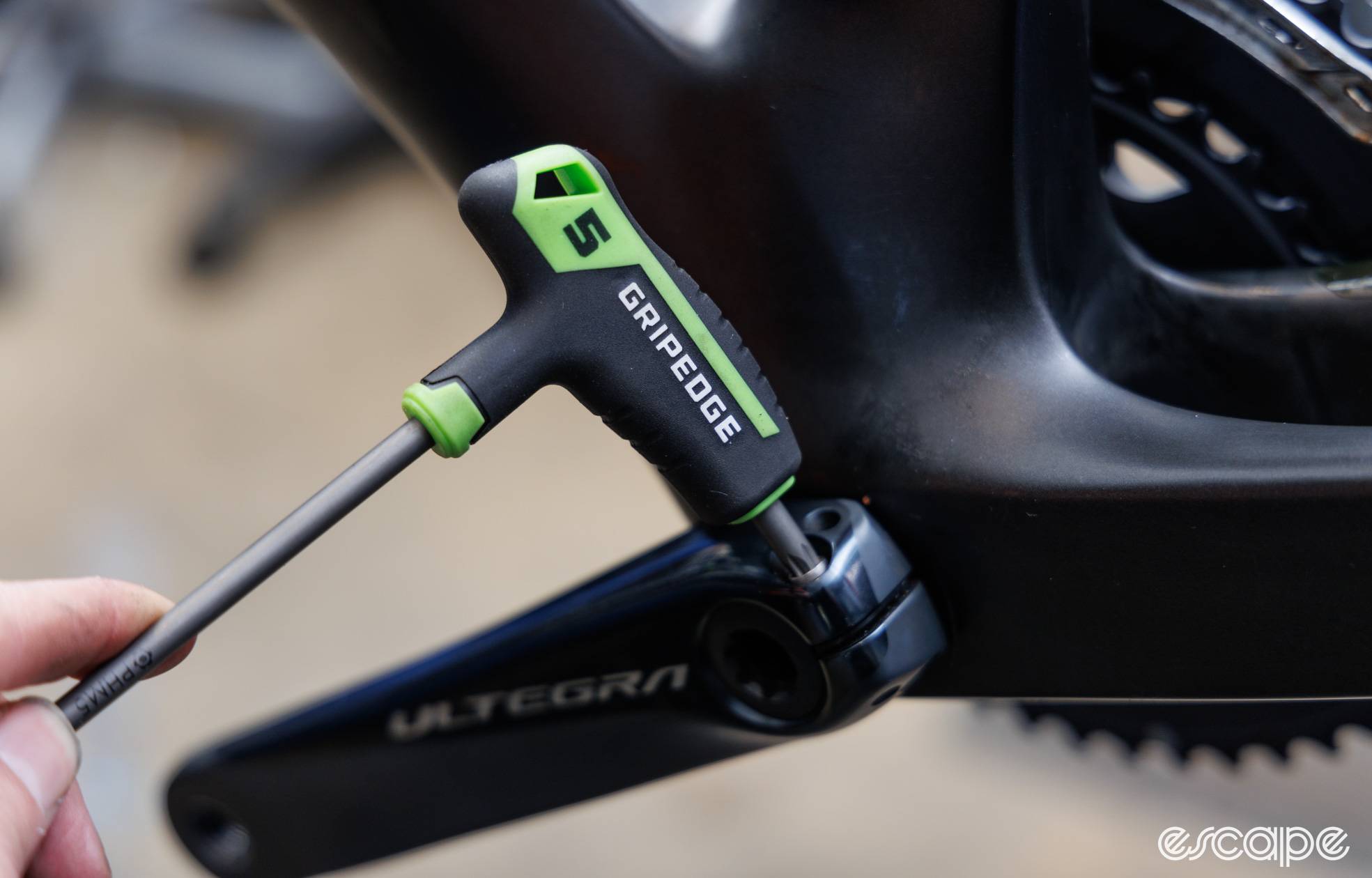
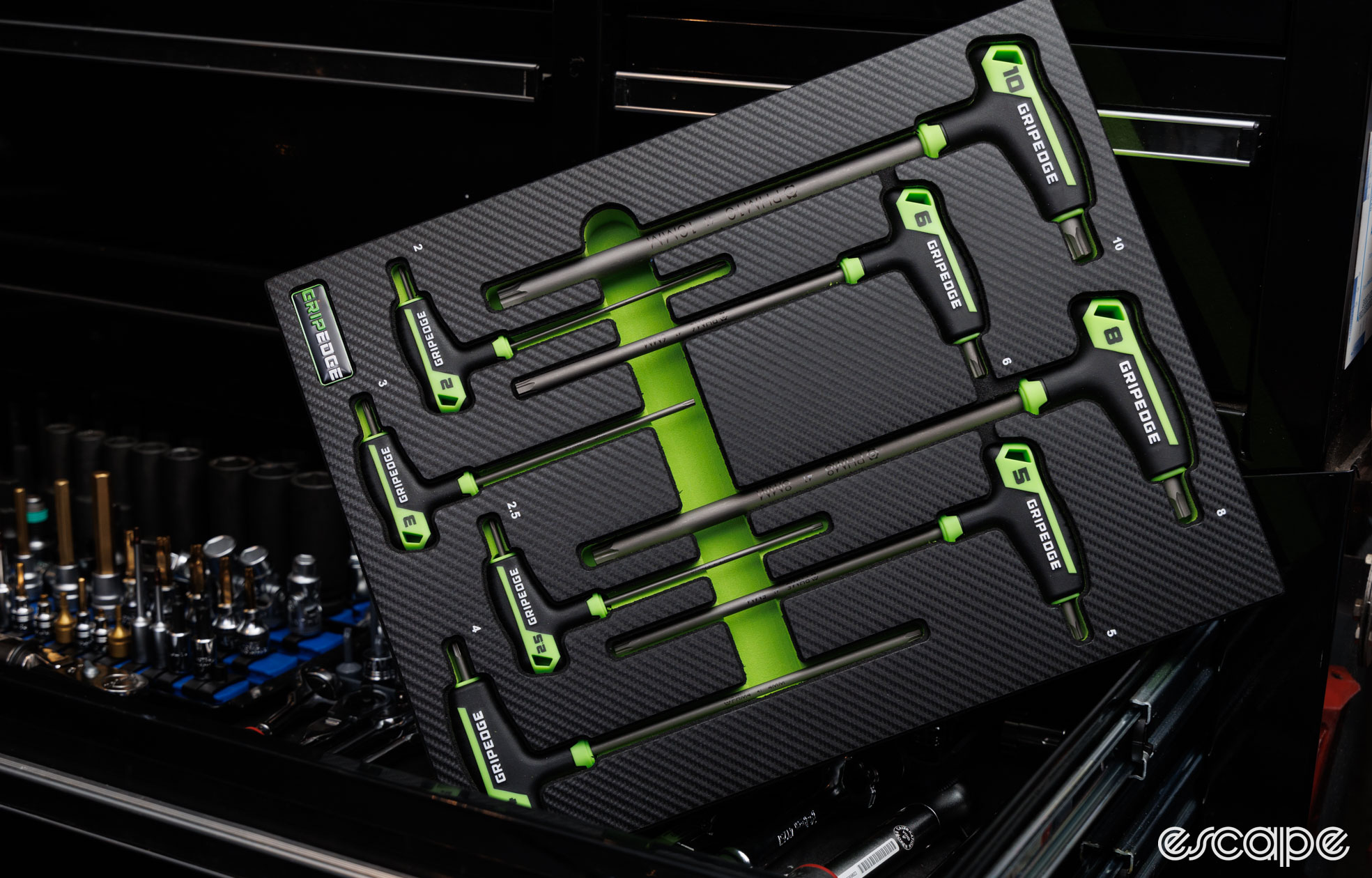
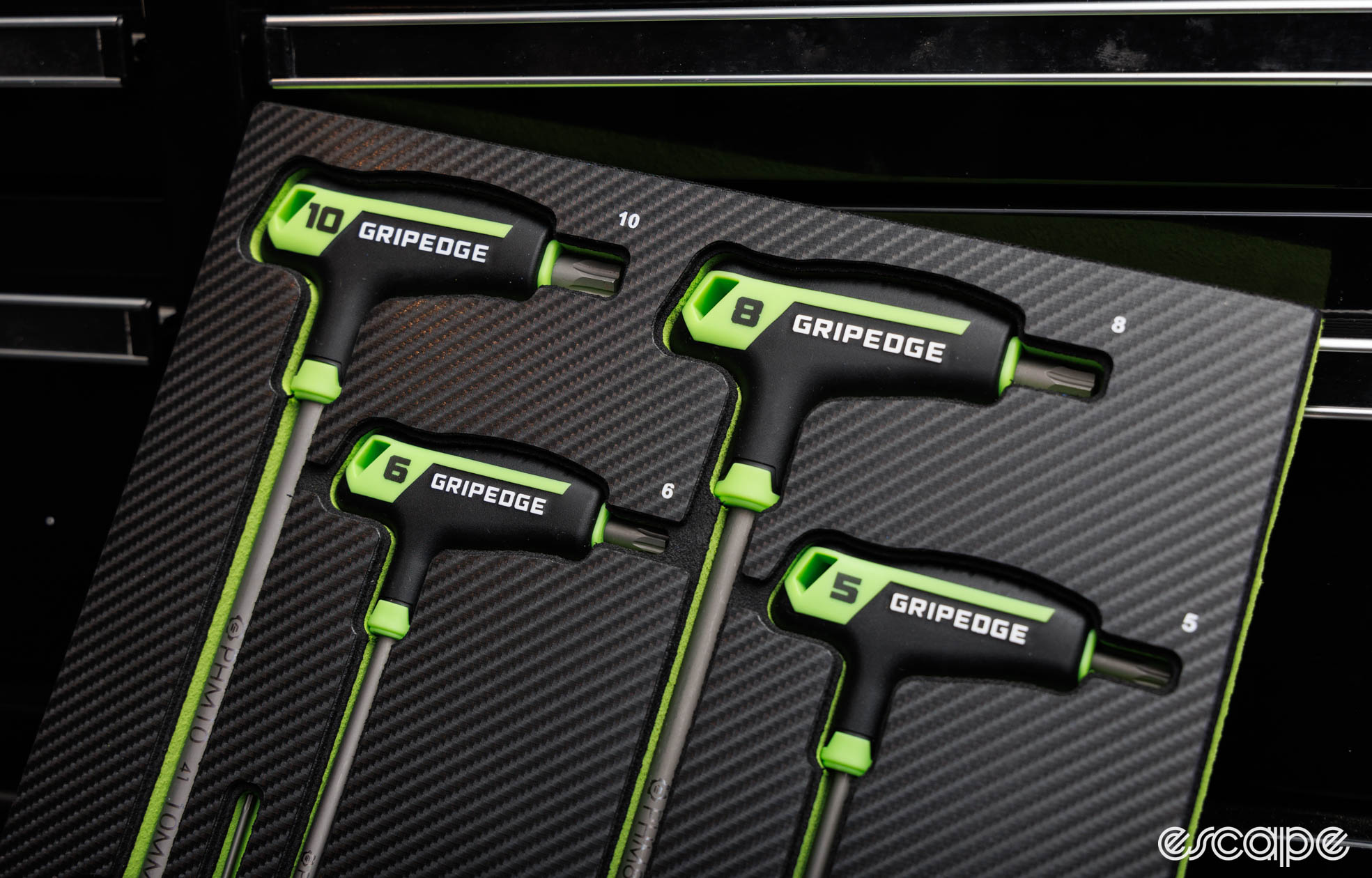
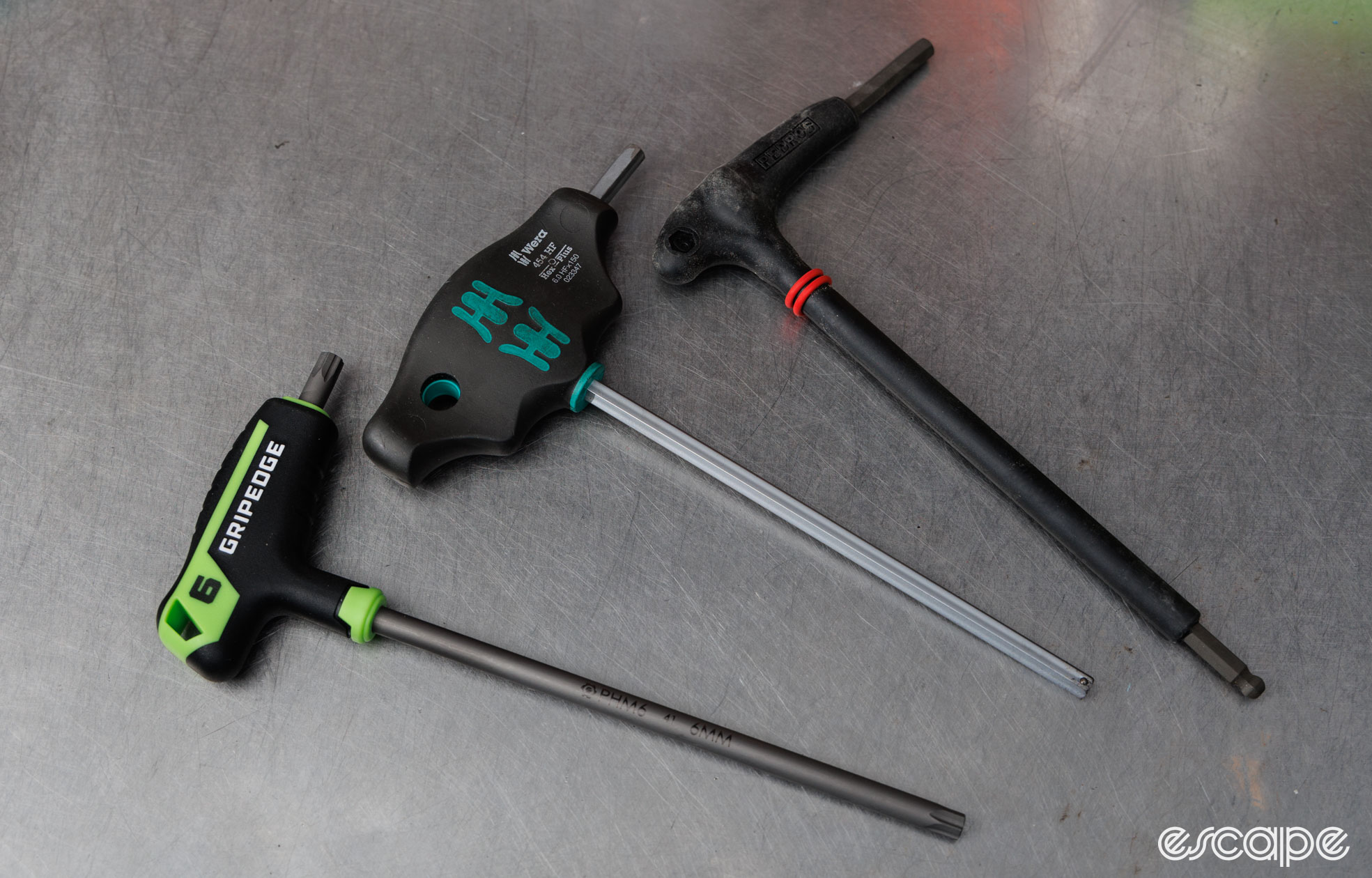
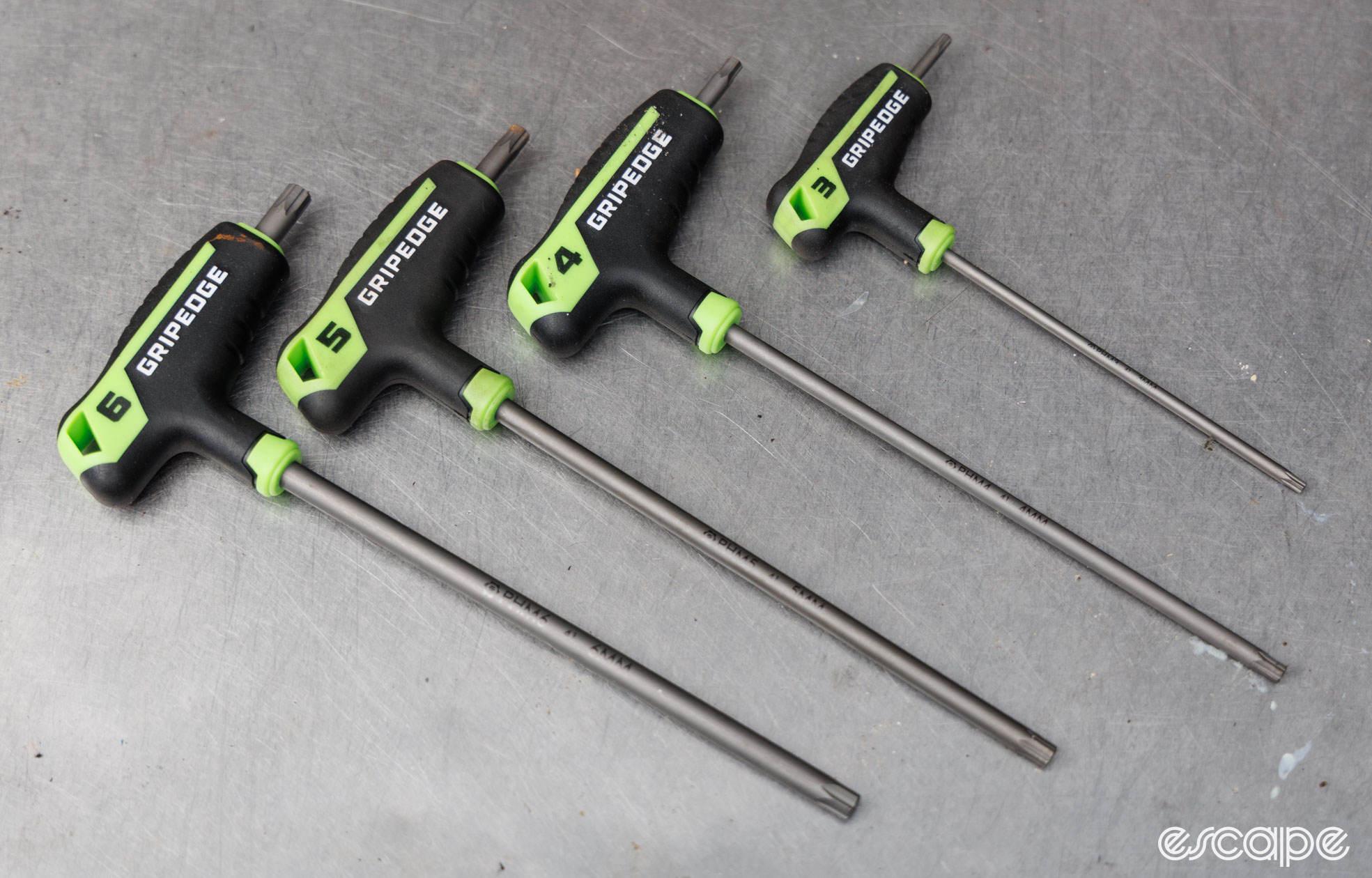
Let's kick things off with what may just be a disruptor in the hex key world – GripEdge. Based in the USA, GripEdge got its start by licensing its patended RPT bolt-removal technology to the likes of Facom, MAC, and Proto (all under the Stanley Black & Decker company banner). Recently, the company started selling its design consumer-direct, with an expanded range and strong messaging that these tools aren't just for rounded bolt head removal, but rather for regular use and prevention of rounded bolts, too. As I've written about before, prevention is always key to not fighting with rounded-out bolts.Don't adjust your screen, this is not a Torx key but rather GripEdge's hex key design.The RPT design uses a similar theory to Wera's HexPlus, where the unique shaping aims to provide far greater surface area contact within a hex-based fastener, and therefore allows for greater torque with less fastener damage. When compared to traditional style hex keys, GripEdge claims it can provide up to 50% more torque on good-condition fasteners , or up to 400% more torque on rounded/damaged fasteners.This may upset many, but my experience with Wera's HexPlus design has been that it doesn't offer any obvious benefit over a high-quality and well-toleranced traditional-shape hex key. By contrast, I've been finding the GripEdge design to be noticeably more secure in often problematic fasteners (at least in hex sizes of 4 mm and above). For a specific example, the GripEdge key is obviously snug and secure-feeling in the easily-rounded Shimano crank pinch bolts, whereas many other high-end tools can still exhibit some worrying wiggle and vagueness.GripEdge is now offering its unique interface design in a range of sockets, bit sets, and P-handle hex keys (pictured). The tools are designed in the USA and manufactured in Taiwan. The company has also teased more options are on the way. Currently the P-handle keys (GripEdge call them T-Handles) are only available as a set of 8 (2-10 mm) and for a premium US$140 (sold direct, or through Amazon). Indeed these are aimed at the professional where a rounded bolt can cost the mechanic far more.The hex keys are provided in a premium foam tray. Although, as I'll get to, I chose another storage path for them.The keys are generously long and closely comparable with other P-handle style keys in the market. Here the 6 mm GripEdge is shown against a Wera 454 and Pedro's Pro TL.A comforting and rock-solid hold in the fastener is exactly what I seek in my tools. Overall there's a lot to like here in a tool that's not just for removing rounded bolts, but one that's great for everyday general use. Some minor gripes include the 4, 5 and 6 mm tools being a little too similar in overall size and therefore hard to differentiate when scattered on a bench – I'll be adding some colour-coded sleeves to solve for this. By contrast, the 3 mm is just tiny compared to the 4 mm! The snug-ftting design can be harder to slip into undersized/rusted fasteners - care is needed that the tool is fully engaged. And lastly, there is no ball-end on these. That's not a deal breaker for me, but it may be for others who are used to the Park Tool or Pedro's style of P-handle.