
Welcome to the first edition of Threaded, a newsletter (column?) for tool nerds, DIYers, and professional mechanics. If you haven’t already, you can sign up for free to ensure you don’t miss future editions.
Over the years, I’ve thought a lot about hex keys (aka Allen keys), tools that have become the foundation of modern bicycle repair. It’s a tool category where quality pays, while cheap options can result in damaged fasteners from poor tolerances and durability.
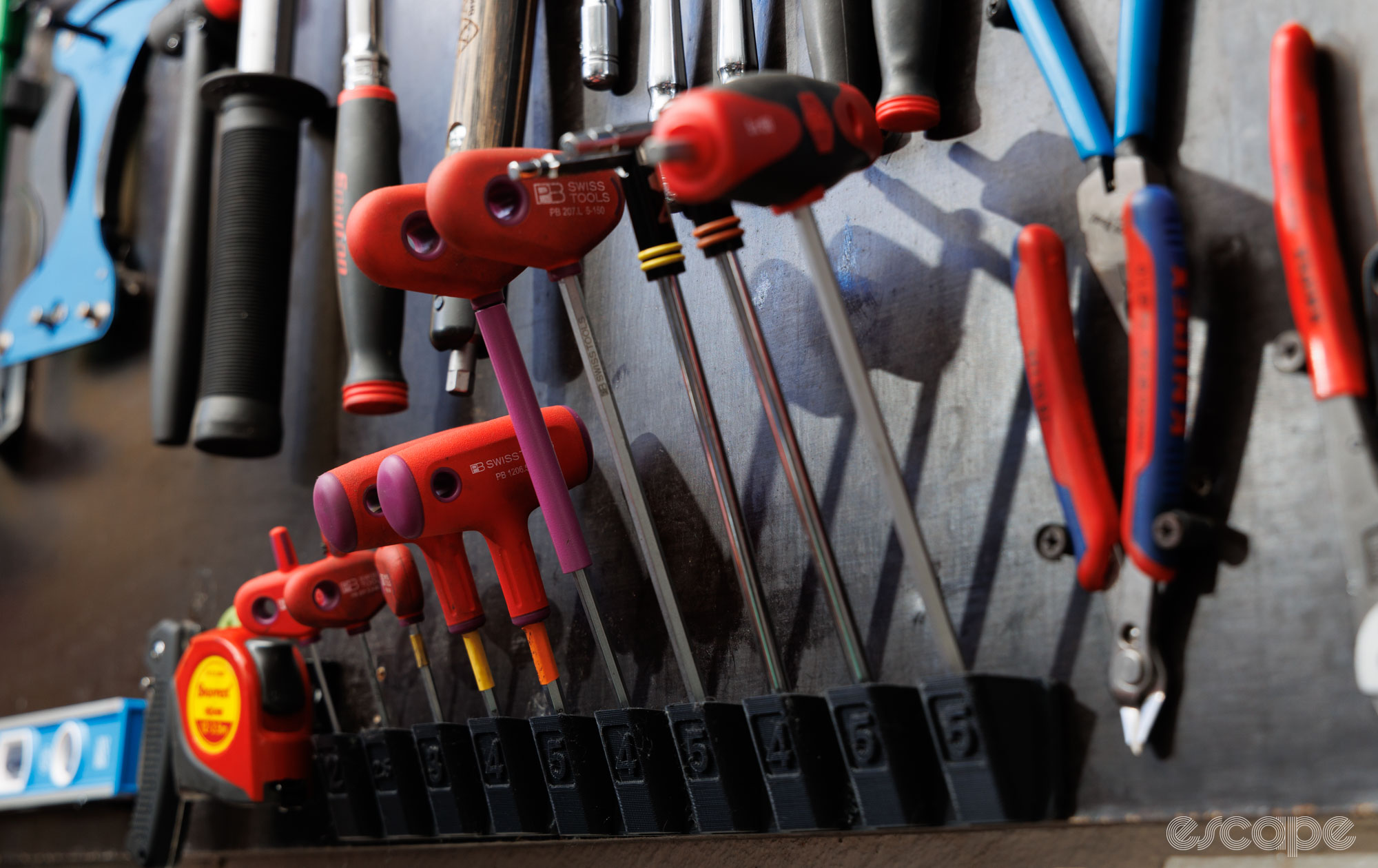
A set of good quality L-shaped 1.5-10 mm metric hex keys will cover the vast majority of repair work, but in terms of frequency of use, the 4 and 5 mm sizes are the peak of the bell curve. Such frequency means I own and use a greater variety of tools in these sizes than others.
I’ve written about the various types of hex keys at a previous publication and thought I’d revisit the topic, this time solely focussing on the 4 mm hex tools I use most and would buy again. This list is in approximate descending order of how often each type is used, and for the sake of brevity, I’ll skip the variants that collect dust. You can extrapolate this to your needs, for other hex sizes, and/or drive types (e.g. Torx).
It’s important to note that tool choice is often personal. What you’ve got the most experience using is likely to feel the best to you, so please don’t hate me for not including your beloved folding tool or three-way. This article is based solely on personal experience from a workshop usage point of view.
Why so many 4s?
Why have multiples of one size of tool? There are efficiencies to be gained through using various tool shapes and styles of one drive size. Sometimes, these efficiencies are gained through easier fastener access or faster threading. And in some cases, simply having a direct path means a greatly reduced likelihood of the dreaded rounded fastener. As a bonus, having multiple 4 mm hex keys means that a messy workbench is less of an issue.
I deliberated over whether to choose 4 or 5 mm as my focus – after all, my preferences and recommendations vary slightly between them. Being the most wanted in an Instagram poll, the smaller 4 mm size is more demanding of better-fit tolerances, is more susceptible to wear, and is often present where surrounding clearance (room to move) is a concern.
Generally speaking (or at least it should be!), this drive size is featured in places where there's a relatively low torque range between 3-8 Nm. That means big comfortable handles and long leverage are rarely required. Meanwhile, this drive size is delicate enough and yet calls for enough torque that I avoid the use of a ball-end hex key for initial loosening and final tightening wherever possible.
1. L Keys
Iconic in design, the L key is often considered the defacto hex key. The shape allows access into tight spots, it can be used for quick spinning, and has leverage when you need it. It’s also the tool shape that so many bicycle and component designs assume the use of. If you can only have one hex key type, make it an L-key.

I use PB Swiss 212-LH long keys with a ball-end. The steel is ultra-long-lasting, it has a nice tactile spring, and doesn’t rust. The consistent fit dimensions fit into oversized and undersized fasteners, and the ball-ends are some of the best in not rounding fasteners.
Did we do a good job with this story?