

The tunes are blaring, the tools are scattered, you’re out of time but just five minutes away from having it all back together. Then disaster strikes: the dreaded feeling of your hex key slipping within the fastener. Time is merely a vacuum now.
Rounding out fasteners, or worse, having them break, can quickly ruin a day on the tools. All too often I see mechanics jump straight to using a drill or Dremel, but I’d like to share how I avoid getting to those drastic steps. In this edition of (un)Threaded, you’ll find a handful of helpful tips in dealing with such problems, along with a few of the tools I’ve found to offer efficient, repeatable, and satisfying success.
Before I start, it's worth noting that this is an advanced topic applicable to professionals and experienced home mechanics. Failing to remove a rounded or broken bolt may make it more difficult for a professional to do so later. If you follow the tips in this article, please note that they are written in an order where all recommendations are somewhat cumulative. It’s worth reading the whole thing if you’re keen for a clean outcome.
If you worry about missing an edition of Threaded, you can sign up here for free to get an email notification.
First, some terminology
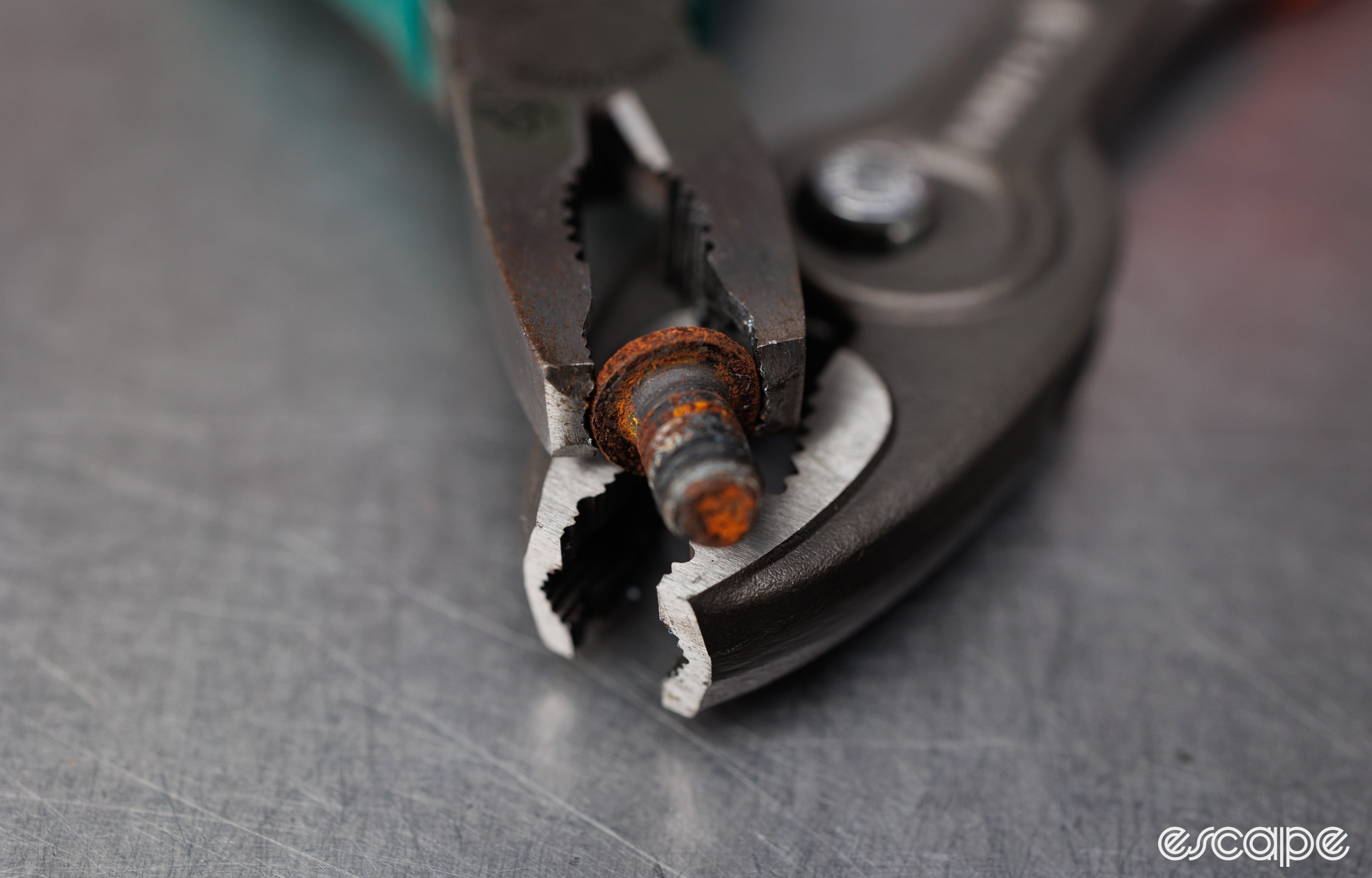
Rounded-out fasteners are those where the tool interface has been damaged to the point where the correct tool no longer works well enough to be used at torque. The first sign of this is a tool slipping, and any further attempts with the same tool are likely to worsen the issue. This article largely focuses on this most common (but preventable!) occurrence.
Cam-out is closely related to a rounded bolt and is arguably the same thing in many cases. Most commonly, cam-out is discussed in relation to Phillips screws, where the driver lifts up and out of the tool interface under torque. Cam-out can also refer to when applied torque causes the tool to slip out at an angle. This is often caused by applying torque incorrectly (at the wrong axis), and the shallower a fastener, the more likely the issue.
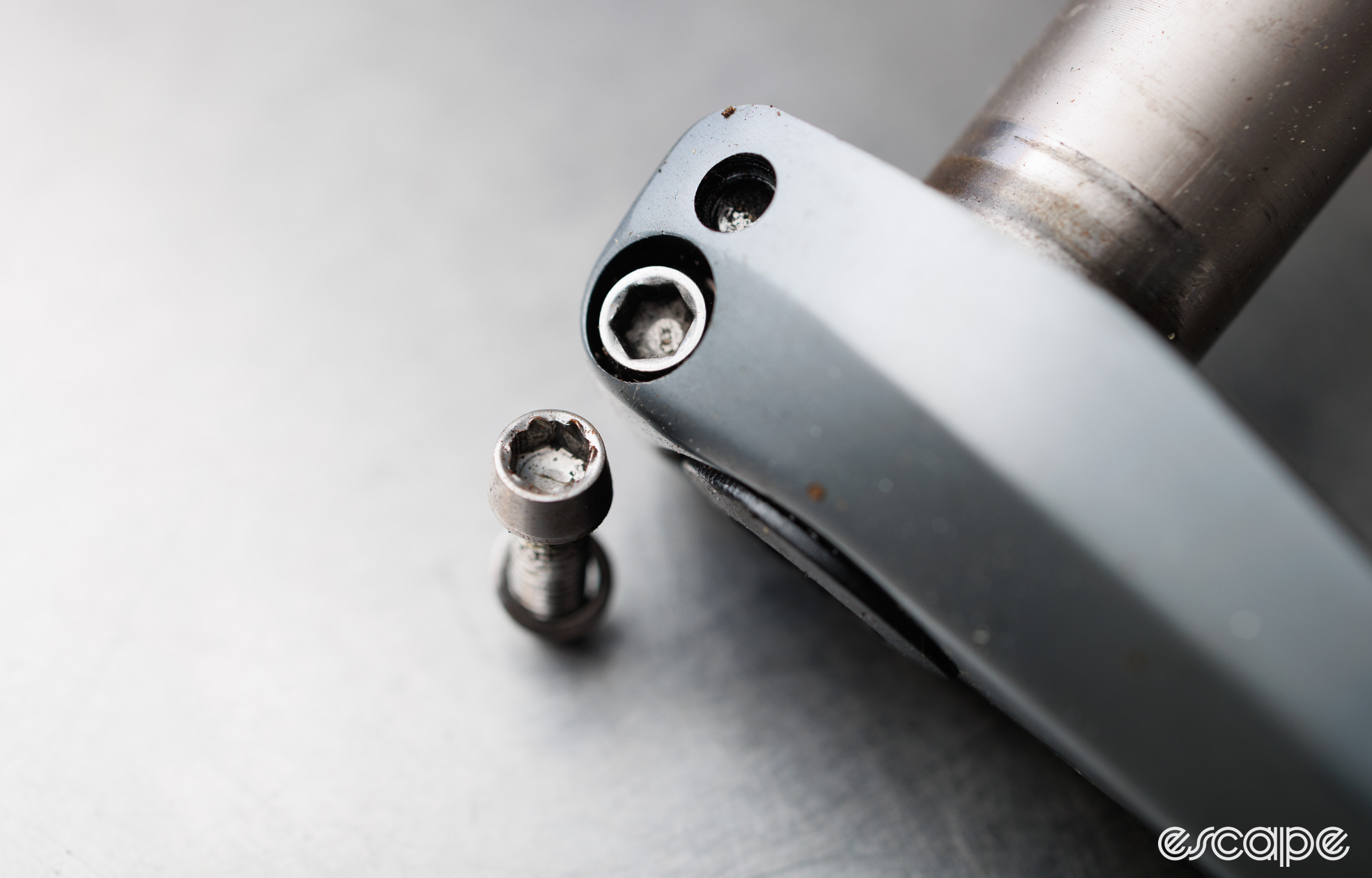
Then, there are broken bolts and threads. A broken bolt is where the head and threaded section have separated from each other (aka, a bad day). By contrast, a cross-threaded fastener is where the threaded bolt and receiving thread are forced together out of alignment. The result of cross-threading is typically a stripped fastener where the thread has failed (can be applicable to the threaded fastener and/or the receiving thread).
Prevention is key
Rounded-out, sheared, or stripped fasteners are often preventable. While poor design or faulty manufacturing can be to blame, such issues often arise through corrosion, incorrect usage, low-quality tools, or ignoring signs of wear. Let’s talk about how to prevent ever needing the more specialist tooling covered later in this article.
Clean, grease, torque and technique
Whether rounded out or snapped clean off, stuck bolts are often the result of corrosion and/or improper torque.
Galvanic corrosion is prevalent in modern bicycles. Many components mix dissimilar materials (such as steel bolts into aluminium), and the rider then provides the corrosive electrolyte through sweat. The good news is that semi-regular maintenance and correct thread lubrication can prevent issues. Any water-resistant grease is better than none, but using an anti-seize for problematic fasteners that are likely to corrode (stem bolts, for example) is even better.
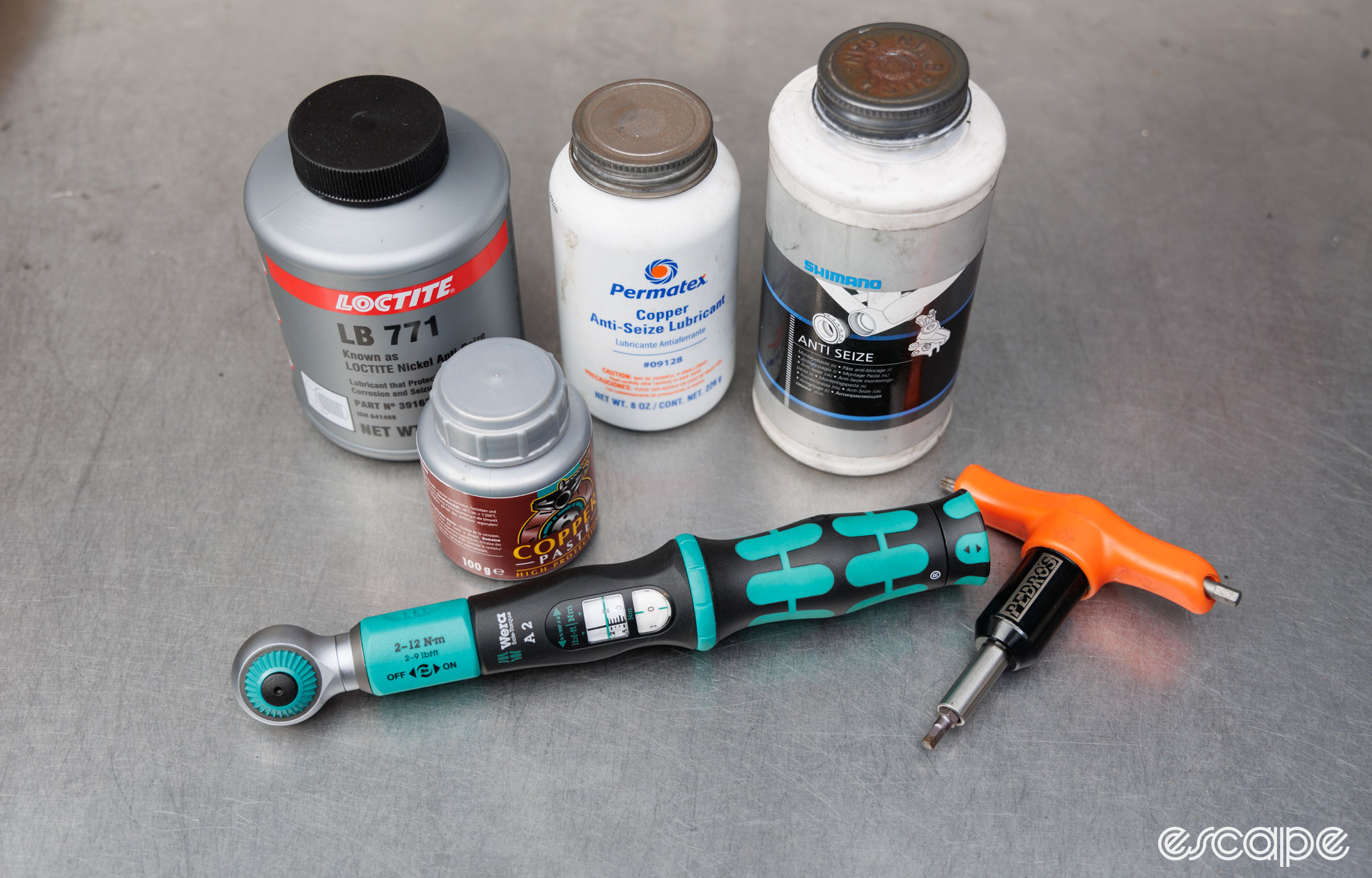
When removing a fastener it’s a good idea to take a peek inside the head for any debris that may prevent full engagement with the tool. It’s common to find such dirt build-up in cleat bolts, derailleur limit screws, and brake caliper bolts. Meanwhile, corrosion in a bolt head could provide similar interference from having the tool sit as firmly into the fastener as intended.
Then there’s the importance of torque. Stripped threads, snapped bolts, and rounded-out heads can all occur as the direct result of too much torque. One such phenomenon is known as thread galling, where too much friction can cause the bolt to seize into place, and it’s especially common on fine-pitch stainless steel, aluminium, and titanium, which just so happen to be the kind of fasteners commonly used on lightweight bicycles.
Did we do a good job with this story?