

Physics suggests that big wheels should roll faster, but I'm someone who likes to see the numbers for myself. In 2025, I covered 869 kilometers (540 miles) doing measured tire testing. I am not including training, warm-up laps, cool-down spins, or just going riding for fun in this total. During the course of this testing, I learned how difficult it is to discern how fast a tire is simply by how it feels.
Last September, I thought it would be interesting to do some testing of the new 32-inch tires beginning to show up on the market to see how they stacked up against the 29”/700c mountain bike and gravel tires I had been testing.
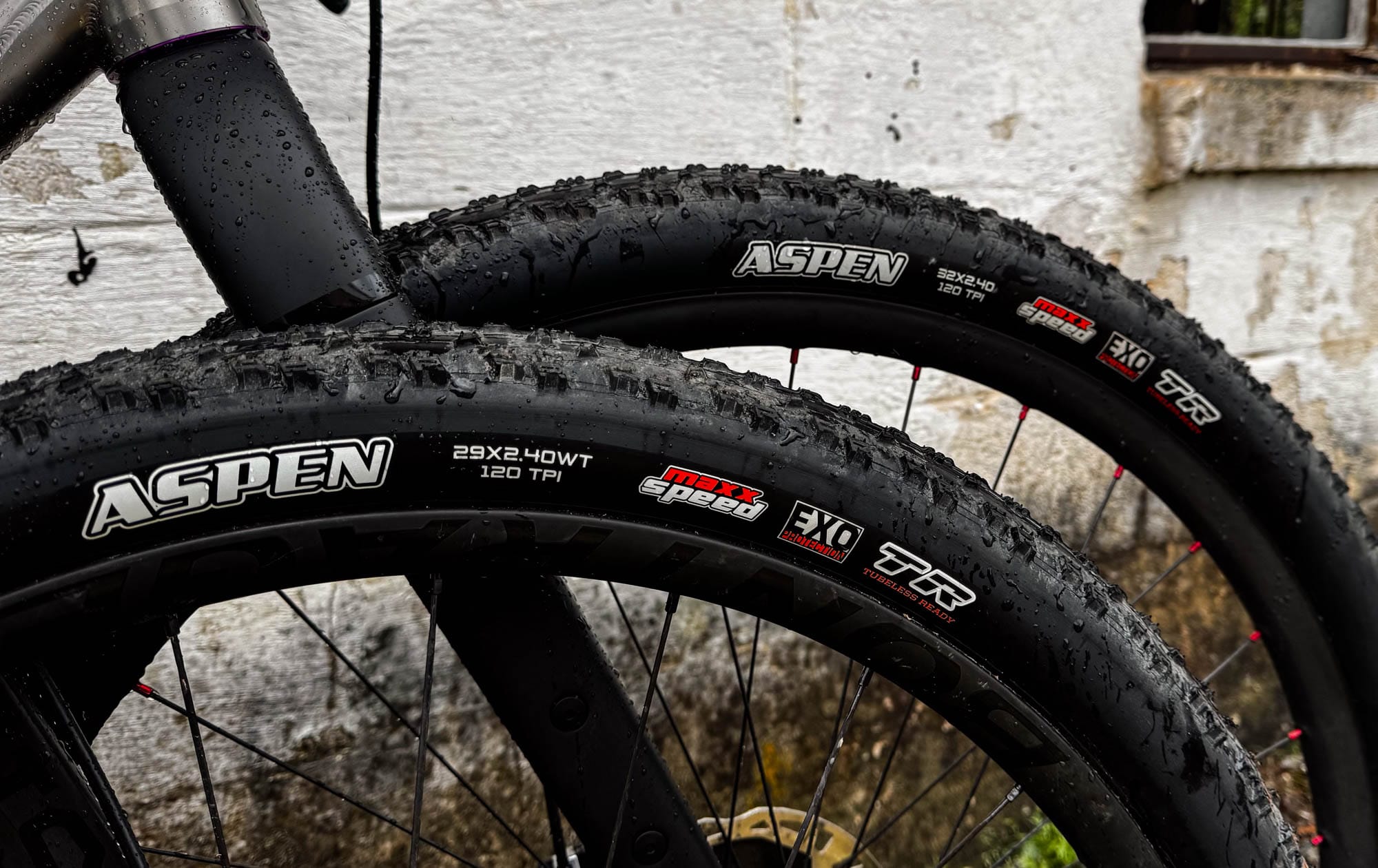
Maxxis debuted the 32 x 2.4" Aspen early 2025 and there was obviously development happening around the new size. BMC had its 32-inch full suspension prototype going, and I knew Ronan Mc Laughlin, despite being someone mainly focused on drop-bar bikes, had ridden it and came away with a positive impression. As an early adopter to 29ers, I could see the appeal of a bike with bigger wheels.
 Josh Weinberg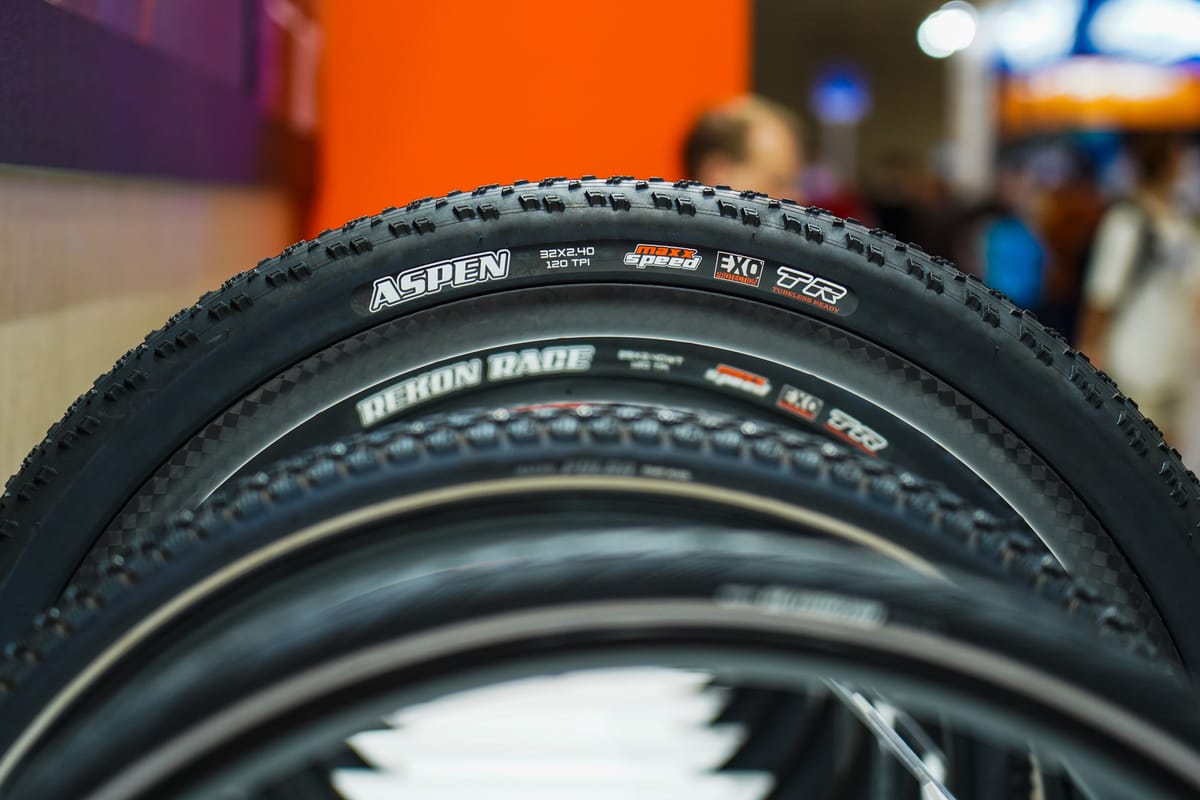
My main concerns around the build were testing-related, so I knew if I could get identical fit metrics, the same drivetrain efficiency, and no suspension on either bike, I’d be on track to another level of Chung Method / Virtual Elevation tire testing. This method has its origins in aerodynamic field testing and, as Escape's Editor-in-Chief Caley Fretz has previously described, can serve as a “wind tunnel without a wind tunnel."
The arrival of 32-inch mountain bike tires represents the first serious wheel size challenge to 29ers in over a decade. If the physics holds up in real-world testing, riders chasing performance on gravel and XC courses may soon be rethinking their entire setup. We could be facing another entirely new set of standards within the next 18 months, which is only something worth considering if there are genuine benefits to the new size. With the caveat that this is very early days in testing 32" wheels and tires, here's what the initial data actually shows.
The test method
With a wheel speed sensor, power meter, scale, and known air density, the Chung Method can flip the script on its typical use to sort out the coefficient of rolling resistance (Crr) on or off-road. With these known values, including perhaps an initial approximation of CdA or aerodynamic drag, a rider can do laps without using their brakes on a course of about 1 km and get a calculation of Crr within Golden Cheetah or better yet, a GitHub Virtual Elevation Analyzer created by another Escape Collective member (Thanks, Hannes!)
 Ronan Mc Laughlin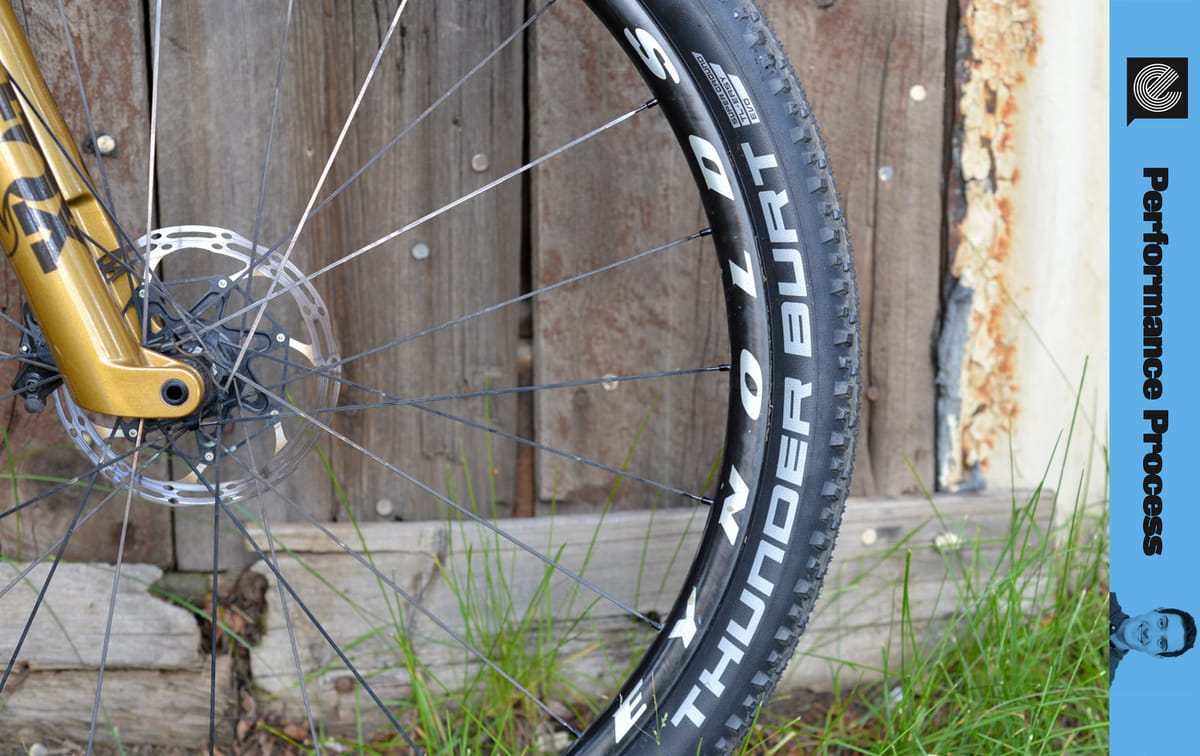
Essentially, this method recreates the actual elevation profile of the test ride laps. I used USGS files of one meter DEM elevation data overlaid in most of these tests for absolute certainty, as GPS elevation can be a bit off as we have all seen in our ride uploads. I know it sounds odd, but it uses calculations for every one-second interval of a .fit file so the outcome is very robust. This contrasts with the initial simplicity of comparing Strava segments, which fall short of showing you with absolute certainty how you were a little faster on this day vs. that day. Regardless of method, any testing should be repeatable to a high degree of accuracy, which means a few laps of both 29" and 32" conditions in this case.
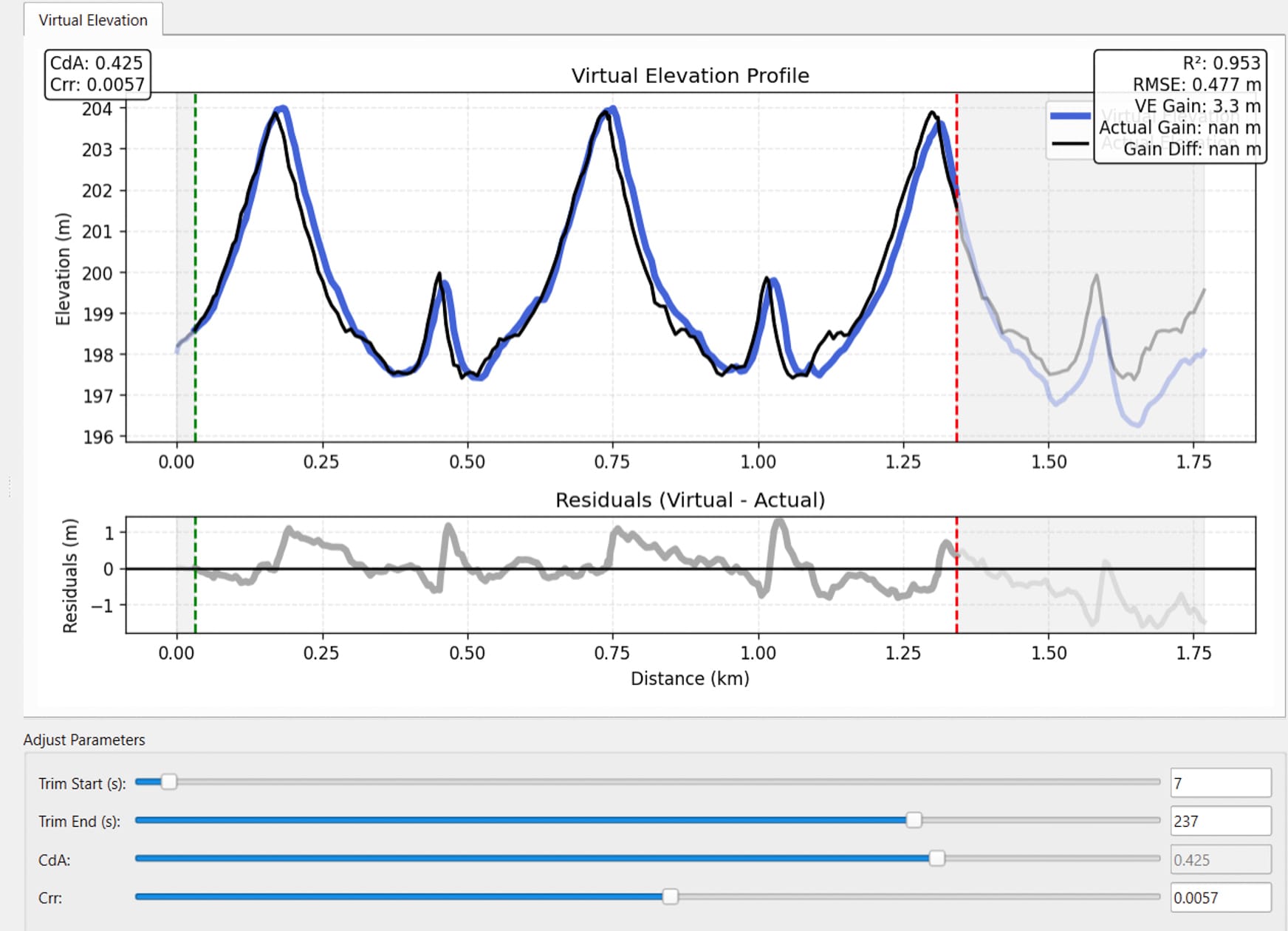
This bike was very much intended to be a test platform, so I wanted the spec to be as relevant to that goal as possible. Drivetrain efficiency is critical, so I stuck with a similar and quite fast setup as my current 29er. The chain on both bikes would be a Shimano Dura Ace/XTR 11-speed, stripped and treated with Silca Hot Wax. From my prior testing, this is around 98% drivetrain efficiency and very reliable. I decided on a singlespeed setup for both bikes, with a Garbaruk chainring and Wolf Tooth stainless steel cog. The 29” already had a 32T chain ring and the 32” would get a 30T chainring for similar gain ratios between the bikes due to the difference in tire diameter. Per some quality testing from CeramicSpeed, this two-tooth difference in ring size carries well under half a watt difference in efficiency at 250 watts. Cog size on each bike would be a 20T.
To keep my bike fit identical, I spent some serious time on XYBikeCalc, created by fellow Escape Collective member and owner of Clubhouse Velo, Allen Kuo. I don't necessarily think it is mandatory for all 32" bikes to have the exact same fit as someone's prior 29er, but I could pull it off with the carbon fork, and it would minimise differences in aero drag values to largely just the delta in tyre diameter.
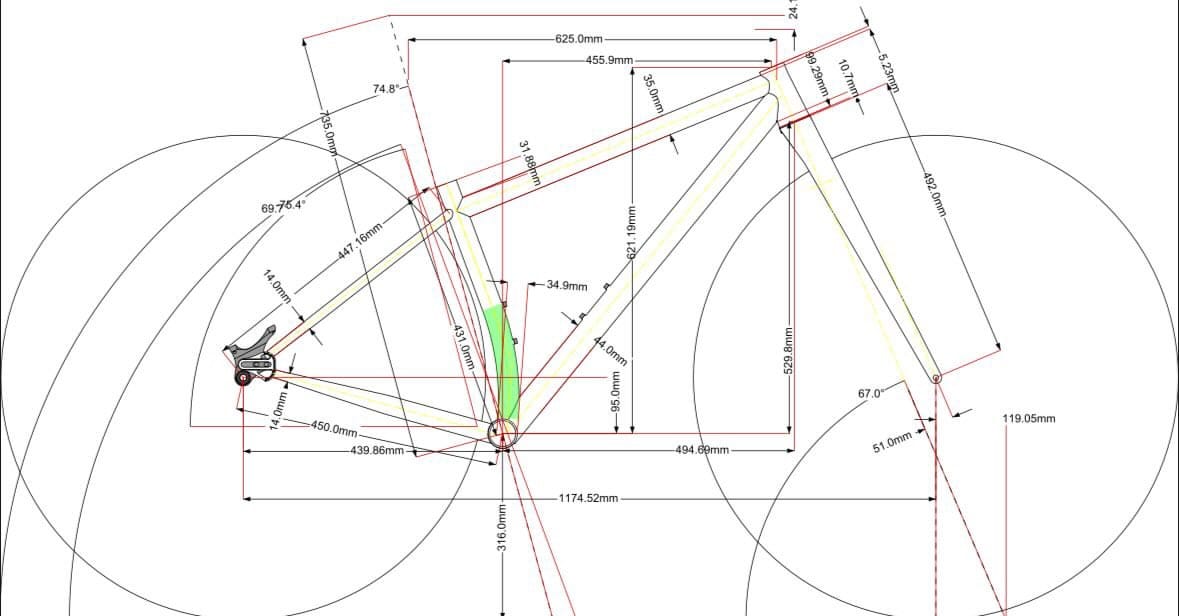
For some context on the geometry, I am 175 cm (5’ 9”) tall with an 84 cm inseam and ride a 73.5 cm seat height with 175 mm crankarms. I do yoga and have been riding since 1999, so the bars are maybe on the low side visually, but the fit is comfortable for me and has worked well in 100-mile races.
The bikes
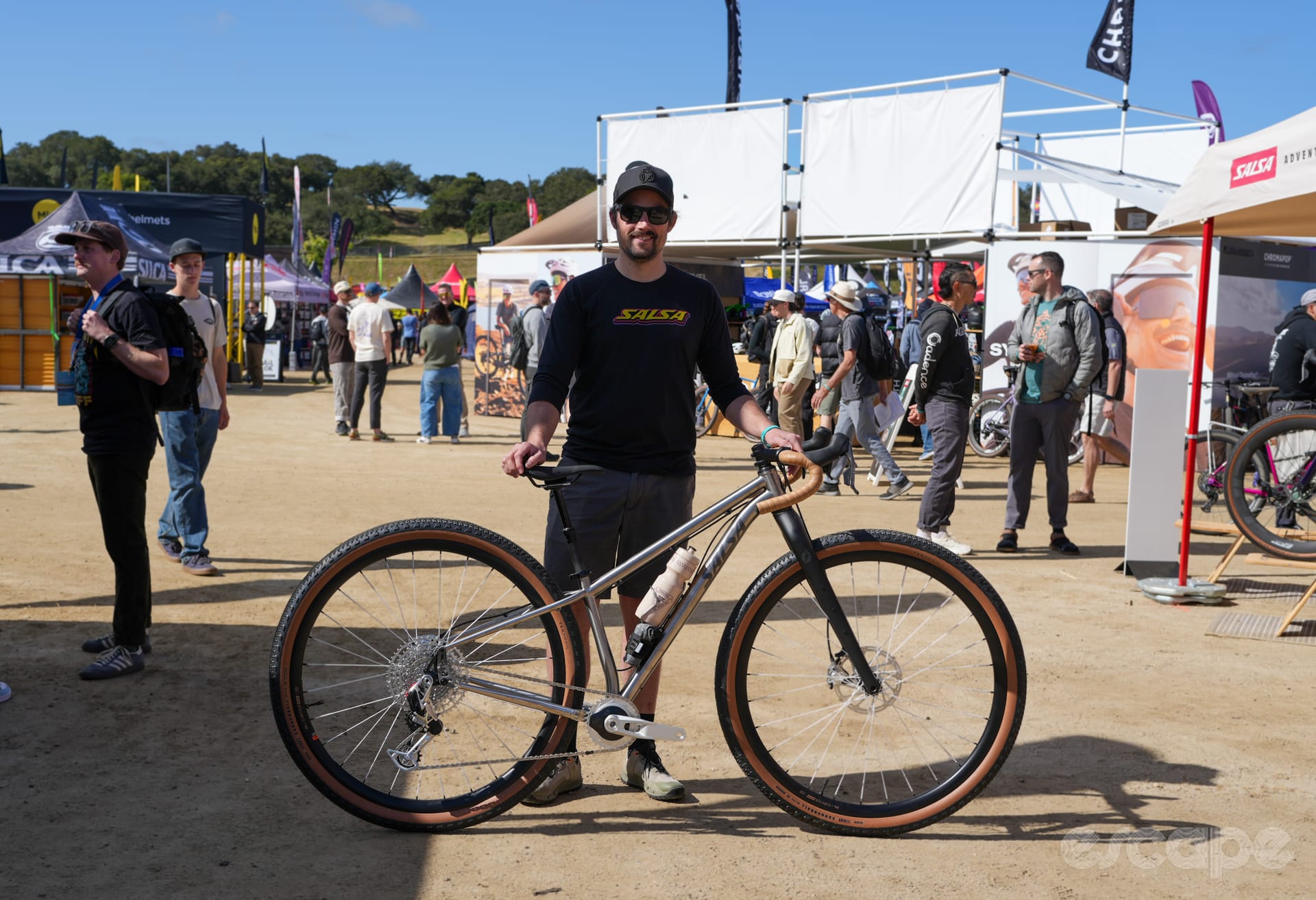
Late last year, a fellow singlespeed nutter Rich Dillen gave me a tip that I should talk to Tom at Vassago Cycles about one of the titanium prototype frames he was building. These were one-off non-suspension corrected frames built around a carbon 29er fork that cleared a 32 x 2.4" tire. Rich had already ordered his and the geometry had some key features I wanted including a bottom bracket drop figure in the low 90 mm range. Daniel Yang and Neuhaus Metalworks were also initial inspirations for the whole project. The 32" Nova from Neuhaus just had this look to it that captivated me (something Josh Weinberg is currently also testing for Escape Collective). Somehow, certain bikes take you back to being a 15-year-old kid looking at your dream bike in a catalog. I told Tom I was in and started planning the rest of my big wheel machine.
Here are the full specs on each bike. I have included all relevant details for transparency, as there are a couple of differences between them, such as spoke count and spoke type. Subjectively, they are both fantastic bikes, and I think they give a reasonable real-world comparison of 29" vs 32" mountain bikes.
29" Build
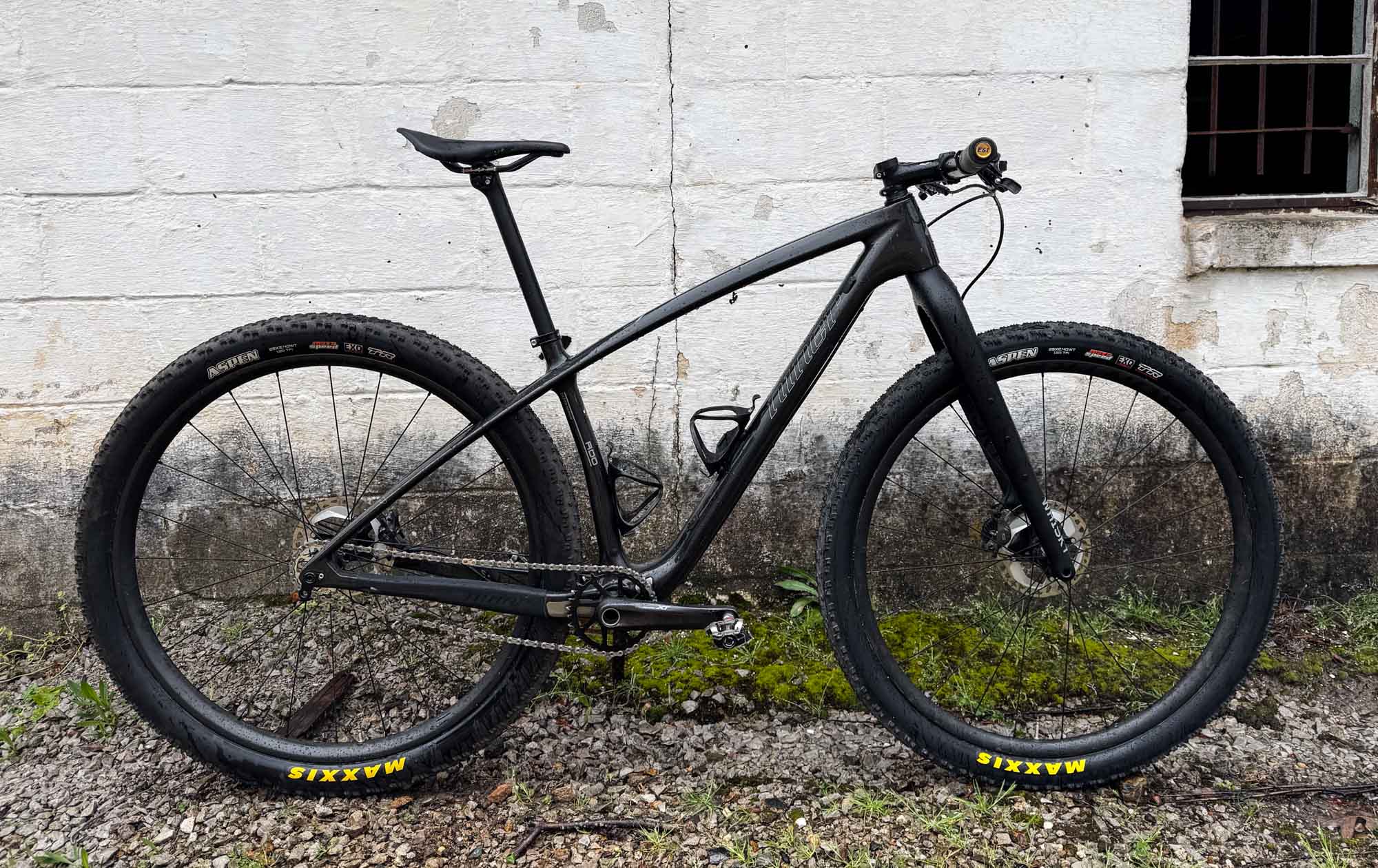
- Frame: Niner Air9RDO carbon frame (148 mm dropout spacing), size medium
- Fork: Whiskey Boost LT carbon rigid fork
- Wheelset: Bontrager Kovee RSL, 29 mm internal width. 24 bladed CX Ray spokes. DT 240 hubs with Ratchet EXP HG freehub – 1,190 grams
- Tires: Maxxis Aspen 29 x 2.4" tires with 80 ml Orange Seal Regular sealant in each tire. The 29er Aspens had an average weight of 754 grams.
- Drivetrain: Shimano XT crankset (175mm) with spiderless Garbaruk 32T chainring. 20T Wolf Tooth stainless steel cog. Shimano HG901 chain with Silca Hot Wax. Endless Bike Co singlespeed spacer kit. BB is part of the eccentric BB and has OEM Shimano 24 mm bearings.
- Brakes: Shimano XT M8100 two-piston brakes with 160mm rotors
- Cockpit: Pro PLT stem, 90 mm/-10°. Enve M5 handlebar cut to 720 mm width. ESI Chunky grips. Enve 400 x 0° offset carbon seatpost. A Mixed 5D saddle off AliExpress that has held up well for a year of riding so far.
- Pedals: XTR (Favero Assioma MX2 Pro power meter pedals for testing)
- Cages: Arundel Mandible
- Weight: 17.8 lb / 8.1 kg with pedals and cages
32" Build
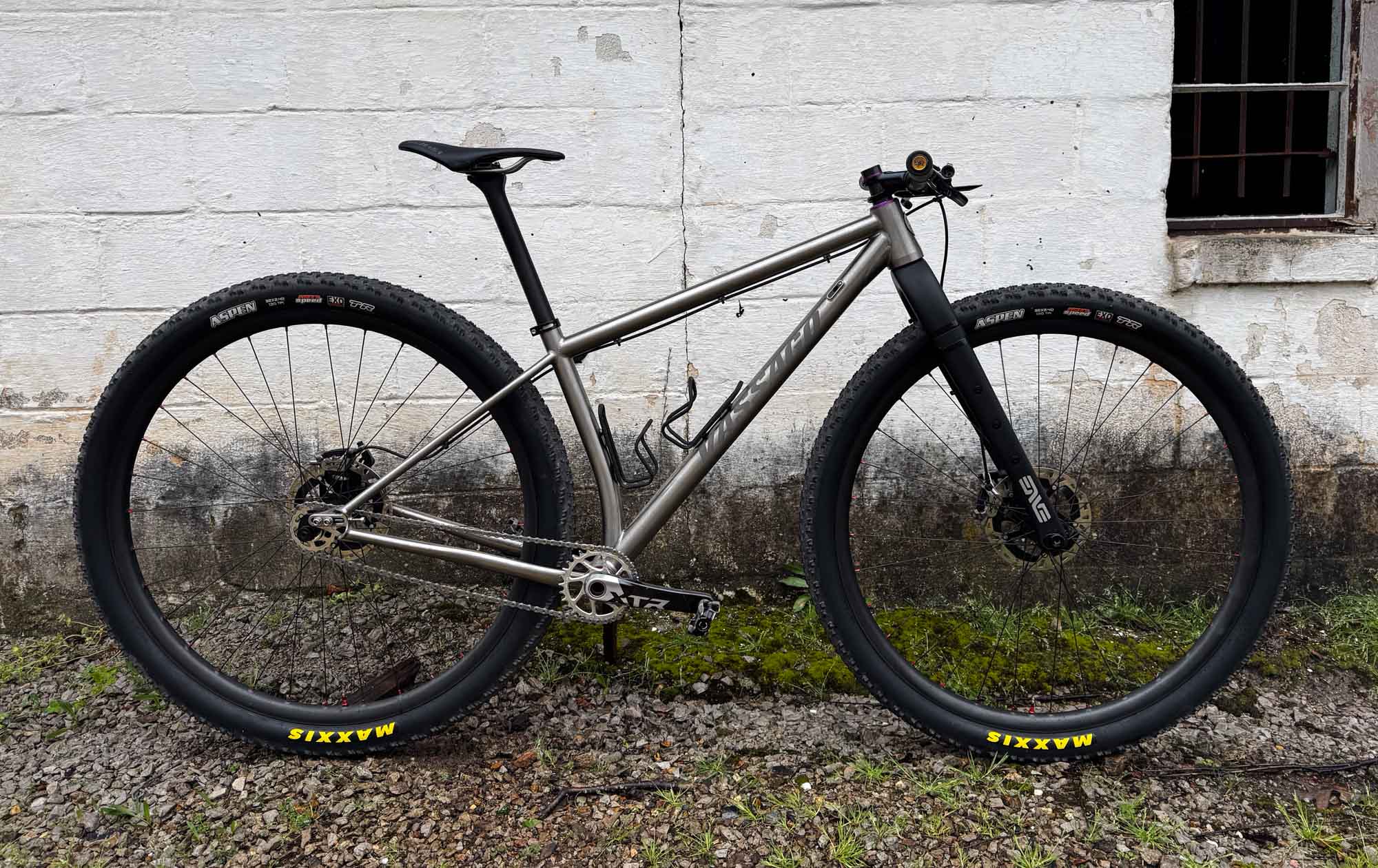
- Frame: Vassago Maximus 32" Prototype (serial number 2). One-off geometry, but it's effectively a Medium. Titanium tubing with Paragon sliding dropouts and Paragon Titanium combo slider hardware. 148 mm dropout spacing.
- Fork: Enve Boost MTB carbon fork with Cane Creek expander plug. Wolf Tooth headset.
- Wheelset: Custom built wheelset by Mike Curiak with Nextie Alpha rims (30 mm internal width), DT 240 hubs with Ratchet EXP HG freehub. Laced up with 32 DT Comp spokes and ProLock nipples – 1,545 grams. I will soon have an identical wheelset (and another set of Aspens) from Mike but with Berd spokes and a third prototype wheelset with 32" carbon rims.
- Tires: Maxxis Aspens, 32 x 2.4". Running 90 ml of Orange Seal Regular in each. These tyres had an average weight of 809 grams.
- Drivetrain: Shimano XTR 9200 crankset (thanks to Nick at Shimano), 175 mm crankarms, with 30T Garbaruk spiderless chainring and 20T Wolf Tooth stainless cog. Shimano HG901 chain with Silca Hot Wax. Wolf Tooth bottom bracket.
- Brakes: Shimano XTR M9220 four-piston brakes and levers with 180 mm rotors
- Cockpit: Darimo IX2AL stem, 60 mm / -17°. Enve M5 handlebar, 720 mm width. ESI Chunky grips. Roval Control SL 400 mm x 0° offset seatpost. Selle Italia SLR Boost Superflow saddle in S3 width and Ti rails.
- Pedals: XTR (Favero Assioma MX2 Pro power meter pedals for testing)
- Cages: Silca Sicuro Ti in black Cerakote. Thanks to Richard at Silca.
- Weight: 20.2 lb / 9.2 kg with pedals and cages
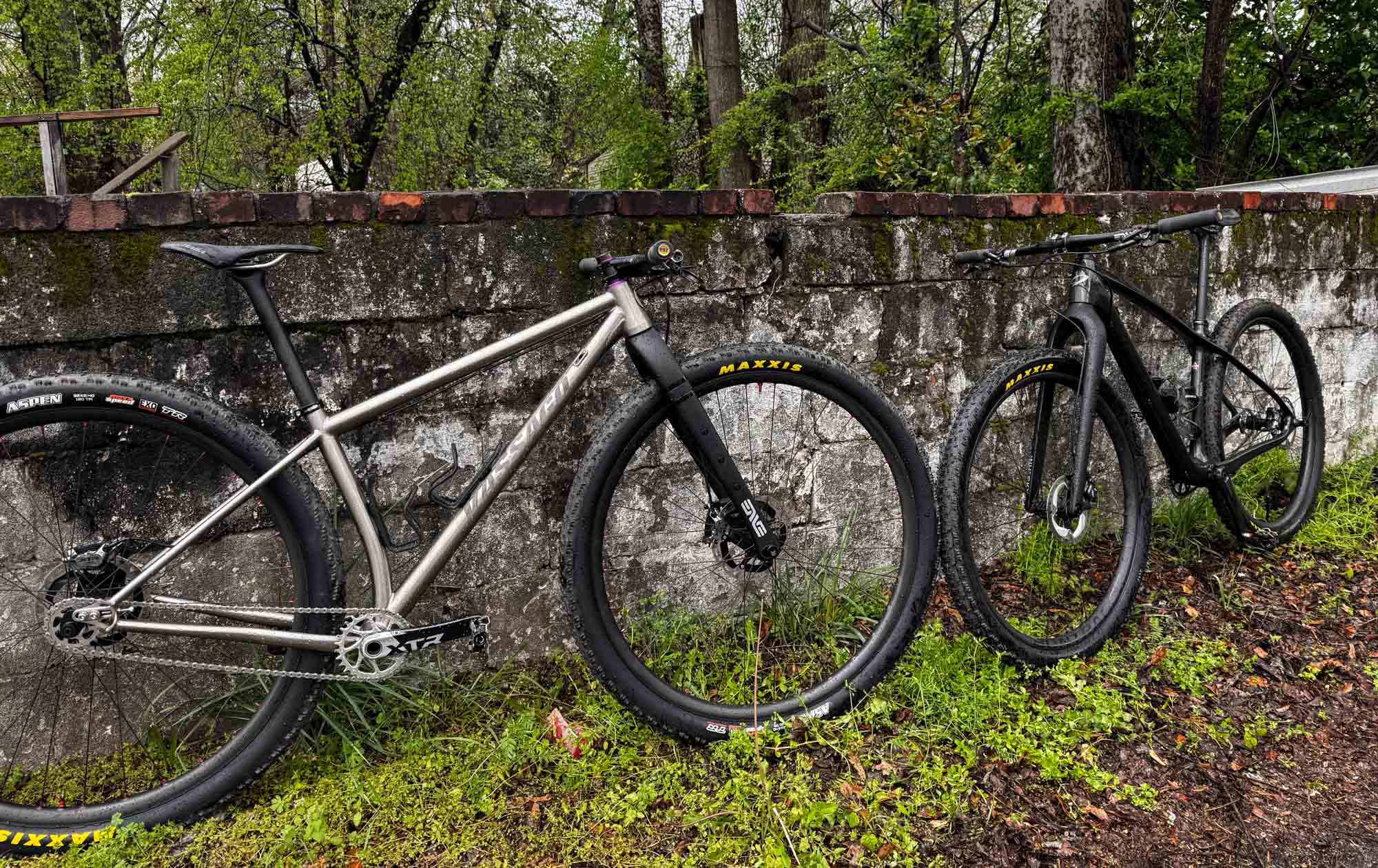
The testing
For all my tire testing, I like to start with a smooth pavement course. Of course drum testing exists and I am glad it does, but pavement testing has been a better frame of reference for me. Crr can be a bit abstract as a reference, so I like to also have some wattage values converted from that as another way to see the full picture.
Aerocoach presents their tire testing in a similar way. I also have some calculated comparisons in the results for total system wattage to give a true real-world look at potential performance between sizes. From initial calculations, the 32" tires have more frontal area than the 29" tires, and the difference seems to match well with what I am using for test CdA values. My 32" setup has an approximate 0.005 higher CdA compared to the 29" setup. To my knowledge, nobody has had a 32" in the wind tunnel yet, at least not publicly. There is likely much more to learn in the future.
Tire pressure notes: For the Smooth Pavement testing I ran 24/26 psi in the 29" and 23/25 psi in the 32". For all other gravel and cobble testing I ran 16/18 psi in the 29" and 15/17 psi in the 32". This seems to give a similar tire deformation between the two sizes and is in line with Wolf Tooth’s tire pressure calculator that was recently updated to include 32" tires.
To come back around to the actual testing results, any test method has potential errors. For Chung/VE testing this can include incorrect tire circumference numbers, so it is critical to do an actual loaded rollout for the tire at riding pressure. Other sources of error are variable wind or incorrect air density inputs. I used a Kestrel weather station for all air density data. I did have an extra Category 1 Gravel test in the wet that I had to toss as the path ran under an interstate bridge and the wind draft off that was quite bad. All the tests presented here have zero vehicle traffic, which can also significantly disrupt things.
 Ronan Mc Laughlin
As Ronan Mc Laughlin and John Buckley mentioned in their tyre testing, temperature can have a significant impact on tire rolling resistance and I have seen the same. We have nice weather here now and I was fortunate to be around 20° C / 68° F for this week of testing. Generally speaking, carefully done Chung field testing is of high reliability, but it takes a significant amount of practice to do it well.
The data
Let's look at the comparison data I collected across four surfaces.
Did we do a good job with this story?